
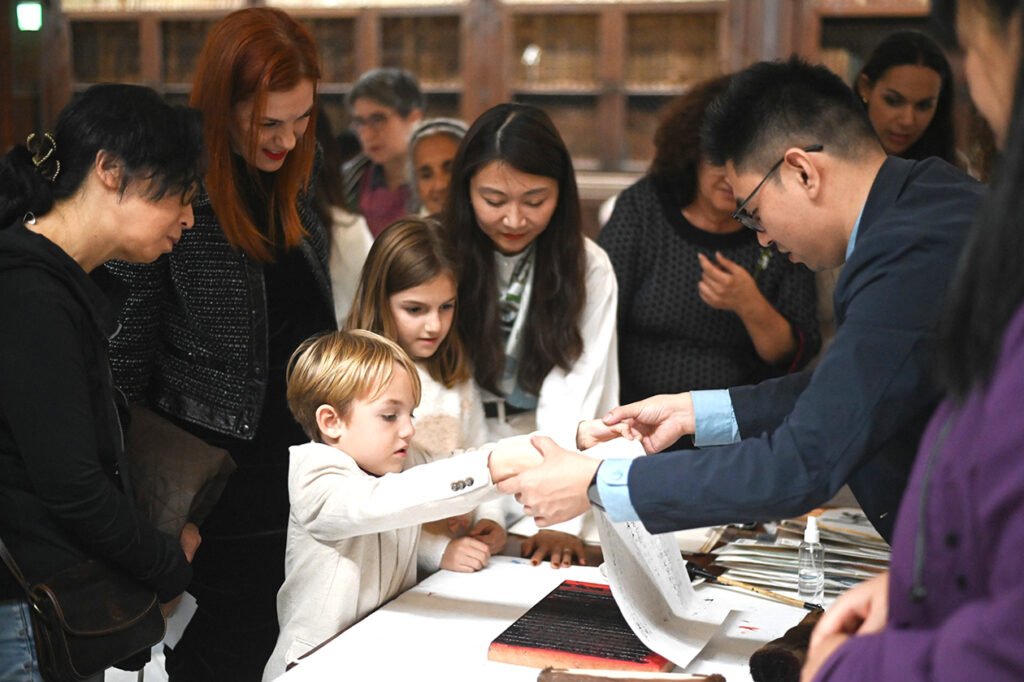
The China Cultural Centre in Malta recently hosted a significant programme of cultural exchange, presented in collaboration with the Zhejiang Provincial Department of Culture, Radio, Television and Tourism and the Zhejiang Library.
The programme featured the launch of the exhibition Prints and Engravings of West Lake on November 24, followed by a public lecture at the National Library on November 25. Together, these events illuminated more than a millennium of Zhejiang’s woodblock printing heritage and the longstanding cultural links between China and Malta.

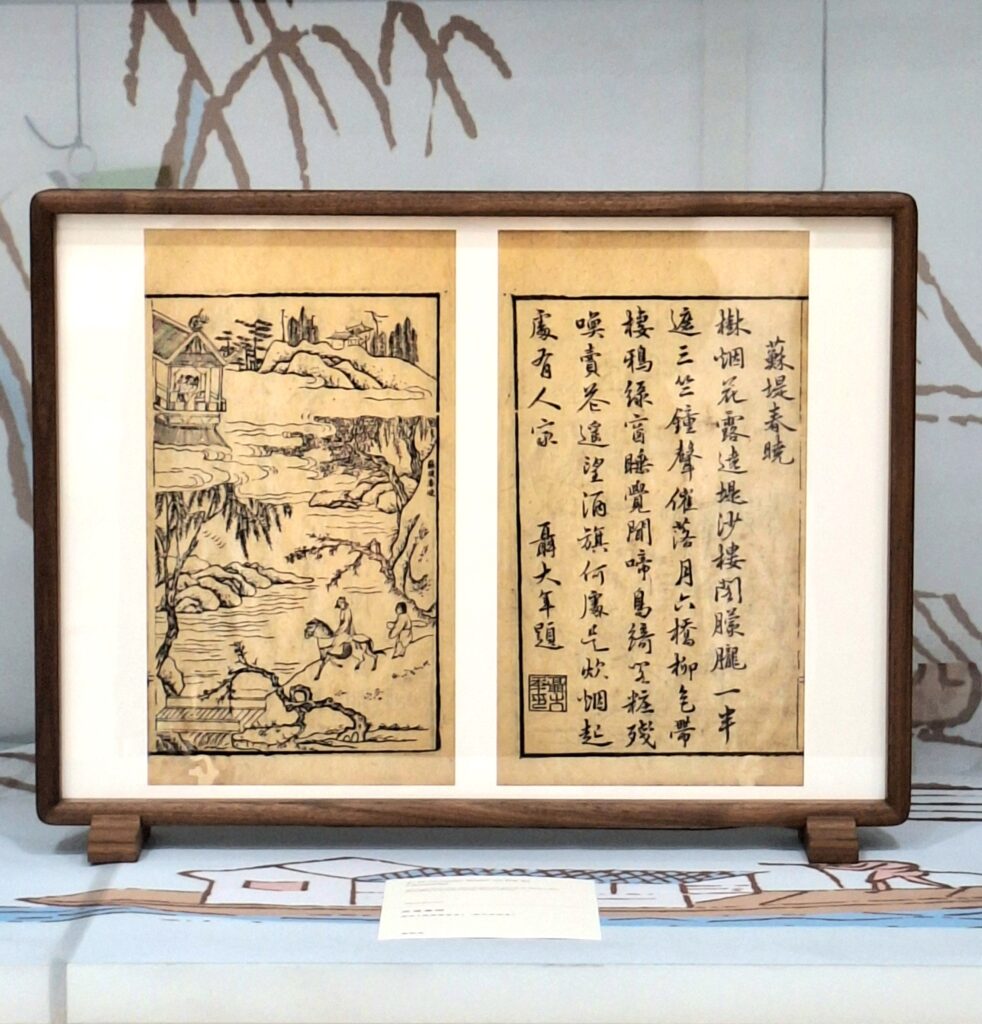
The evolution of Zhejiang’s printing culture
The exhibition opening brought together distinguished guests and scholars to explore the artistic and historical depths of Zhejiang’s printing culture.
Through key works and thematic displays, visitors were guided from the early Wuyue period through the Song, Yuan, Ming and Qing dynasties, encountering masterpieces that illustrated the evolution of block-cutting, illustrated woodcuts and Hangzhou’s vibrant printing tradition centred around the UNESCO-listed West Lake.
During the launch, three speakers offered reflections that framed the exhibition’s significance.
Chinese Ambassador for Malta, Zhang Zuo, emphasised China’s commitment, that was reaffirmed at the recent Fourth Plenary Session of the 20th CPC Central Committee to deepen exchanges among civilisations and to work with Malta on cultural heritage, academic collaboration, youth engagement and the integration of culture and tourism.

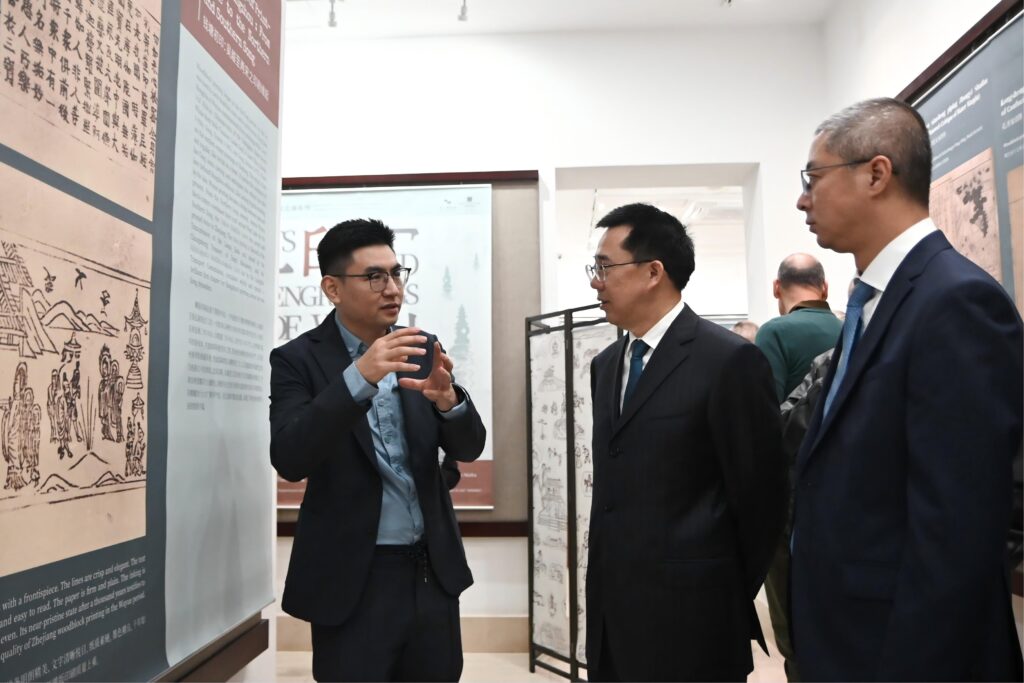
Godwin Vella, senior manager of publications, libraries and didactic resources, reflected on his recent visit to the West Lake and noted the strong affinity between Malta and China, observing that both countries treat cultural heritage as a living resource that improves quality of life for future generations.
Deputy director of Zhejiang Library, Beini Xie, highlighted how books and prints embody civilisations and expressed the hope that Maltese audiences would experience China’s classical culture through works shaped by centuries of craftsmanship.
How the Chinese learnt about Malta
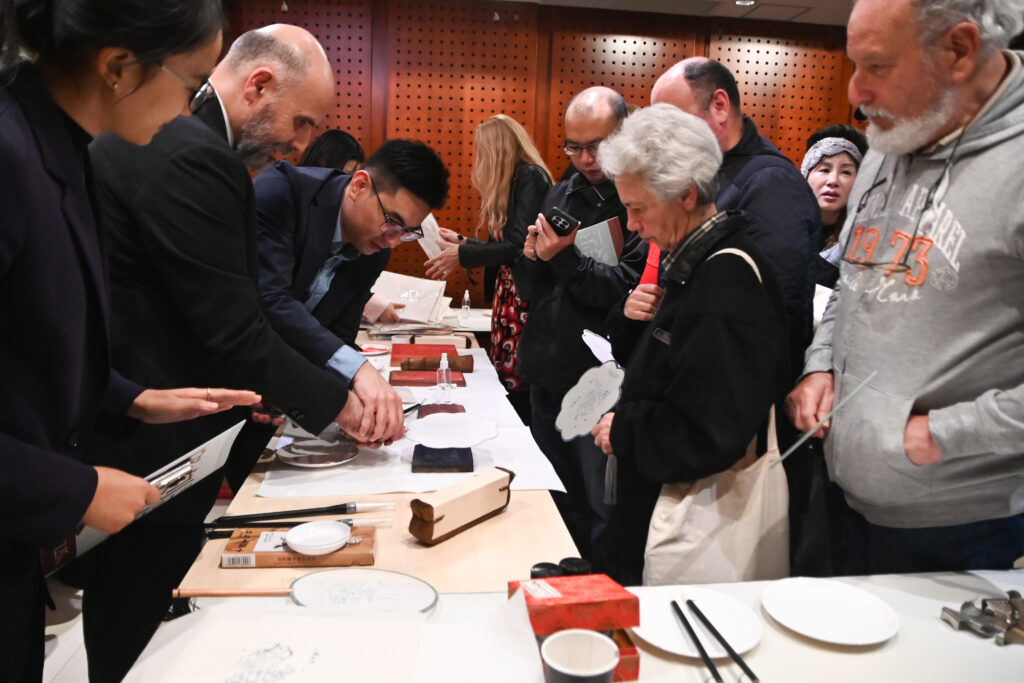
The following day, the National Library hosted Beini Xie for a well-attended public lecture titled ‘Prints and Engravings of West Lake: The Inheritance and Development of Zhejiang’s Printing Culture’.
Her presentation traced the origins, peaks and continuities of Zhejiang’s printing achievements, while placing particular emphasis on the early encounters between Chinese printed knowledge and Malta.
She highlighted how Malta first entered Chinese awareness through Zhifang waiji (Record of Foreign Lands), completed in 1623 at West Lake by the Jesuit Giulio Aleni and the Hangzhou scholar Yang Tingyun.
As the first world geography written in Chinese, it presented Malta’s history, the storied feats of the Knights of Malta and the island’s remarkable reputation for having no venomous creatures − details that intrigued Chinese readers of the Ming and Qing eras and formed one of the earliest cultural bridges between the two nations.

Xie also captivated the audience with the story of the Leifeng Pagoda, which collapsed in 1924 after more than a thousand years standing beside West Lake. As people mourned the loss, an unexpected discovery astonished everyone.
Hidden within specially crafted “scripture bricks” were fragments of Buddhist sutras printed in 975 − among the oldest surviving examples of Wuyue woodblock printing. These texts, protected inside the bricks for nearly a millennium, now stand as rare testimonies to the sophistication, devotion and ingenuity of early Chinese printing culture.
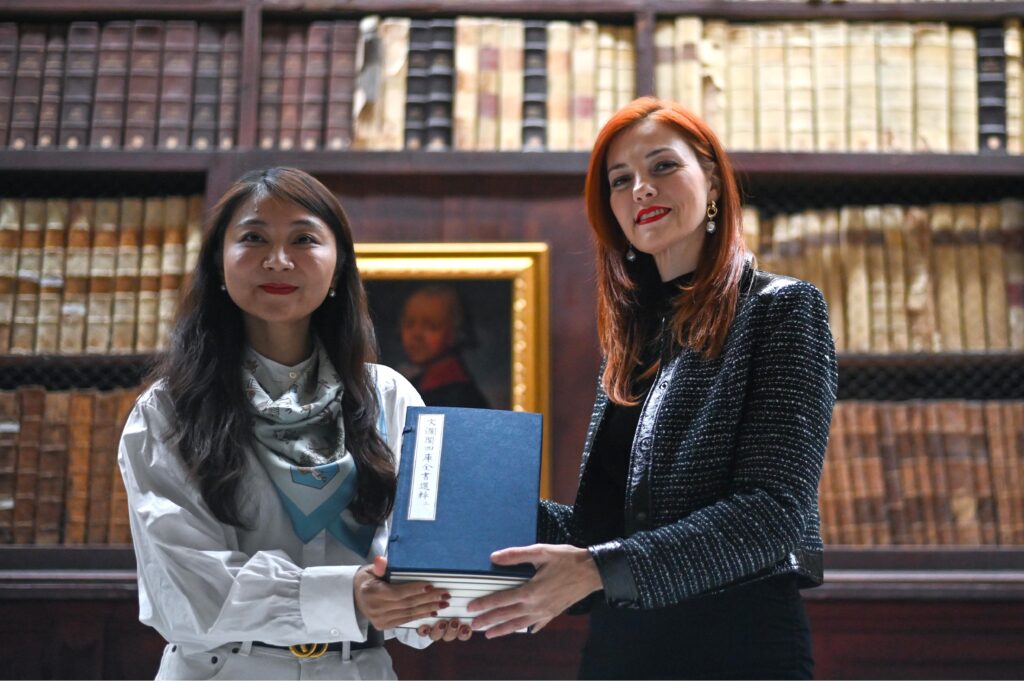
At the conclusion of the lecture, Xie donated various important cultural items to the National Library. These included a Republican-era printed edition of Zhifang waiji, as well as high-quality facsimile editions of Selected Volumes from the Wenyuan Pavilion Siku Quanshu (Set II) and The Joint Album of Dong Qichang and Mo Shilong.
Prints and Engravings of West Lake runs until mid-December at the China Cultural Centre in Valletta.