


When the Manoel Theatre Orchestra disbanded in 1996, Roderick Bugeja’s dream of becoming a full-time orchestra member seemed dashed.
He had been freelancing as a part-time musician in the orchestra for a couple of years when it disbanded and had even switched from euphonium to viola to play in the ensemble.
“I used to attend orchestra concerts and think, ‘Wow, how lovely it sounds. How lovely it is.’ But my teacher told me I needed to study a string instrument, and he suggested the viola as they were a little scarce at that time,” he recounted.
Bugeja used to practise “the whole day after school”, and when he left school, he upped this to “between seven and 15 hours per day… my life was only music”.
But when the orchestra disbanded, he was temporarily without direction.
“There was just a small chamber orchestra left, and those who were full-timers had more chances to be in the orchestra. So, for a small period of time, I deviated a bit. But since I wanted to have a job in music, I went to join the army band,” he recounted.
Seemingly in keeping with Bugeja’s prior musical experiences, however – he had switched to euphonium after being told he was unsuited to the trumpet, an instrument he started learning at the age of nine – Bugeja was told the army was looking for a flautist.
He spent a year studying the flute and preparing for his entrance exam to the army, but as he joined, rumours reached him that the orchestra was expanding, and Bugeja spotted an opening in the trombone section.
“The former trombone players all had jobs elsewhere, as they ended up jobless [when the theatre orchestra disbanded], so I thought I had a great chance; trombone and euphonium mouthpieces are very similar,” he said.
“At that time, I already had a fellowship in euphonium, so I went to Manchester, bought a trombone and started practising – insanely,” he said with a laugh.
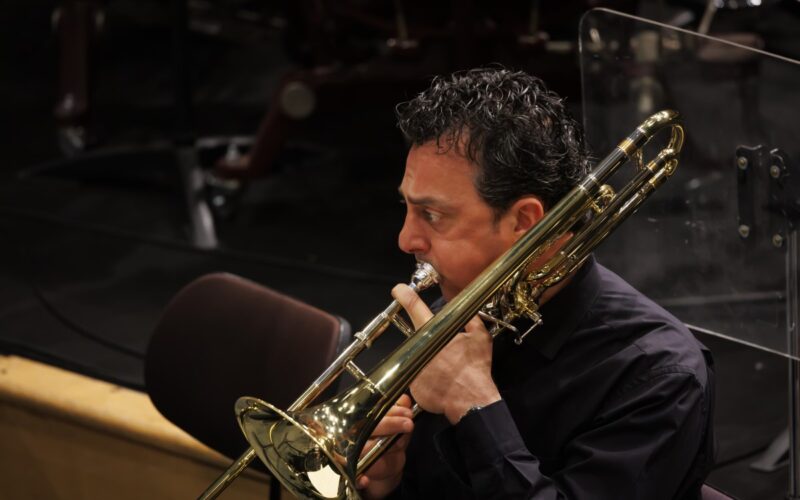
Bugeja auditioned in 2001 and won the first trombone chair in what was then the National Orchestra of Malta, the forerunner of the Malta Philharmonic Orchestra (MPO), for which he is now principal trombonist.
‘When you have a will, there’s always a way’
Bugeja has clearly found his instrument, speaking fondly about the trombone’s unique ability among brass instruments to, should one’s ears be accurate, play perfectly in tune by adjusting the slide.
But not everything about the trombone is easy: “It has its difficulties, and especially when playing legato [smoothly], that’s a hard thing to do – but, when you have a will, there’s always a way”.
Since joining the orchestra, Bugeja has also explored avenues outside of performance. In 2018 he conducted the MPO for the close of Valletta’s Capital of Culture celebrations, and three years later, spent two weeks rehearsing the orchestra for a tour of Dubai.
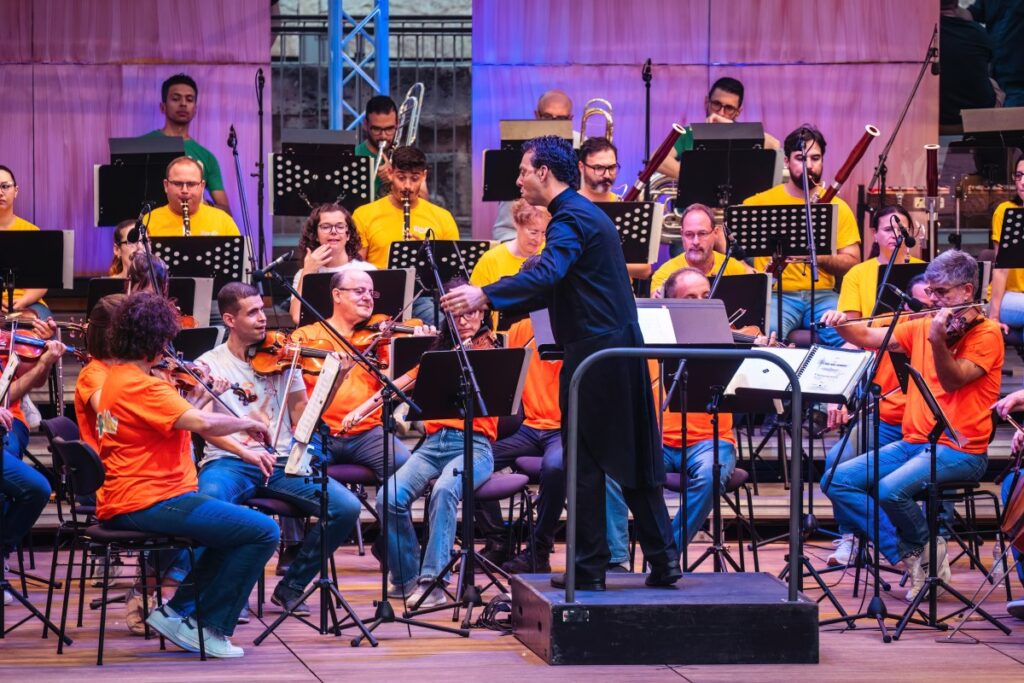
“We were still in COVID times, and the principal conductor wasn’t allowed to enter Malta to start the rehearsals before the tour. I remember the CEO calling me in at around midnight and telling me I had to start rehearsals the next day… so, no pressure,” he said.
“It was a very intense two weeks, and the management later asked me to conduct a concert three days after we got back. That was a very lovely thing.”
‘We need a reason for musicians to stay’
Conducting ties in with one of Bugeja’s other main passions – education. He was recently appointed assistant conductor for the Malta Youth Orchestra Juniors, a new initiative aimed at young musicians between the ages of nine and 14.
“It’s a pilot project, but it’s very important to give young musicians a better understanding of what an orchestra is and how to play in an ensemble,” he said.
“We didn’t have these opportunities when I was young, and now, thanks to the MPO, these kids will have professional tutors within the orchestra helping them.”
It’s very important to give young musicians a better understanding of what an orchestra is and how to play in an ensemble
Yet he still sees gaps in Malta’s musical education system, noting the country’s lack of a conservatoire – a specialist performance university – “where someone can just focus on instrumental and orchestral playing here, not only abroad”.
At present, Maltese players are heading overseas to study, and not all of them are returning, he said. “That’s a pity. We need reasons for musicians to stay and strengthen the MPO”.
‘Amazing’
Something else Bugeja thinks would help inspire younger players is for the orchestra to be equipped with its own purpose-built concert hall, something he thinks should be prioritised.
“A good concert hall is very important, even for the young musicians – so they can see where they could be playing in 15, 20 years if they join the orchestra,” he said.
“We need good premises in which to practise – individually, in sections and as an orchestra. We do the very best we can, but you see the difference when you go on tour”, he said.
And Bugeja stressed that Malta’s orchestra deserved such a space to rehearse and perform, emphasising its “amazing” sound due to its multicultural lineup.
“Maltese musicians are the core, but we have a lot of foreigners with us. So, when you have an orchestra with this kind of blend of cultures and people, it can sound unbelievably amazing.”
Read the previous article in James Cummings’s series on the MPO here.