
Il-Ħaġar Museum in Victoria is currently presenting Earth, Light and Silence, a new exhibition by Gozitan artist Victor Agius, on view until January 11.
The exhibition marks a return to a theme that has accompanied Agius throughout his career: the Nativity. Here he revisits the subject through an elemental and contemporary visual language that weaves together earth, light and silence as the foundational concepts underpinning the show.
This new body of work appears exactly 20 years after Agius’s 2005 exhibition Nativitas at the Banca Giuratale. Already then, the artist was integrating raw organic materials: earth, hay and sheep’s wool into his canvases. Those early experiments foreshadowed what has since become a distinctive artistic practice rooted in the conviction that matter itself can carry spiritual resonance.
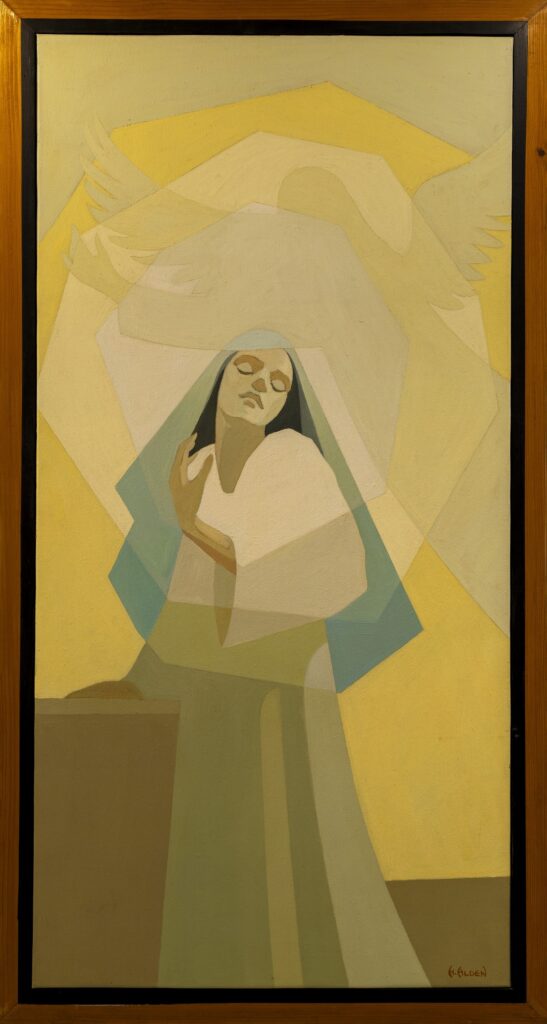
What is particularly striking in this exhibition is the curatorial decision to juxtapose Agius’s works with major historical and modern interpretations of the Nativity: Harry Alden’s Annunciation, Stefano Erardi’s Madonna and Child with St John, Anton Inglott’s Adoration of the Shepherds, the modernist Nativities by Emvin Cremona, Caesar Attard’s conceptual reinterpretations, and the meditative studies of Mario Caffaro Rore.
This arrangement creates a silent visual conversation across centuries. The connections are not direct quotations but subtle resonances, filtered through Agius’s contemporary sensibility and his ongoing commitment to the elemental.

The Nativity through material and metaphor
In Earth, Light and Silence, Agius proposes a reading of the Nativity that transcends traditional illustration. Instead of narrative representation, he turns to abstraction, texture and material presence to evoke the Incarnation as a moment when the divine enters the physical world.
Earth signifies, for the artist, the humility of the Word made flesh, a return to the ground, to matter, to the tactile realities of human existence. His earth paintings, layered with soil, wool, straw, terrarossa and other natural substances, invite viewers to consider how the biblical narrative unfolded not in splendour but in the quiet materiality of a cave.
“Through these works, Victor Agius reminds us that the sacred often resides not in spectacle but in the quiet, fragile and tactile realities of the world around us”
Light appears throughout the works as a subtle luminosity: glimmers of gold leaf, shimmering surfaces and radiating forms. These references echo both the divine light central to Christian iconography and the symbolic function of the manger, traditionally understood as a prefiguration of the Eucharistic vessel. The gilded straw and glowing textures suggest an inward radiance breaking through darkness.
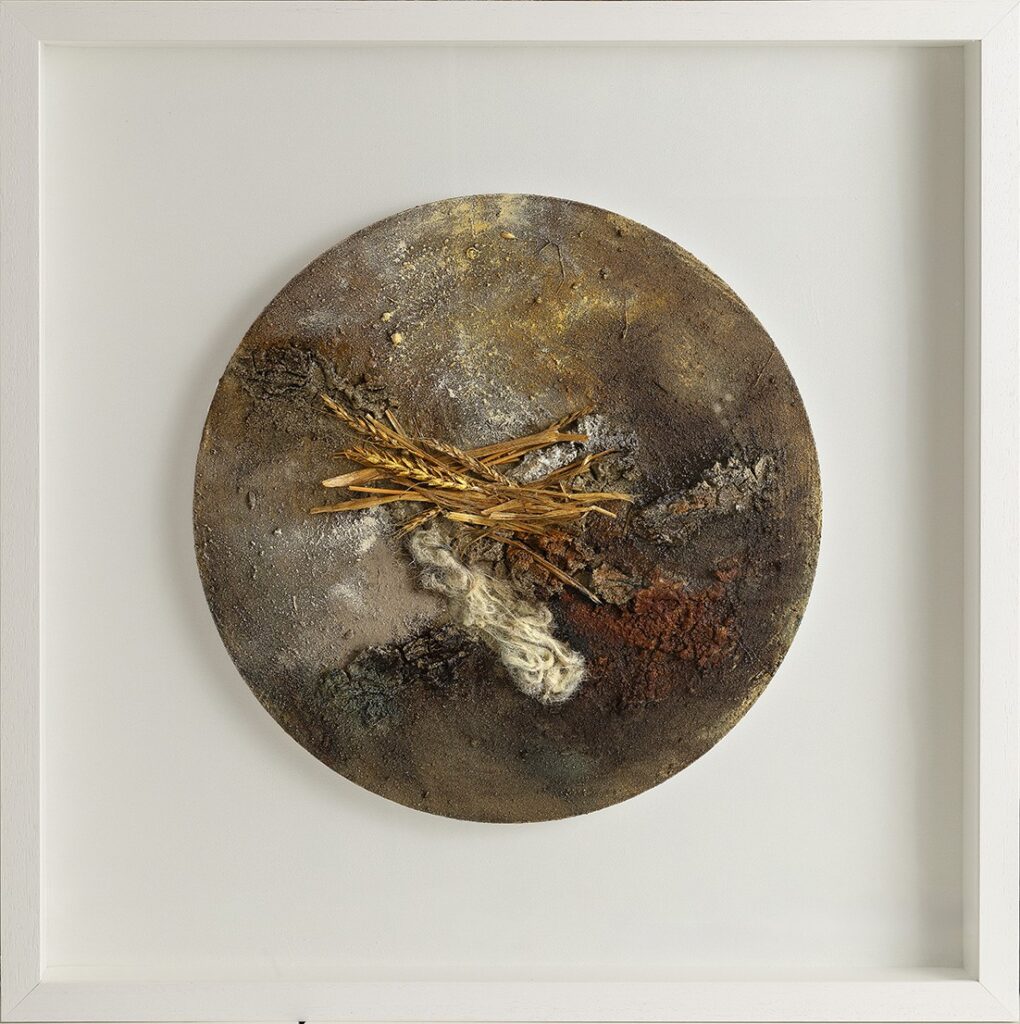
At the entrance to the museum, one finds Earth, Light and Silence I, a circular composition executed in charcoal, straw, sheep’s wool, 23-carat gold and terrarossa. Agius intentionally placed this work in dialogue with Anton Inglott’s Nativity with Shepherds. Both employ light as a metaphor for the birth of Jesus as lux mundi, the light of the world.
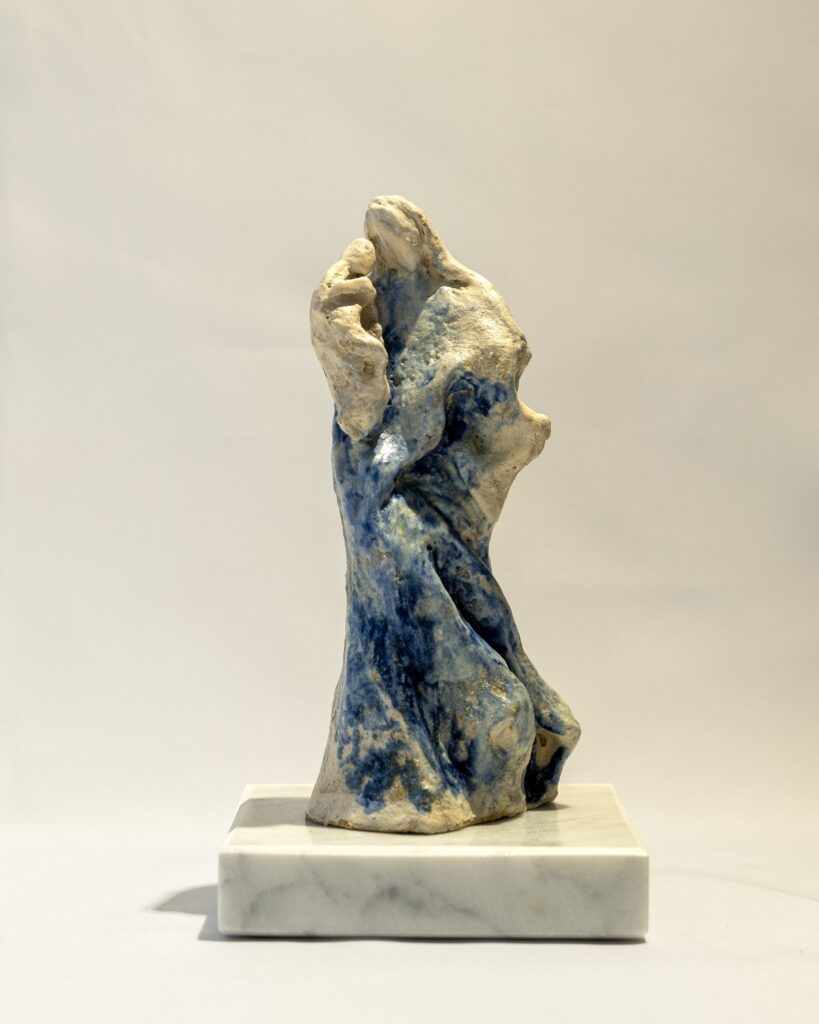
A notable inclusion is Praesepium, a large-scale abstract painting completed in 2008 and exhibited at the Florence Biennale the following year. Its presence anchors the exhibition within Agius’s broader artistic trajectory, bridging earlier explorations with the current series.

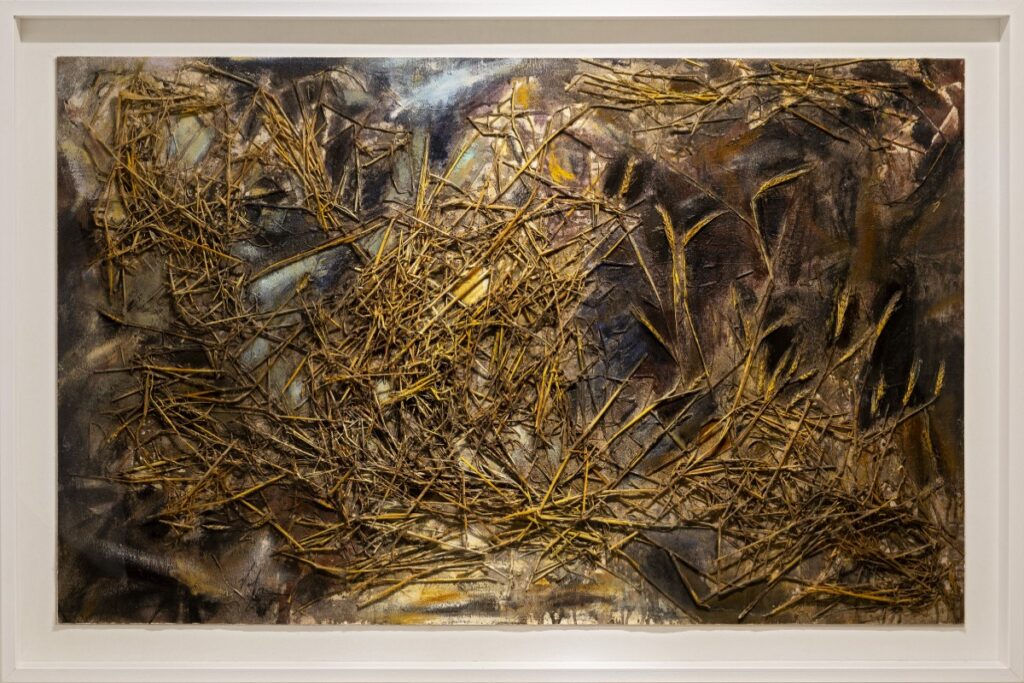
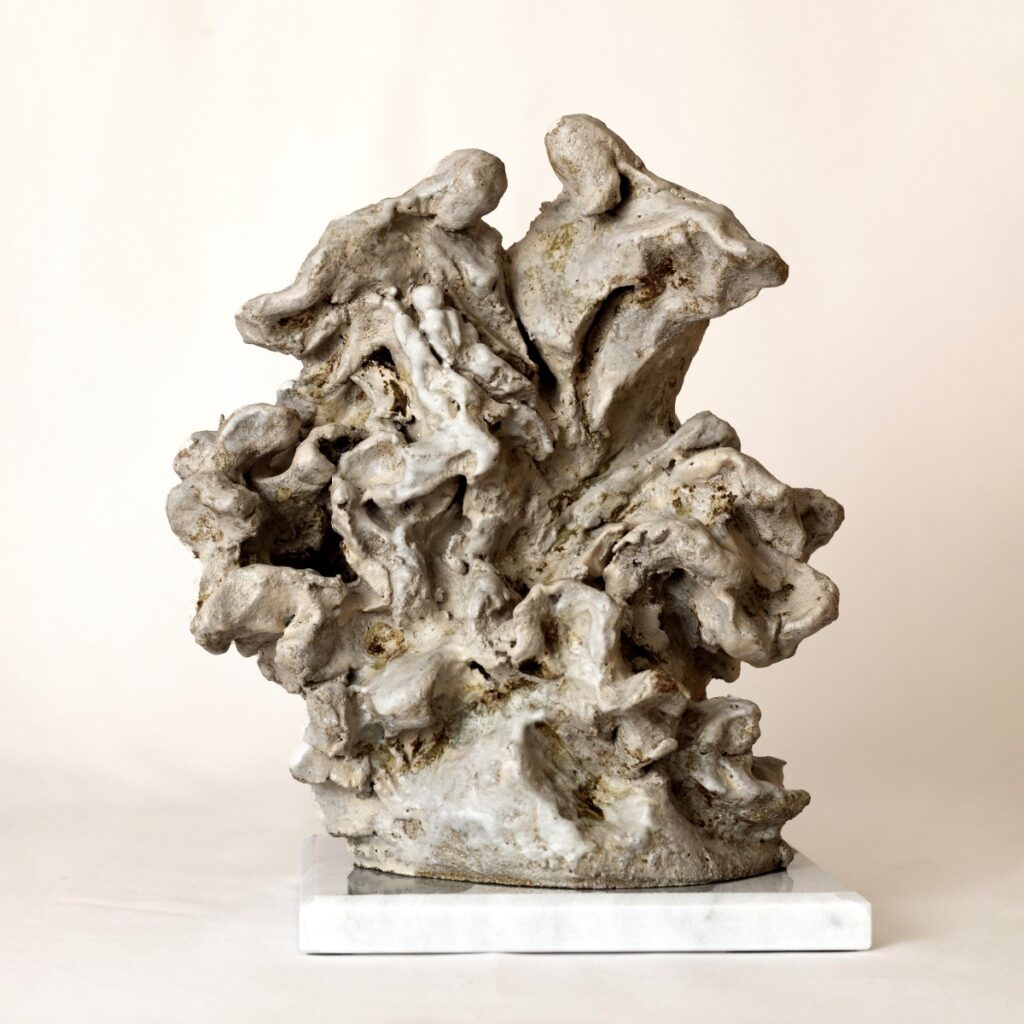
The exhibition also features a series of glazed ceramic sculptures reflecting the Nativity’s symbolic narrative and expanding the dialogue into three-dimensional form.
Silence, the most elusive of the three themes, is expressed through restrained compositions, muted colours and spacious surfaces. Agius draws inspiration from the quieter passages of Luke’s Gospel, suggesting that the Nativity unfolds not in spectacle but in stillness; an invitation, especially today, to rediscover contemplation amid the noise of contemporary life.
Several works in the series titled Earth, Light and Silence, each differentiated by number, explore this theme through circular, abstract compositions incorporating mixed media, organic materials and gold.

Matter as relic
Many of Agius’s works incorporate objets trouvés: hay, shrubs, wool and gold are treated with the reverence of relics. These materials are deeply rooted in the Gozitan landscape, yet they resonate symbolically with the terrain and ritual environments of the biblical narrative.
Agius first developed this approach in the early 2000s, well before his later encounters with artists such as Anselm Kiefer or Lucio Fontana. His intuitive use of organic matter emerged from an interest in Maltese prehistoric art and ritual, where earth and nature play central roles in the cycles of birth, life, death and regeneration.
This research continues to inform his practice today, visible in his tactile surfaces and stratified layers of both paintings and ceramics. Here, matter is not simply manipulated − it is honoured, suggesting the presence of spirit latent within the earth.
Dialogue with art history
A prominent section of the exhibition explores the maternal theme. In one of the museum’s rooms, Stefano Erardi’s 17th-century Madonna and Child hangs opposite a series of ceramic sculptures by Agius dedicated to the same theme.
While the rock-like textures and robust forms of Agius’s style remain evident, several sculptures adopt smoother surfaces and more minimalist compositions, revealing the artist’s technical range.

On the upper floor, works such as Alden’s Annunciation and Cremona’s Nativity continue the visual dialogue with Agius’s pieces. Particularly resonant is Theotokos (Mother of God), an acrylic painting executed at the Harry Alden Studio and exhibited in Nativitas in 2005. In this work, flashes of golden light pierce a dark cosmic void, transforming the composition into a dynamic spiritual space that reaches beyond the human realm.
A contemporary Nativity rooted in the Earth
Earth, Light and Silence ultimately reveals Agius’s ability to reinterpret one of Christianity’s most enduring narratives through a language that is both archaic and profoundly contemporary. The works, whether sprawling mixed-media assemblages or intimate circular compositions, affirm his belief that matter holds memory, and that the sacred can be approached not only through iconography but through texture, substance and atmosphere.
In the richly layered paintings, where straw, wool, terrarossa and gold emerge from cracked, earthen surfaces, Agius evokes a Nativity grounded not in visual storytelling but in sensation. The tactile density of straw and soil becomes a metaphor for the humble setting of Christ’s birth, while the subtle infiltrations of gold suggest a quiet annunciation of divine presence.
These works do not depict the Nativity, they summon it, allowing viewers to inhabit the elemental world from which the biblical narrative unfolded.

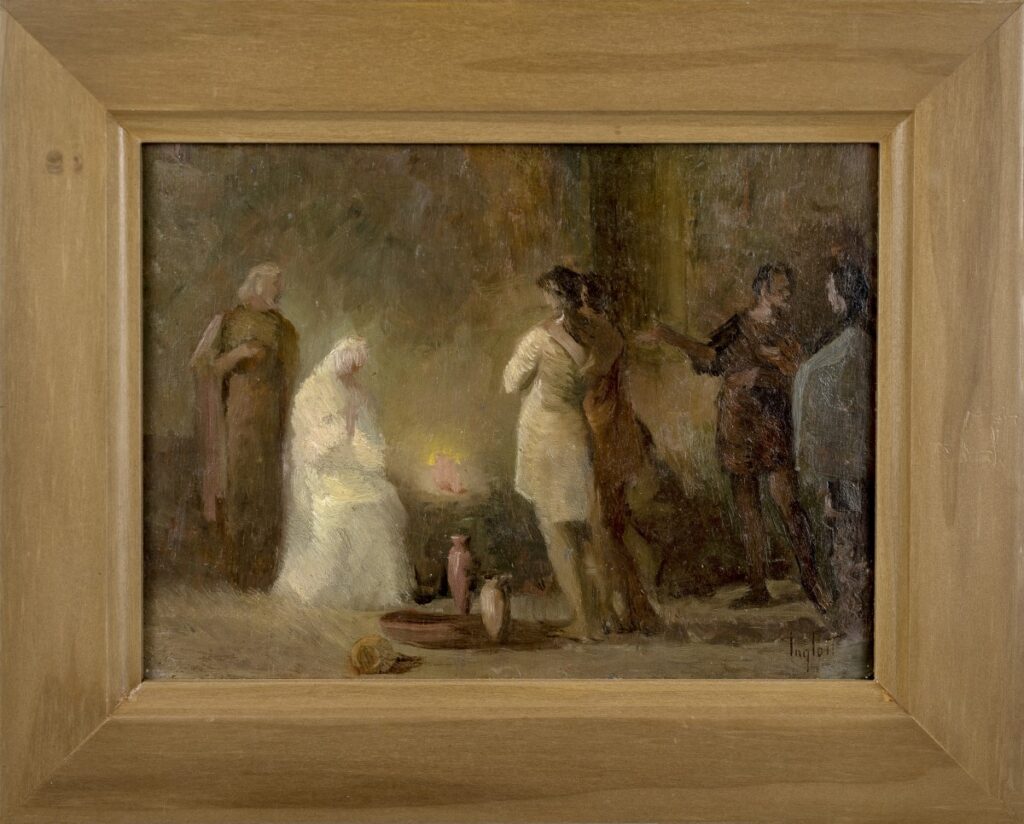
Seen alongside historic Maltese and Gozitan masters from Erardi to Inglott, Alden to Cremona, Agius’s pieces form a compelling dialogue that spans centuries.
The exhibition repositions the Nativity not as a fixed image but as a living idea, continually reimagined in response to each era’s cultural and spiritual needs. Agius’s contribution is one of contemplation, material intelligence and profound sensitivity to the rhythms of nature.
In this sense, Earth, Light and Silence becomes more than an exhibition: it is an invitation to return to the elemental foundations of belief; earth as humility, light as revelation, silence as the space in which mystery is perceived. Through these works, Victor Agius reminds us that the sacred often resides not in spectacle but in the quiet, fragile and tactile realities of the world around us.
An illustrated catalogue is available at the museum which forms part of Il-Ħagar GEMS Series no.36.