

I travelled to Hubei Province in late October as part of an international group invited to attend the opening ceremony of the 2025 International Wudang Tai Chi Culture Festival and the Zhiyin Hubei–Wudang Travel Agency Cooperation and Exchange activities.
The visit was made possible through the organisation and sponsorship of the Ministry of Culture and Tourism of the People’s Republic of China, the China Centre for International Cultural Exchange and Tourism, the Hubei Provincial Department of Culture and Tourism, and the Culture and Tourism Bureaus of Shiyan and Suizhou.
This experience is presented in two articles, and this first feature focuses on the days we spent in Shiyan City from October 25 to 28.
An ‘iconic landscape’
Arriving in Shiyan meant stepping straight into the world of the Wudang Mountains, an iconic landscape shaped by centuries of Taoist philosophy and Chinese martial arts. For our first two nights we stayed at the Narada Wudangshan Hubei, also known as the Junlan Hotel.
Conveniently located near Wudangshanxi Railway Station and within easy reach of Shiyan Wudangshan Airport, it proved an ideal base for the opening days of the programme.
The first full day began with the opening of the 2025 International Wudang Tai Chi Culture Festival at Yuxu Palace, a key landmark of the Wudang complex and the former base camp for the Ming-dynasty construction on Mount Wudang. Scarred by time, fire and floods, the palace remains monumental, its vast courtyards and surviving structures still charged with history.

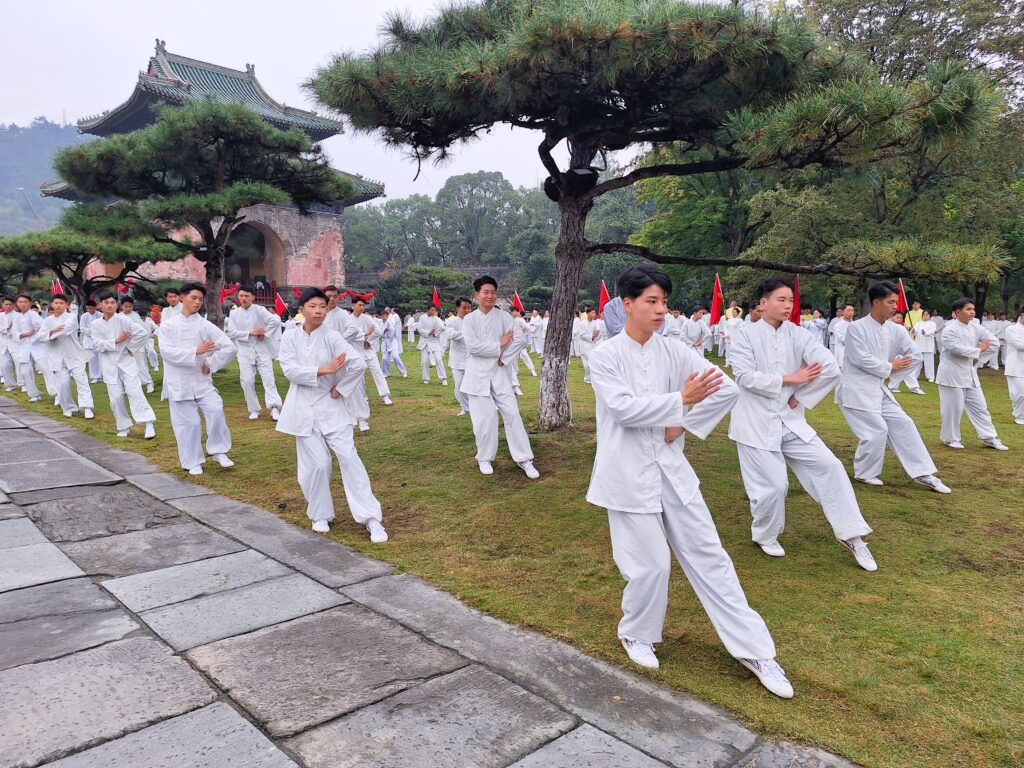
We were greeted at Yuxu Palace by the sound of large drums beating with the rhythm of a dragon’s heart. Hundreds of young performers filled the space, practising Tai Chi, striking the drums and recreating scenes of traditional Wudang life. A light rain fell, yet nothing paused. Performers, presenters and speakers continued with quiet discipline, their composure holding the audience beneath a grey sky. Wrapped in raincoats, we watched as movement, sound and resilience drew the weather into the spectacle itself.
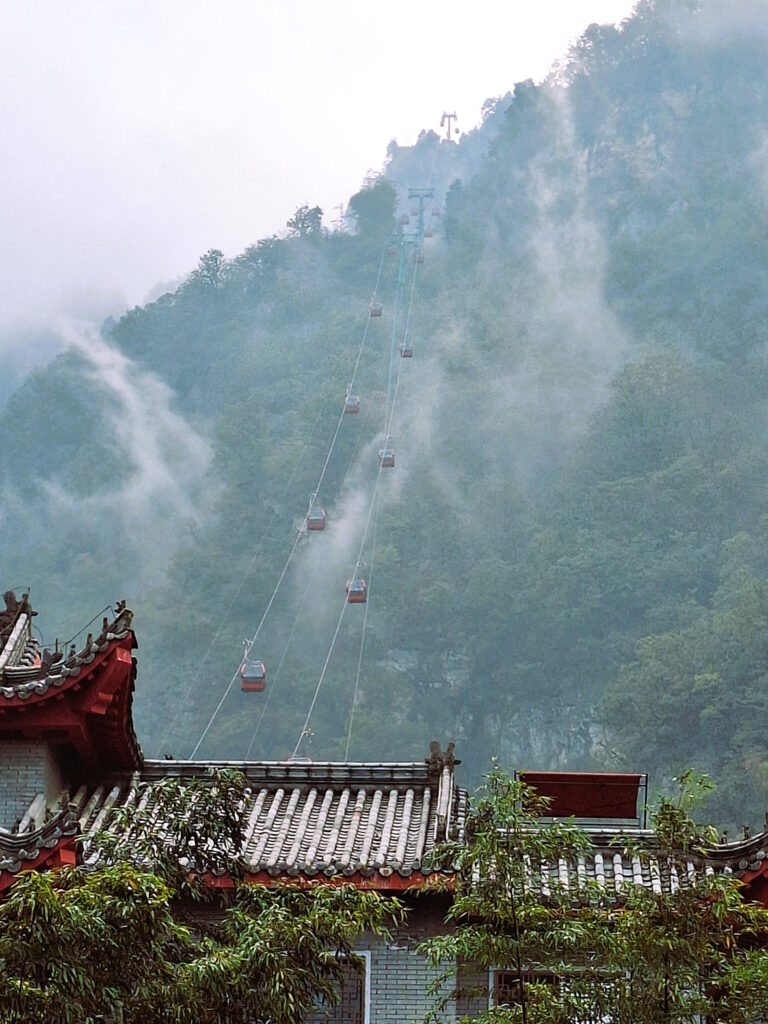
After the ceremony, we continued to the Wudang Mountain scenic area. The mountain rose before us wrapped in mist, its slopes fading into the cold air. The ascent began with a cable-car ride and continued on foot along steep stone steps. Temples and shrines appeared and disappeared along the route, marking our progress upward.
The climb was demanding but when the Golden Hall finally emerged at the summit, the moment felt profound. It was a powerful reward for the physical effort, heightened by the unique atmosphere of the place and by the quiet, commanding beauty that surrounded us.
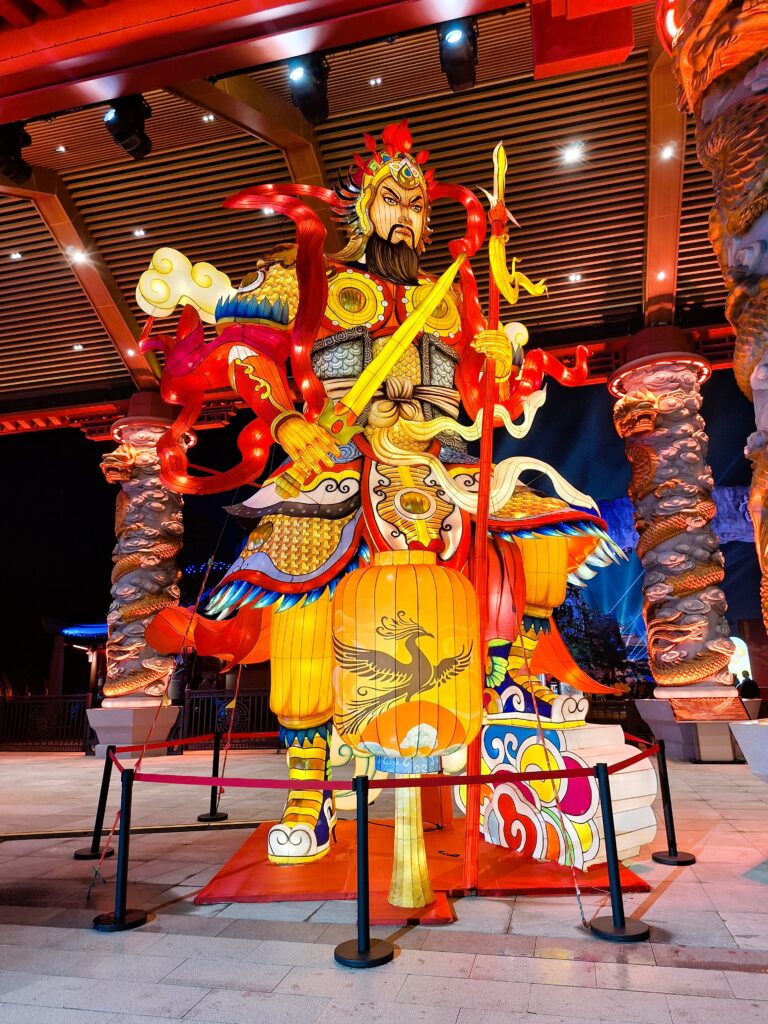
In the evening, we attended A Dream of Wudang staged at Wudang Dream Park, located near the main scenic area of Wudang Mountain. The performance combined drama, music and advanced visual technology, with holographic projections and carefully choreographed scenes that traced the spirit of Wudang culture.
After the indoor show, the experience continued outdoors with costumed parades and a coordinated drone display, where illuminated forms of dragons and Tai Chi figures rose into the night sky, turning the park into a vivid extension of the performance.
Cultural, historical and ecological tourism
The following morning began with the Zhiyin Hubei–Wudang 2025 International Travel Agency Cooperation and Exchange Conference, our first formal meeting with local travel agents. Discussions focused on future collaboration and on how Hubei positions itself as a destination for cultural, historical and ecological tourism.
The day continued with a visit to the Wudang Mountain Museum. If the mountain offered an emotional and spiritual experience, the museum provided its intellectual framework.
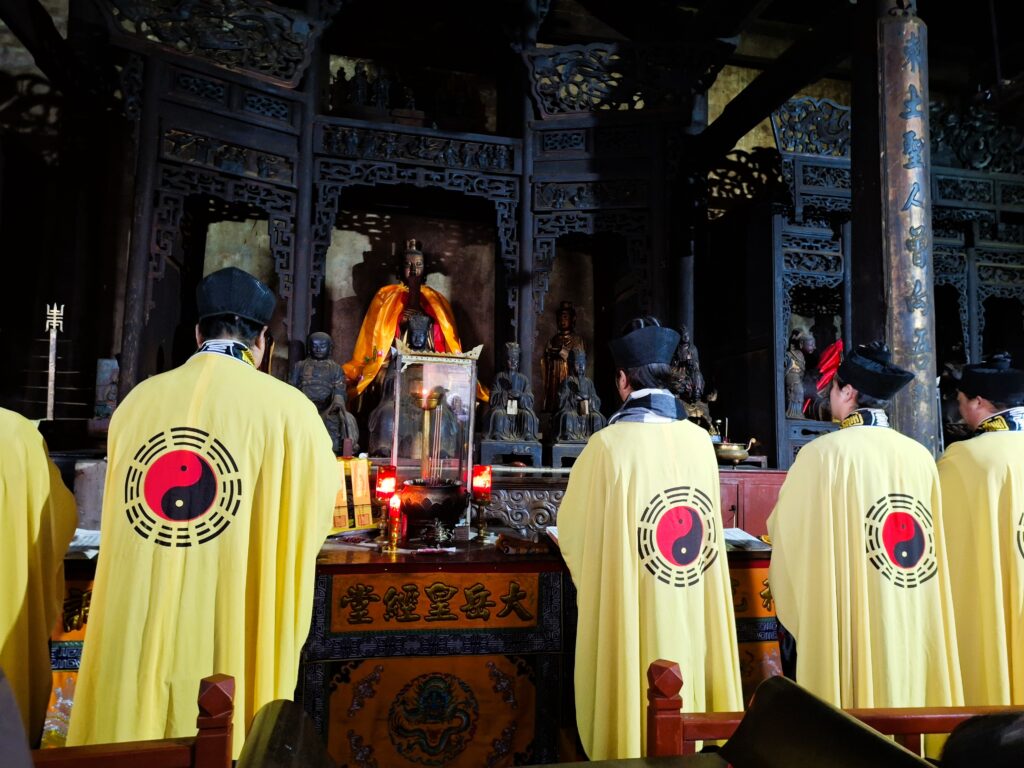
It houses nearly 2,000 artefacts related to architecture, rituals, martial arts and local customs. Through its exhibitions, visitors gain insight into the development of Taoist practice, the history of the temples and the principles that shaped Wudang martial arts.
In the afternoon, we travelled to Yuzhen Palace, another important Taoist complex within the Wudang area. The palace stands today on higher ground after conservation efforts lifted the entire structure to protect it from rising waters.
While the setting alone is striking, the highlight of the visit was a Tai Chi session conducted inside the palace by a Tai Chi master. Performing those movements in a place of such historical resonance created a rare sense of connection. Calm and disciplined, the experience was among the most memorable moments of the trip.
On the third day, we left the Junlan Hotel and travelled by coach to Zhushan County. The road led through mountain valleys and forested hills until we reached Shangyong Ancient Town, a settlement with a history of more than 3,000 years, located beside Shengshui Lake.
Although the lake is artificial, created through a hydropower project, the surrounding landscape feels natural and serene. A short boat ride on a traditional vessel became a lively moment, with reflections of buildings and mountains merging on the water.
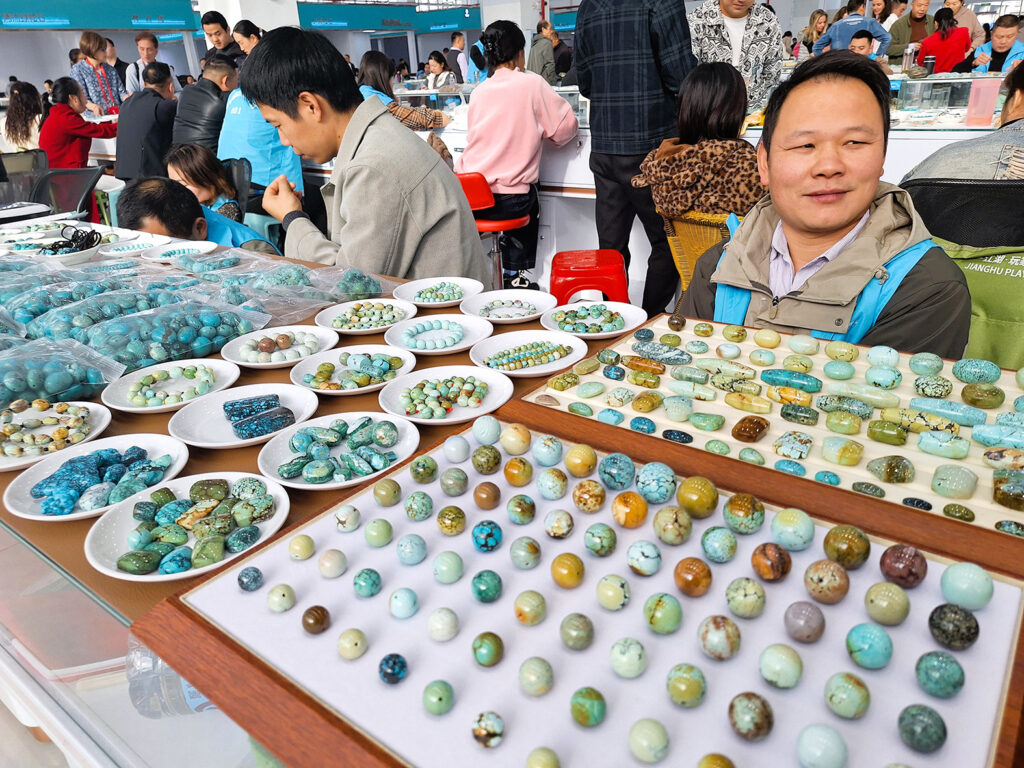
Our next stop was the Majiadu International Turquoise Trading Centre. Zhushan is known as China’s turquoise capital, and the centre demonstrated the scale of this reputation. Stalls displayed turquoise in a wide range of forms and qualities, with prices varying accordingly. Browsing was part of the experience and I eventually found a pair of earrings that captured the soft blue-green colour characteristic of the stone.
From Zhushan, we travelled to Zhuxi County, where we spent the night at the Taohua Island Rammed Earth Town Homestay, one of the most distinctive hotels of the entire journey. Built using rammed earth, stone and wood, the structures echo traditional local architecture. The atmosphere was quiet and reflective, with rooms arranged around themed courtyards decorated with clay sculptures. Dinner featured local specialities, generous and well-prepared.
Later that evening, we visited Wuling Never Sleeps City, a lively area filled with lights, performances and food stalls, offering a glimpse of local nightlife.
Leaving our hotel the following morning, we travelled within Zhuxi County to Rammed Earth Town, a cultural and tourism complex built along the Longwang River using traditional materials. The site brings together architecture, ecology and intangible cultural heritage through workshops, small museums and craft spaces.
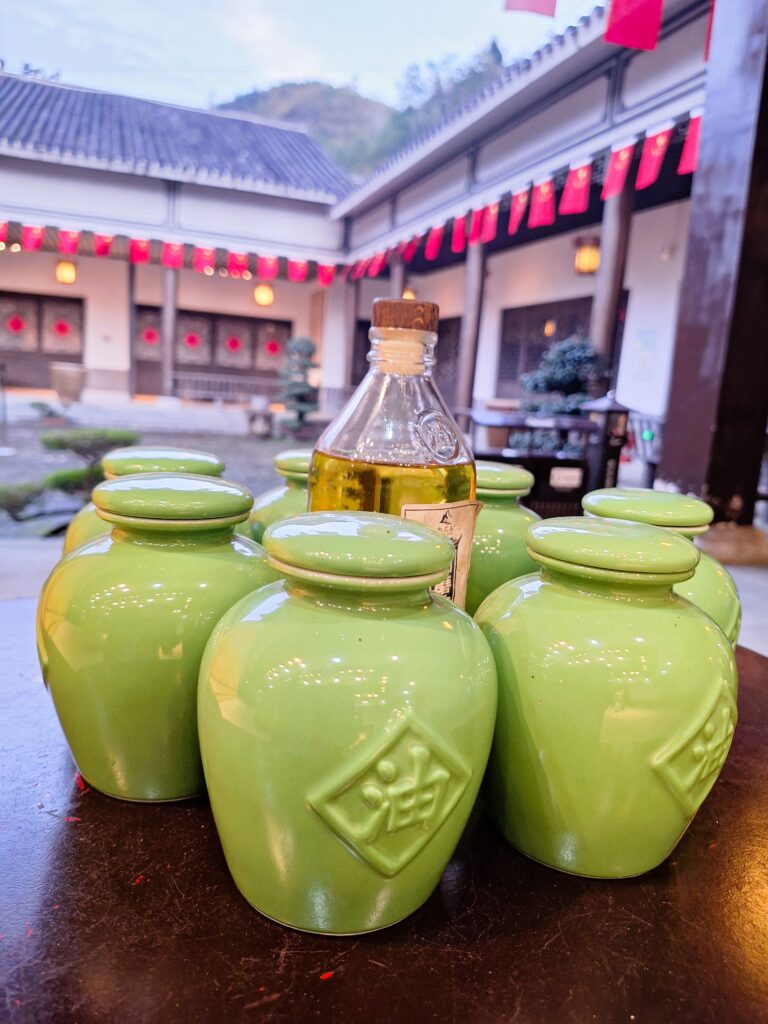
We then continued to the Taohua Island Oil Mill Museum, also in Zhuxi, where traditional oil presses and demonstrations illustrated techniques passed down through generations.
From Zhuxi, we travelled on to Fang County, known for its long-standing yellow rice wine tradition. Our first stop was Huatian Jiuxi Yellow Wine Folk Culture Village in Tucheng Town, where rice wine is still produced using traditional methods based on steamed rice, fermentation starters and time.
We then visited Beijing Zhonghe Fangxian Biological Food Co. Ltd, where the same principles are applied on a modern, large-scale level, with controlled fermentation, ageing and bottling.
The third stop was the Luling King Winery, also known as the Zhuangjiu Wangling Hall, which presents the cultural history of Fang County rice wine through exhibition spaces and tastings.
The cultural focus continued at the Luo Guoshi Art Museum, dedicated to the Fang County-born painter whose landscapes and floral compositions earned national recognition.
In the evening, we arrived at the Echeng Hotel in Fang County, where we spent our final night in Shiyan.
Our time in Shiyan was shaped by the depth of its cultural heritage, the beauty of its landscapes and the care of the teams who accompanied us throughout. Shiyan proved both generous and rewarding, setting a strong foundation for the days that followed in Suizhou.
To be continued.