
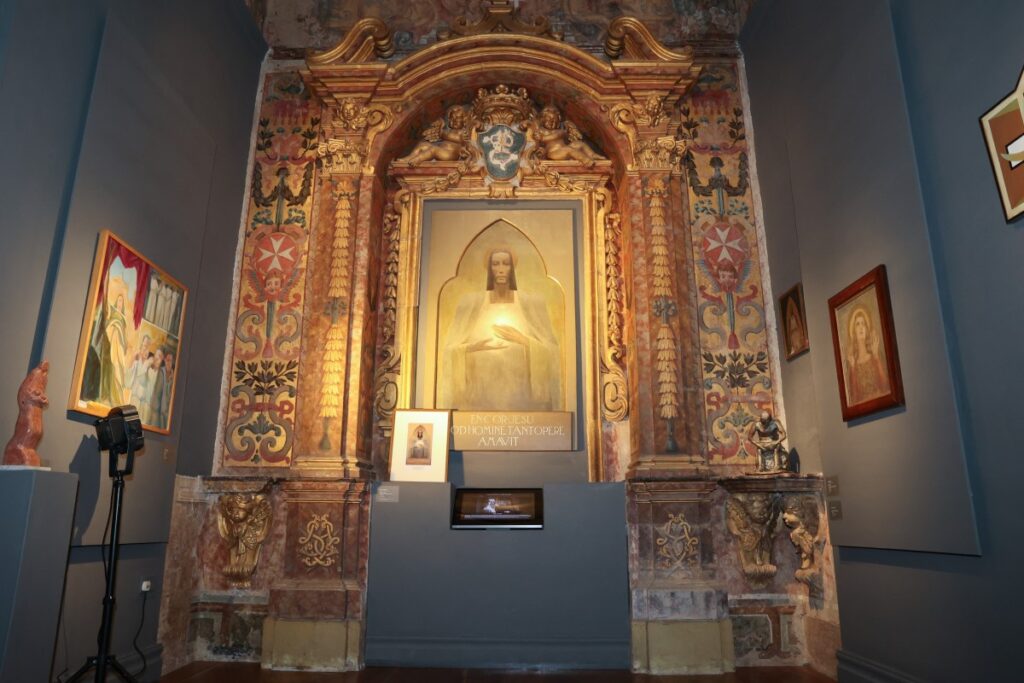
The Malta Society of Arts (MSA) has unveiled the restored Sacred Heart of Jesus (1943) by Maltese artist Anton Inglott (1915–1945), following a major conservation project carried out by Prevarti with the support of the HSBC Malta Foundation.
The painting, which forms part of the MSA’s permanent collection, will now be on display in the chapel at Palazzo de La Salle, the MSA’s historic seat in Valletta.
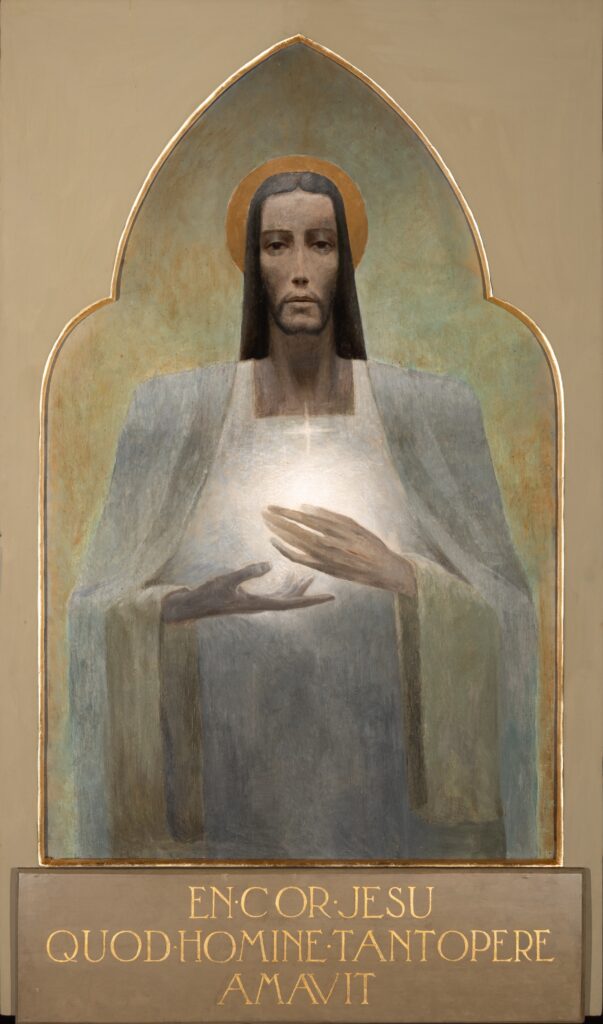
Painted on plywood during World War II, the work had suffered natural ageing and earlier restoration interventions. The conservation process involved meticulous cleaning and stabilisation, including the removal of discoloured varnish and accumulated surface deposits. This has allowed Inglott’s original colour palette and expressive treatment of light to re-emerge after decades of obscurity.
One of the most striking outcomes of the restoration is the renewed clarity of the light radiating from Jesus Christ’s heart – a bold and distinctly modern feature that reflects Inglott’s progressive approach to religious imagery at the time.
Research carried out during the project also revealed that the inscription beneath the painting had originally been gilded. The decorative frame was subsequently treated, and the gilding carefully reinstated using traditional techniques, restoring an important visual and symbolic detail. The painting’s physical restoration runs parallel to a complex history surrounding its original reception.
Inglott’s Sacred Heart of Jesus marked an important moment when it was donated to the MSA in 1943. It stirred immediate controversy due to the artist’s portrayal of Christ as a stylised and dark-skinned figure, and through the replacement of the heart with an abstract flood of light, which at the time was perceived as running counter to Catholic iconographic tradition.

The consecration ceremony was postponed indefinitely, and the painting was relegated to a storage space in the society’s basement.
Ultimately, Sacred Heart of Jesus was rejected in favour of a commission from Inglott’s close friend, Emvin Cremona (1919-1987), who painted a more literal, and therefore more conventional, version of the Sacred Heart. The two paintings are now on display in the MSA’s chapel, facing each other, positioned symbolically at opposite ends of the space.
Eventually, Inglott’s Sacred Heart of Jesus was rediscovered by a new generation of researchers and curators, and has since come to be recognised as a masterpiece of Maltese modern art.
Speaking at the unveiling of the restored painting, President Myriam Spiteri Debono praised such preservation and conservation initiatives not only for safeguarding local artistic and historical heritage, but also because it reflects the development of art over the years and, in many instances, is a reflection of the development and evolvement of society itself.
Reiterating the importance of the conservation of such artworks, Pierre Bugeja, head of restoration and founder of Prevarti, said: “This restoration has allowed us to rediscover Inglott’s original artistic intent, particularly his innovative use of light. It represents an important step in preserving a significant work within Malta’s artistic and cultural heritage.”
Manfred Galdes, chair of HSBC Bank Malta, which supported the restoration, said the initiative “goes beyond conservation; it is an act of preserving a vital chapter of Malta’s modern cultural history”. He added that the bank looked forward to participating in similar projects in the future.
While Roderick Camilleri, acting president of the MSA remarked that the restoration reaffirmed the society’s “ongoing commitment to cultural stewardship and to safeguarding our artistic legacy for future generations”.
Anton Inglott bio
Anton Inglott (1915–1945) was a prominent Maltese artist known for his expressive, spiritual works and poignant depictions of wartime Malta. Born in Ħamrun on New Year’s Day, he showed early talent in drawing and studied at the Government School of Art under the Caruana Dingli brothers.
In 1938, he furthered his education at the Regia Accademia di Belle Arti in Rome, where he was deeply influenced by the Italian Renaissance. Returning to Malta in 1940 due to World War II, Inglott created powerful wartime drawings and religious works despite his declining health from diabetes.
Inglott died on August 15, 1945, aged 30, leaving behind a wife, a young daughter, and a legacy celebrated in numerous exhibitions and retrospectives over the decades.
The official unveiling of the restored Inglott painting, together with the Malta Society of Arts’ Gold Medal Ceremony for 2025 honouring Darrin Zammit Lupi, will be aired on TVM+ on February 20 at 9.15pm. For more details about the Malta Society of Arts, visit www.artsmalta.org or www.facebook.com/maltasocietyofarts.