




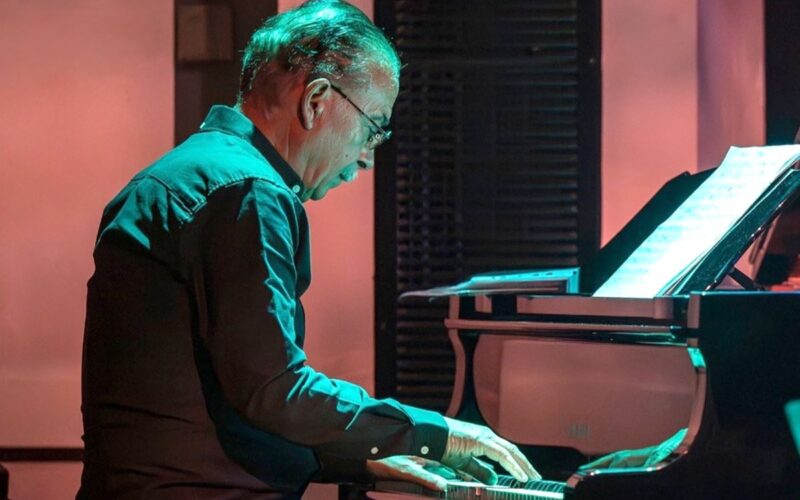
When pianist and composer Ray Agius received a call from his friend, pianist Dominic Galea, in the summer of 2024, he had no idea what would follow.
Aware of Agius’s fascination with jazz in the 1970s and convinced he must have some original compositions from that time tucked away somewhere at home, Galea contacted him, asking to hear them.
And, after meeting at the songwriter’s home to listen to them, he “fell in love with them”, recalled Agius.
What followed was a whirlwind resurrection of compositions Agius had not thought about for years, because Galea, CEO of the National Agency for the Performing Arts (NAPA), was midway through planning the launch of a new jazz festival, Jazz Assemblea, which debuted that year.
“He [Galea] asked if he could play my compositions with his band at the festival and said we would eventually do an album – and it all started from there,” explained Agius, adding the experience had felt “too good to be true”.
While Agius was initially reluctant to play on the album – Galea’s “one condition” for the project – he eventually agreed, and the Supernova studio album was born.
Premiered at the end of last year, the eight-track album, much like its cover art by the late percussionist and visual artist Charles ‘City’ Gatt, evokes an intimate, warm aesthetic swathed in cool modernity – and is one that does not disappoint.
Displaying satisfying horn-writing throughout, including effective use of unison parts, the album is replete with the agile, darting melodies reminiscent of the era in which Agius’s compositions were born.
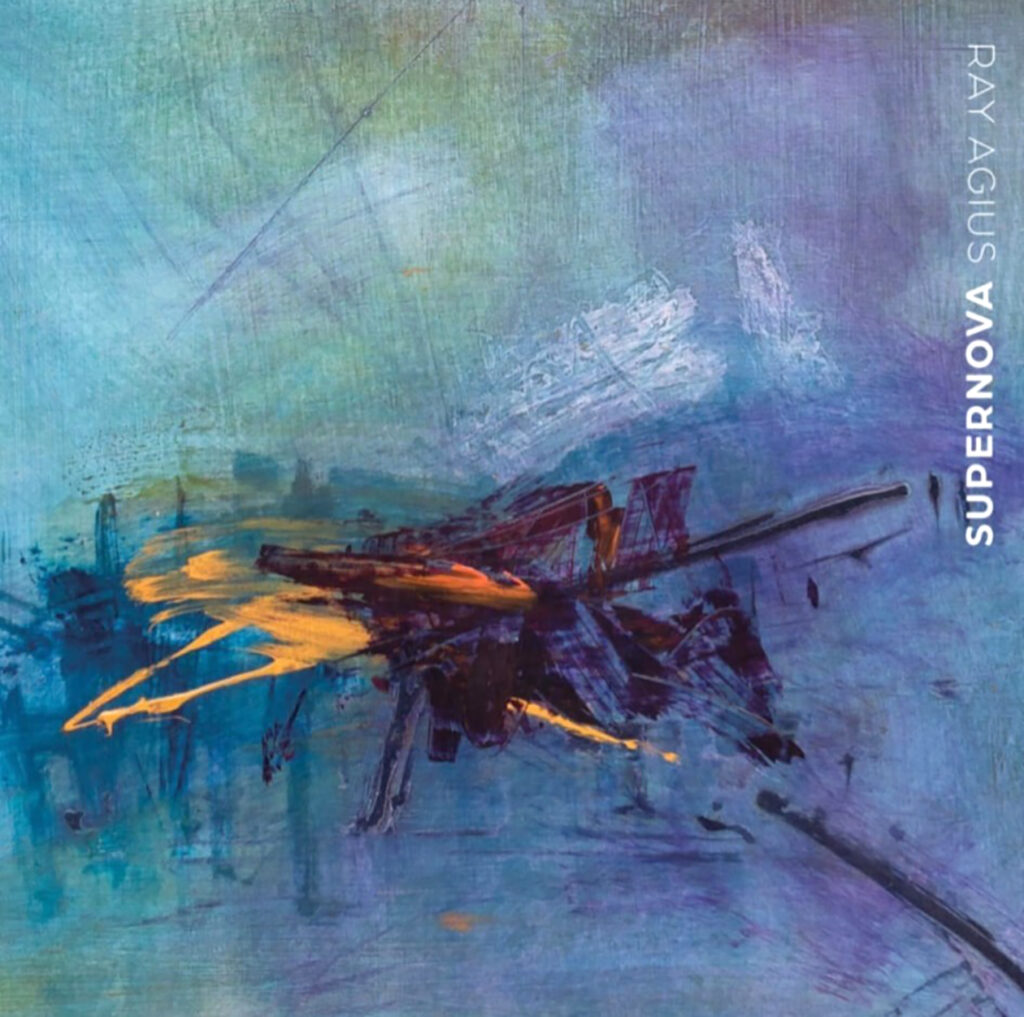
The record’s harmonic progressions, especially on the vinyl’s side A (tracks one to four) are satisfying and idiomatic – without feeling trite – while side B, particularly the fusion jazz fifth track Higher Dimension, expands into more experimental territory buoyed by well-chosen flute, electric piano and percussion (in particular, rimshot) contributions.
There is a lot to like in this album; the record begins strongly with the Dave Brubeck-infused Traffic Jam, continuing with the atmospheric ballad In Your Embrace and the catchy yet surprising Keep Going.
“I had started playing in clubs, then one night Charles [Gatt] came to me and told me he needed a pianist for the band – and that’s how [the ensemble] Supernova started”
The album’s fifth track, the yearning ballad Missing You, contrasts well with the preceding experimentation in Higher Dimension, while the seventh track Logħba, as the name (game) suggests, evokes a playful (and Latin-inspired) lilt.
Supernova is well-placed as the title and final track, summoning an infectious groove and, seeming to bring the album full circle, evoking the jazz of the 1970s and preceding decade. The record is artfully mixed throughout, evoking an intimate aesthetic reminiscent of the same era.
‘Jazz helped me’
Agius describes the album as an homage to a jazz ensemble by the same name he used to perform with in the 1970s, comprising himself, Gatt, Joe Arnaud on flugelhorn and bassist Tony Almerigo.
“I had started playing in clubs, then one night Charles [Gatt] came to me and told me he needed a pianist for the band – and that’s how [the ensemble] Supernova started.”
The move into jazz marked a departure from Agius’s classical musical education and influenced his later songwriting, he explained.
“Jazz helped me – the phrasing of the tunes, the chord progressions, musical arrangements; it’s there at the back of your mind when you’re composing.”
Agius is well-known for penning some of Malta’s most beloved pop tunes, including L-Ewwel Tfajla li Ħabbejt, a song made famous by the Malta Bums and co-written with lyricist Alfred C. Sant, who also provided lyrics for the fourth track on the Supernova album, For Old Times’ Sake, performed artfully by singer Nadine Axisa.
Other well-known hits composed by Agius include Fjura fil-Kantina, Sa l-Aħħar, Dak kien Żmien and Fejn Tħobb il-Qalb, in addition to his numerous Eurovision entries which include Keep Me in Mind, sung by Mike Spiteri, and Let Me Fly, performed by Debbie Scerri.
‘It brought back memories’
After playing with Supernova, Agius began performing with other well-known jazz players on the local scene, including the late saxophonists Sammy Murgo and Val Valente.
“The album really brought back all those memories – when we started recording and rehearsing, it was really emotional for me,” he said, while adding the record also includes tracks written in the past few years in addition to older works.
“Jazz is part of my life and the one I listen to the most, but when you come to performing after not being in the scene for a while… it was a bit [difficult], but I wanted to do it,” said Agius, adding, “It’s all thanks to Dominic [Galea]; I really have to thank him.”
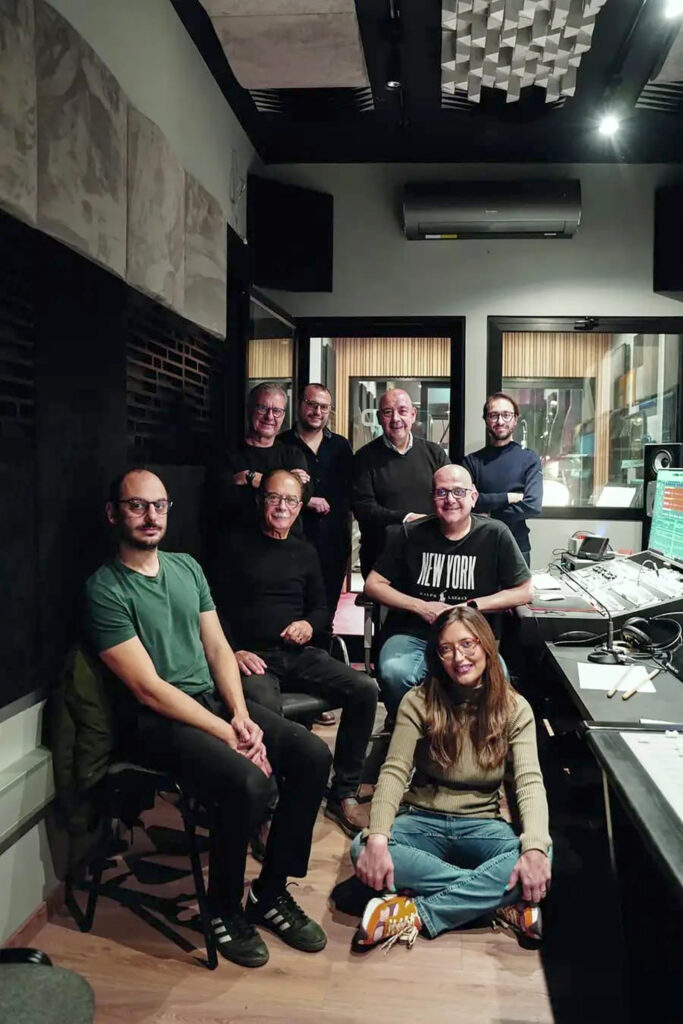
Galea was not just responsible for getting the project off the ground – including helping to secure funding from NAPA – he also served as executive producer and shared piano duties on the album, playing piano on half the tracks.
The pair was joined by saxophonist and flautist Walter Vella, Alex Bezzina on trumpet and flugelhorn, bassist Oliver Degabriele and drummer and percussionist Ġużè Camilleri.
The album was recorded, mixed and mastered by producer Manolito Galea at Lito’s Place Recording Studio in Swieqi, with cover design by Ivan Scibberas and photos by Robert Camilleri.
What does Agius hope audiences take away from the album?
“I hope that listeners who are interested in jazz will be able to look at the memories of where I started… because it was from there that I started my voyage.”