
Gustave Klimt’s later paintings offered a visual diagnosis of a society struggling with desire, decay and identity. Together with Sigmund Freud, the founder of psychoanalysis, he exposes a shared concern: the conflict between civilisation’s restraints and the darker, instinctual forces beneath them.
Klimt’s work reflects the struggle between ego and superego within society. The elaborate gold patterns and ornamental surfaces in paintings such as The Kiss can be read as cultural masks − beautiful, controlled and decorative − overlaying intense emotional and sexual undercurrents.
Beneath the surface harmony lie vulnerability and loss of control. This duality parallels Freud’s view of civilisation itself. Freud argued that society depends on repression to function; yet this repression inevitably produces dissatisfaction and psychological strain.
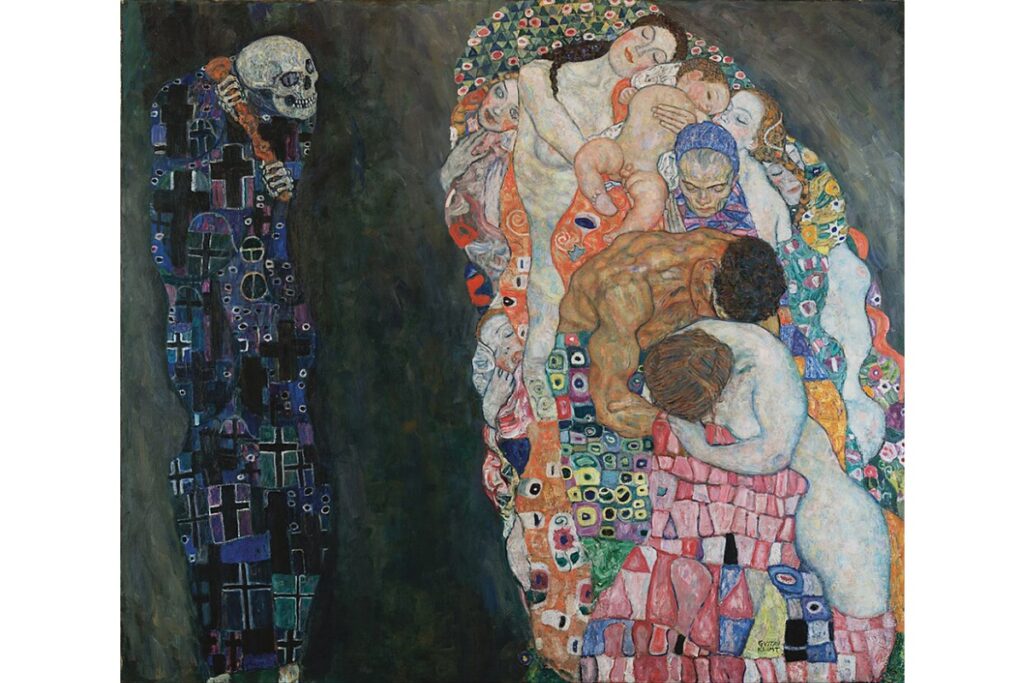
Klimt’s later works seem to agree: civilisation’s beauty is inseparable from its anxiety. In Death and Life, for instance, human figures are clustered
together in vibrant patterns, symbolising vitality and connection, while death looms nearby, indifferent and inevitable. The painting suggests that despite cultural refinement and communal bonds, individuals remain powerless against deeper forces − mortality, instinct and fate.
The unconscious made visible
Perhaps the strongest connection between Freud and Klimt lies in their shared fascination with the unconscious. Freud sought to make the unconscious intelligible through analysis and language. Klimt made it visible through symbolism, distortion and emotional intensity.
Klimt’s fragmented bodies, ambiguous expressions and dreamlike compositions resemble the logic of dreams Freud described − where desire, fear and memory merge without rational structure.
Klimt’s art does not offer moral resolution or narrative clarity; instead, it confronts viewers with psychological truths they may prefer to avoid.
Freud’s theory of personality
Freud’s theory of personality is grounded in the belief that human behaviour is largely driven by unconscious processes. Freud divided the psyche into three interacting components: the id, ego and superego.
The id is the most primitive part of the personality. It operates according to the pleasure principle, seeking immediate gratification of instinctual drives such as sex, aggression and hunger. The id is irrational, amoral and unconscious, representing raw biological impulses.
The superego, by contrast, embodies internalised social rules, moral standards and parental authority. It judges actions according to ideals of right and wrong, often generating guilt or shame when desires conflict with social norms.
The ego mediates between these two forces. Governed by the reality principle, the ego attempts to satisfy the id’s desires in socially acceptable ways, balancing instinctual urges with moral constraints and external reality. Freud believed that psychological tension arises from conflicts among these three components.
“Klimt’s art and Freud’s theory remain profoundly modern”
When the ego struggles to manage these conflicts, anxiety results and individuals rely on defence mechanisms − such as repression, denial or sublimation − to protect themselves from psychological distress.
Importantly, Freud argued that repression does not eliminate forbidden desires; instead, they return in disguised forms, influencing dreams, neuroses and creative expression.
Vienna, repression and the cultural unconscious
Freud’s ideas did not emerge in isolation. Fin-de-siècle Vienna was marked by rigid social conventions, sexual repression and a strong emphasis on outward respectability.

Public morality clashed sharply with private desire. Freud interpreted this contradiction as psychologically damaging, arguing that excessive repression intensified neurosis and inner conflict.
This same cultural tension deeply influenced Klimt. While Freud diagnosed repression in the individual psyche, Klimt diagnosed it in the collective psyche of Viennese society. His later works expose what polite society attempted to conceal: erotic desire, death, anxiety and the fragility of identity.
Klimt’s later work: a visual diagnosis
Klimt’s early success came through decorative and allegorical commissions, but his later works − especially after his break with the Vienna Secession − became increasingly introspective, erotic and unsettling. Paintings such as Judith II, Danaë, Death and Life, and The Three Ages of Woman abandon idealised classicism in favour of psychological intensity.
In Freud’s terms, Klimt’s art gives form to the id. His figures are sensual, exposed and often absorbed in pleasure or suffering. Sexuality is not romanticised but depicted as overwhelming, compulsive and sometimes destructive.
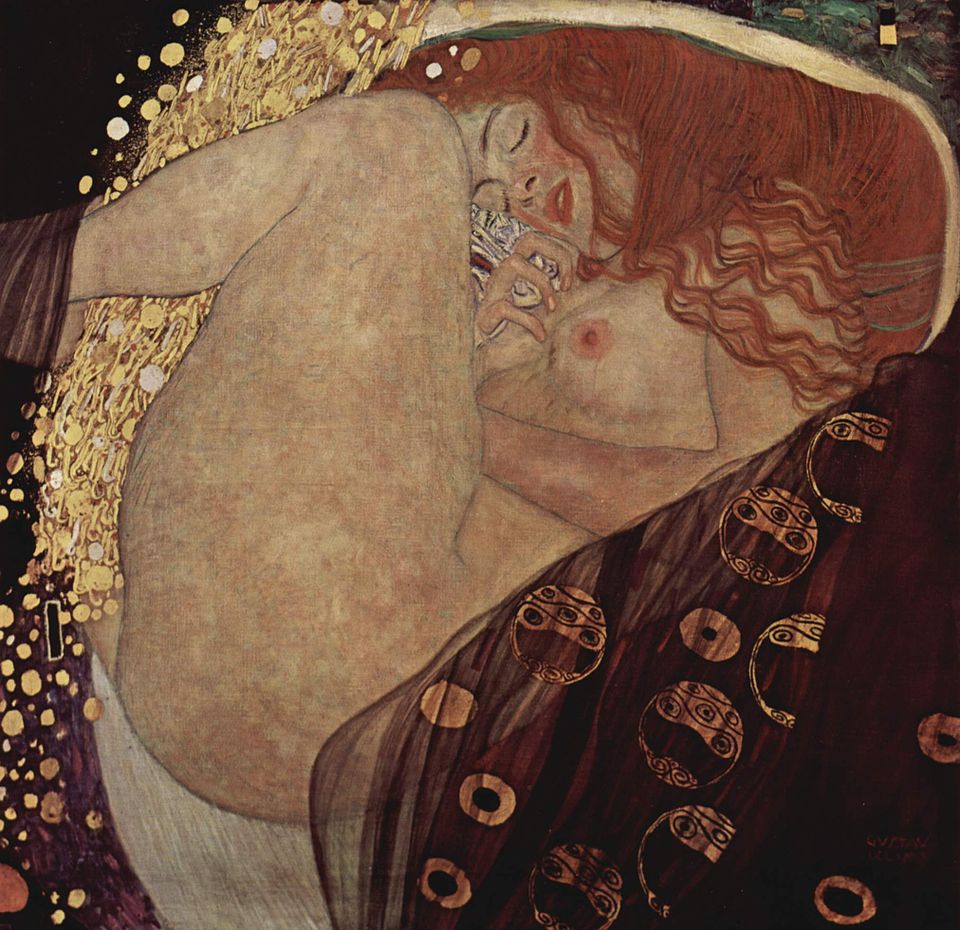
In Danaë, for example, the woman is curled inward, engulfed by erotic sensation, detached from social context − an image that resonates strongly with Freud’s emphasis on instinctual drives overpowering rational control. At the same time, Klimt frequently portrays female figures as threatening or ambivalent, reflecting male anxiety towards desire. This tension mirrors Freud’s notion that repressed sexual energy returns in distorted or troubling forms.
Freud and Klimt, working within the same cultural moment, offered parallel diagnoses of human experience. Freud’s theory of personality exposed the inner conflict between instinct, morality and reality, revealing how repression shapes behaviour and suffering.
Klimt’s later work extended this diagnosis to society as a whole, portraying a civilisation glittering on the surface while roiling with desire, anxiety and decay beneath. Together, Freud and Klimt challenge the illusion of rational control. They insist that beneath culture’s elegance lies the unconscious and that ignoring it − whether in the individual or in society − comes at a psychological cost.
In this sense, Klimt’s art and Freud’s theory remain profoundly modern, reminding us that self-knowledge begins where comfort ends.