
Ever since pen was first put to paper, literary heroines have leapt off the page, often as literature’s most nuanced characters. Whether plucky and confident, pushing the boundaries of society, or increasingly empowered in their own quiet ways, it is no surprise that fictitious females reveal much about the world.
So, to celebrate International Women’s Day 2026, here’s 10 favourite literary luminaries (in no particular order) to uncover what they can teach us about living.
1. Jane Eyre (1847) by Charlotte Brontë
“I am no bird; and no net ensnares me: I am a free human being with an independent will.” So says Jane Eyre in one of literature’s most famous lines. She overcomes a dreadful childhood, impoverished circumstances and social inequality (as well as the indignity of finding out the man she loves is already married) through a strong sense of self-worth. Described throughout the novel as small and plain, Jane demonstrates an innate sense of endurance, independence and self-belief, no matter what she faces.
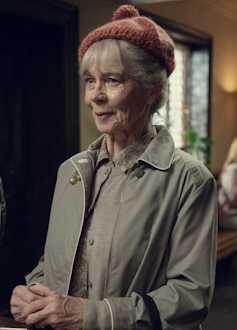
2. Joyce, The Thursday Murder Club (2020) by Richard Osman
Very fond of a slice of cake and known for being generous to everyone, Joyce Meadowcroft is a key narrative voice in Osman’s popular crime series. Like Miss Marple before her, Joyce has a keen sense of right and wrong, alongside razor-sharp observation skills. Not afraid to get stuck in, this 77-year-old former nurse reminds us not to underestimate older people.

3. Offred, The Handmaid’s Tale (1985) by Margaret Atwood
The dark events of The Handmaid’s Tale are recounted from the perspective of Offred, who is often considered a resigned and compliant narrator. Memories of her former life with her family, alongside the strong and often bleak narrative voice exhibited throughout, reinforce that quiet protests or simply overcoming silence can be a means of survival.
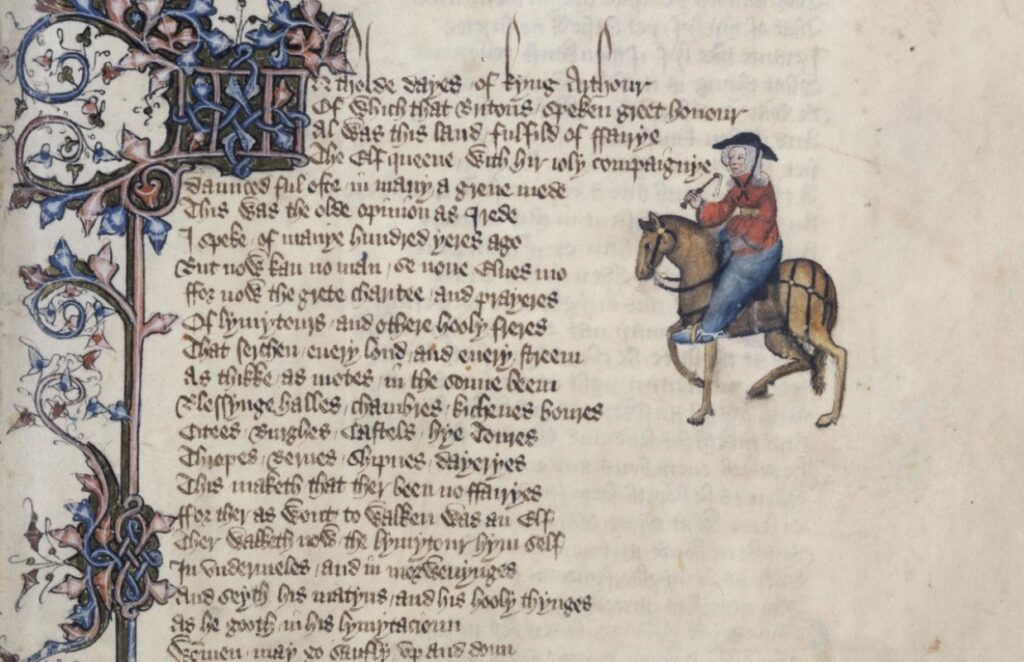
4. Wife of Bath, Canterbury Tales (c. 1400) by Geoffrey Chaucer
Recognised as the “first ordinary and real woman in English literature” by the University of Oxford’s Marion Turner, the Wife of Bath broke the mould back in 1400 by declaring that sexual freedom was a positive, and women should not be defined or constrained by their partners (five husbands in her case!). Advocating for the freedom to be (and be with) who you want, creating a 600-year legacy? Many would hope to be as influential.
5. Kahu, The Whale Rider (1987) by Witi Ihimaera
Named after her ancestor, an original whale rider, Kahu Paikea Apirana is our youngest protagonist. As she is female, the prejudices of society – particularly, and most poignantly, those of her influential great-grandfather – ensure she is not considered as the rightful heir to the chieftainship of her Māori community. But through her ability to communicate with whales, Kahu unites her family and the natural world. The Whale Rider is a profoundly moving story that reminds us our connection with the environment should always be harmonious.
6. Orlando (1928) by Virginia Woolf
Influenced by Shakespeare’s As You Like It, Orlando is potentially what Jeanette Winterson calls “the first English language trans novel”. Initially a 16th-century nobleman, Orlando awakes at the age of 30 in 1920s England, having been transformed into a woman. Thought to be based on Woolf’s lover and friend Vita Sackville-West, the character of Orlando reminds us that we must always be true to who we are.
7. Olivia, The Woman of Colour: A Tale (1808), Anonymous
The protagonist of this Regency drama is the first Black heroine in a European-set novel. Facing prejudice from her English relations, Olivia firmly alters preconceived notions and stereotypes about her skin colour, intellect and background. Upon learning of her new husband’s wrongdoing (like Jane Eyre’s Rochester, he is already married), Olivia dissolves the marriage and takes her dowry home to Jamaica, where she aims to improve the lives of her countrymen. Published just a year after the 1807 abolition of the slave trade across the British Empire, Olivia inspires us to take an interest in world events, foster empathy and stand up to prejudice.
8. Rosalind, As You Like It (1600) by William Shakespeare
Perhaps Shakespeare’s best creation (overall, not just female), Rosalind has the most lines of any of his female characters. And unlike many of the Bard’s other characters, Rosalind speaks throughout the play in prose, disparaging love poetry. Even more unusually, she has the last word in delivering the epilogue. Shakespeare’s bold heroine encourages us to be unafraid to speak our own minds.
9. Eleanor, Eleanor Oliphant is Completely Fine (2017) by Gail Honeyman
Facing a consistently empty existence, Eleanor is a character facing profound loneliness. It is not until her colleague Raymond becomes a firm friend, and accepts her as she is, that Eleanor begins to recognise her isolation. This novel’s heroine prompts us to remember the human need for connection, and the importance of having understanding friends.
10. Scheherazade, One Thousand and One Arabian Nights (circa 900), folk tale
Complex and multilayered, the first version of Scheherazade’s tale was a manuscript found in Cairo in the 9th century. Since then, her stories have woven their way through the centuries and across continents.
Scheherazade is the new bride of a vindictive sultan whose first wife was unfaithful. He vows to take revenge on womankind by taking a new virgin bride every night and executing her the next morning.
But Scheherazade’s wit, intelligence and storytelling prowess enable her to tell enthralling, unfinished tales every night. This means she stays alive for 1,001 nights, saving herself and the women of the kingdom. Patience, persistence and selfless concern for the welfare of others are all tenets this original storyteller embodies.
This article is written by Amy Wilcockson, a research fellow, English Literature, Queen Mary University of London. It is being republished from The Conversation under a Creative Commons licence. Read the original article.