
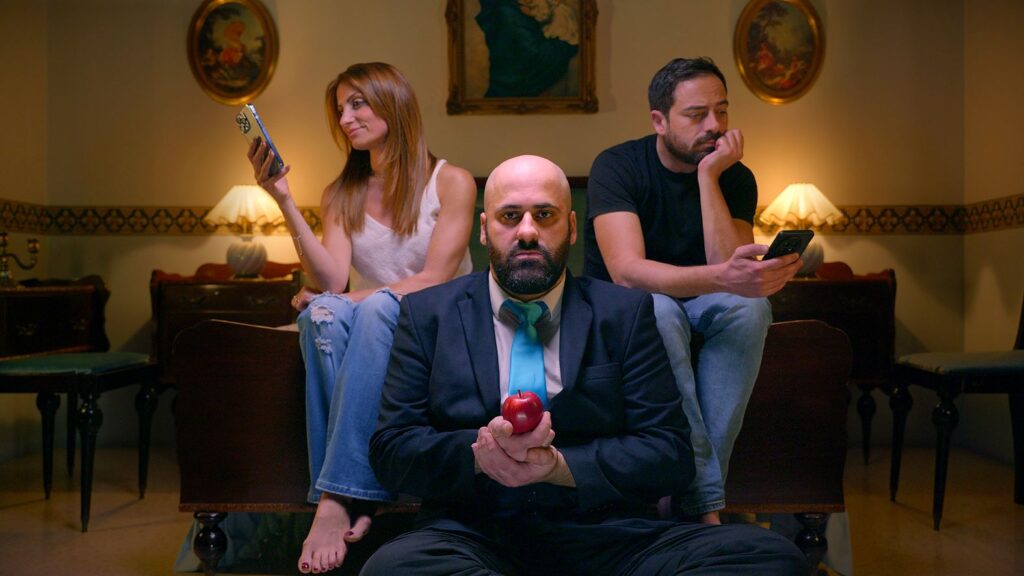
A contemporary drama inspired by Holy Week is being staged at the Black Studio, Malta School of Drama and Dance, Pietà, from March 18 to 29.
Written by Stefan Galea Debono and directed by Karl Schembri, Sa Ma l-Mewt Tifridna (Till Death Do Us Part) offers an original take on Holy Week productions by drawing parallels between a marriage on the brink of collapse and the story of Jesus’s Passion.
Schembri recounts that while studying for a diploma in drama and acting, he and Galea Debono wrote and performed a short duologue featuring two characters discussing an apple.
The crux of the discussion centred on the true value of religious faith: believing with humility, devoid of greed and self-centredness. From then onwards, they began discussing whether such a piece could be adapted into a stage play featuring a relatable theme.
“Marriage and relationships are timeless subjects that resonate with a wide array of audiences. They also require patience that comes with a certain degree of sacrifice – notions that can be related to the Passion story,” Schembri says.
In the play, married couple Josue (Mark Mifsud) and Mariah (Alison Abela) are stripped of the idyllic façade they have long maintained and are forced to confront ‒ and make peace with ‒ the harsh truths they have been avoiding for a long time.
“Jesus Christ chose to follow God’s will, enduring suffering out of love to redeem humanity and bring salvation from sin. Similarly, Josue and Mariah are compelled to endure suffering to redeem their past mistakes and, hopefully, save their marriage,” the director explains.
“This journey involves confronting unresolved issues such as betrayal − reminiscent of Judas’s betrayal of Christ − and the pain of a mother losing her child − mirroring the Virgin Mary’s sorrow over her son’s suffering.”
The plot
At the start of the play Josue and Mariah’s relationship seems to be the epitome of a loving marriage.
Another character, the Moderator (Schembri), then introduces them as a couple who have overcome a series of problems which has put their marriage to the test and are now finally eligible for an undefined prestigious prize in recognition of their profound love.

However, in this final trial, presented as a last supper between the two, reminiscent of Jesus’s Last Supper with his disciples, the Moderator asks them to discuss the definition of the apple, which symbolises the forbidden fruit in the Garden of Eden.
The apple, which the couple meddles with against the rules specified by the Moderator, ends up shattering egos and reopening old wounds, forcing inevitable conflict.
“Discussions about the apple stir long-buried problems they are wholly unprepared to face, which is precisely what the Moderator had hoped would happen,” Schembri points out.
“The couple, eager to know what the prize is and faced with the Moderator’s constant refusal to give any answer, are pushed by him to, like Jesus Christ, face passion and darkness to reach salvation.“
“This journey involves confronting unresolved issues such as betrayal − reminiscent of Judas’s betrayal of Christ − and the pain of a mother losing her child − mirroring the Virgin Mary’s sorrow over her son’s suffering“
In the couple’s case, salvation means confronting the truth they desperately need to face but have long avoided.
The audience will witness whether the mysterious prize, which will eventually be revealed, leads them to accept the truth without conflict and to honour their wedding vows “till death do them part”.
How much should one compromise for love?
Among the issues the play addresses are those of individual dignity and self-interest in relationships.
Josue strives for moral perfection, modelling himself on Jesus Christ − a trait that once drew Mariah to him.
Yet, throughout the marriage, Mariah has constantly swallowed her pride to maintain the peace between them.
“One of the questions I would like to address in this play is whether taking care of oneself and prioritising one’s own interests at all costs is beneficial or harmful to marriages and relationships,” Schembri says.
“Without generalising, in my view, an excessive focus on self-interest might have interfered with harmony in relationships, which often depends on compromise…”
He adds that, nonetheless, he believes that walking out of abusive relationships is “a must”.
“It is never easy, though, to determine whether a relationship is healthy when gaslighting is involved,” he adds.
Audiences will be invited to put themselves in both characters’ shoes and assess to what extent such a situation is acceptable.
“My intention is to avoid being patronising or didactic, leaving the audience to form their own conclusions about whether the marriage between Josue and Mariah could work, and whether marriage in general still carries a prestigious value,” Schembri says.
“I believe that the beauty of theatre lies in allowing the audience to reflect on and discuss salient issues in life; issues that are sometimes not addressed as often as they should be.”
Sa Mal-Mewt Tifridna is being staged on March 18, 19, 27-29 and is suitable for an audience aged 15+. Tickets from ticketline.com.mt.