
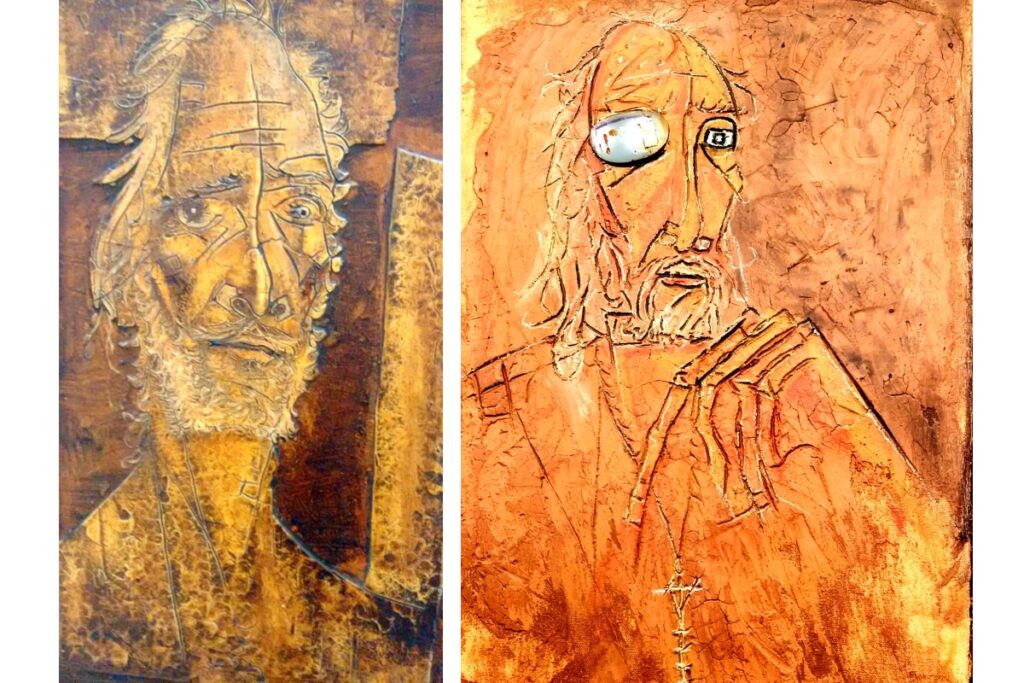
Mario Azzopardi (1944-2022) and Antoine Camilleri (1922-2005) stand as two of Malta’s most uncompromising modernists, functioning almost as artistic alter egos. Working in literature and visual art respectively, they enacted parallel acts of dissidence in a post-colonial Malta still negotiating its cultural identity.
Modernism, for them, was not merely an imported aesthetic but a struggle for expressive freedom. Each fashioned himself as a Christ doppelgänger: not as a devotional icon sanctioned by institutions but as an existential Dostoevskian figure who exposes himself to suffering and engages with contemporary concerns.
Modernism in Malta emerged as an act of defiance, born of dissatisfaction with inherited forms and a need to speak truthfully about contemporary experience. In literature and visual art alike, this meant dismantling traditions that had become asphyxiating.
Azzopardi and Camilleri, though working in different media, share a strikingly similar ethos: a refusal of aesthetic comfort, a commitment to dissidence, and an intensely autobiographical mode of creation in which the self becomes both subject and instrument.
Azzopardi emerged in the 1960s as one of the most outspoken activists of the time and a leading voice of the Moviment Qawmien Letterarju. He dismantled the romantic legacy of Dun Karm Psaila and its reverential treatment of faith and nation. Free verse became his primary tool of liberation.

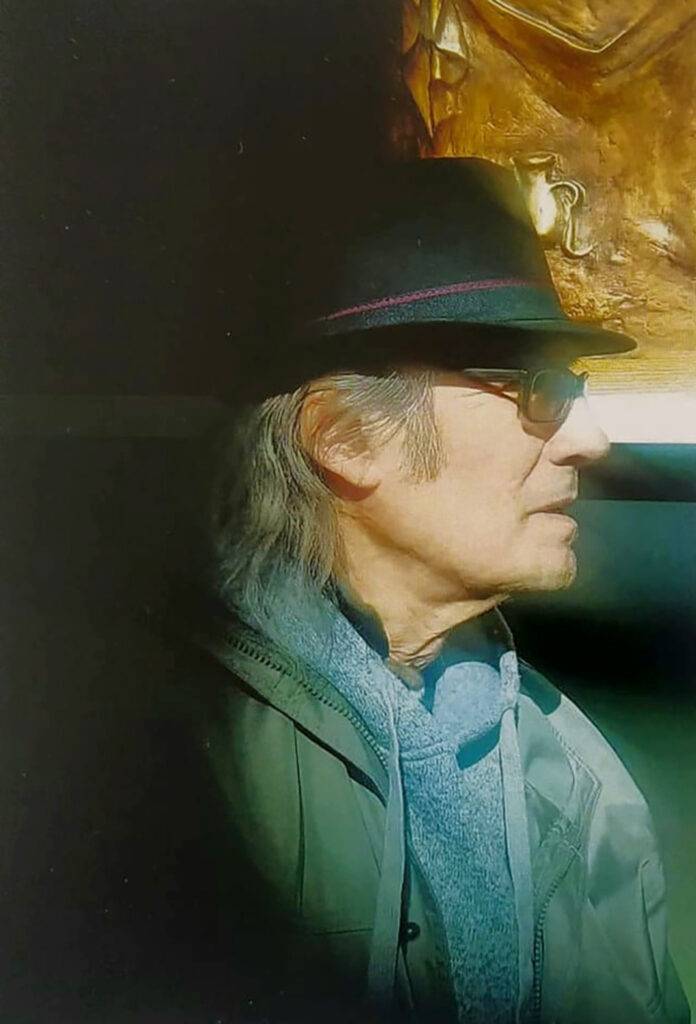
Inspired by the English and American Beat Generation poets and strongly influenced by the Soviet dissident poets, Azzopardi rejected metre and rhyme in favour of forms governed by the rhythms of breath, thought and expressive urgency. His poems unfold through juxtapositions of unexpected images and abrupt leaps of imagery that deliberately disrupt logical continuity, forcing the reader into an active role in the construction of meaning.
A parallel modernist urgency animates Camilleri’s work. From the late 1950s, Camilleri rejected the security of traditional painting, progressively leaving the canvas and embracing experimentation as an existential necessity. Exceptionally prolific, he combined mastery of line and graphic design with tireless experimentation with objets trouvés, from spaghetti and rabbit bones to eggshells and flowers.
Like Azzopardi, Camilleri sought a language capable of confronting contemporary reality rather than reproducing inherited forms. Art, for him, demanded intellectual engagement and philosophical questioning. “You cannot just see with your eyes,” he insisted. “You must see with your mind and question things.”
Experimentation and protest were inseparable in their practice.
“Azzopardi and Camilleri, though working in different media, share a strikingly similar ethos: a refusal of aesthetic comfort, a commitment to dissidence, and an intensely autobiographical mode of creation in which the self becomes both subject and instrument”
Azzopardi collapsed the divide between literary and spoken language, grounding his work in everyday Maltese speech and introducing words long considered inappropriate for poetry. His poems attacked the Church as politically complacent, dismantled patriotic myths and exposed the psychological residue of colonial subservience.
Poetry became a social act, performed in streets and public spaces as much as on the page. In a deeply Catholic society, such transgressions rendered his work dangerous.
Camilleri’s protest took visceral, material form. Works such as Concentration Camp and Conflict confront historical and racial violence not through representation but through materiality. Rusted metal, barbed wire and tangled spaghetti evoke suffering at a sensory level, forcing viewers into an uneasy encounter with trauma. Later works incorporating rabbit bones, such as Protest Cry and The Human Tragedy, responded to contemporary conflicts, including the wars in Serbia and Kosovo, transforming animal bones into human skeleton-like forms.
The anarchic traditionalism of both figures is inseparable from their embodiment of the Christ doppelgänger. Azzopardi’s rebellion draws on traditional spirituality, aligning himself with the prophet, pilgrim, mystic or ascetic, transforming suffering and marginality into social critique. Camilleri enacts a parallel stance through self-portraits that cast him as a Christ-like figure confronting human vulnerability and societal contradictions.
In both, the Christ-like self becomes a site of endurance, dissidence and revelation, where personal suffering and artistic experimentation illuminate broader existential truths.
Their challenge, therefore, is not to tradition per se but to its institutional rigidity: they are anarchic in rejecting imposed norms, yet remain profoundly rooted in Christian tradition.

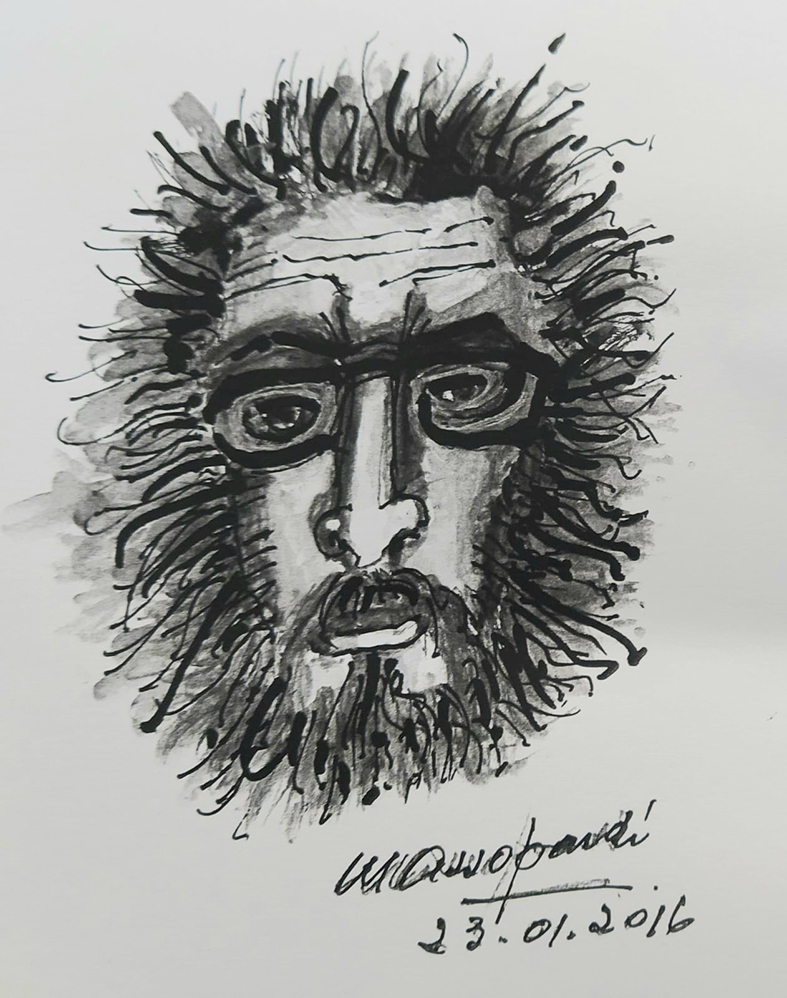
The autobiographical dimension intimately links the two. Azzopardi fashions himself poetically as an outsider, self-exiled from collective conventions and religious certainties. Camilleri’s art is similarly autobiographical. His endless self-portraits, also incorporating his own medical certificates, x-rays or even surgical tools, function as a material diary in which he confronts physical and psychological vulnerability.
In both cases, however, autobiography is not confessional in a sentimental sense. Rather, it is transfigured into a universal manifestation of the human condition. Azzopardi’s private anguish becomes a metaphor for collective angst, while Camilleri’s introspection expands into a broader meditation on human vulnerability.
In their respective fields, both artists redefined what it meant to create in a post-colonial Malta. They resisted inherited conventions, challenged audiences and demanded that art and literature be lived, questioned and fully experienced.
Camilleri’s meditative, sometimes mystical vision and radical experimentation in materials complement Azzopardi’s restless linguistic exploration. They both risked disturbance, refused easy answers and remained fully engaged with the historical moment they inhabited.