
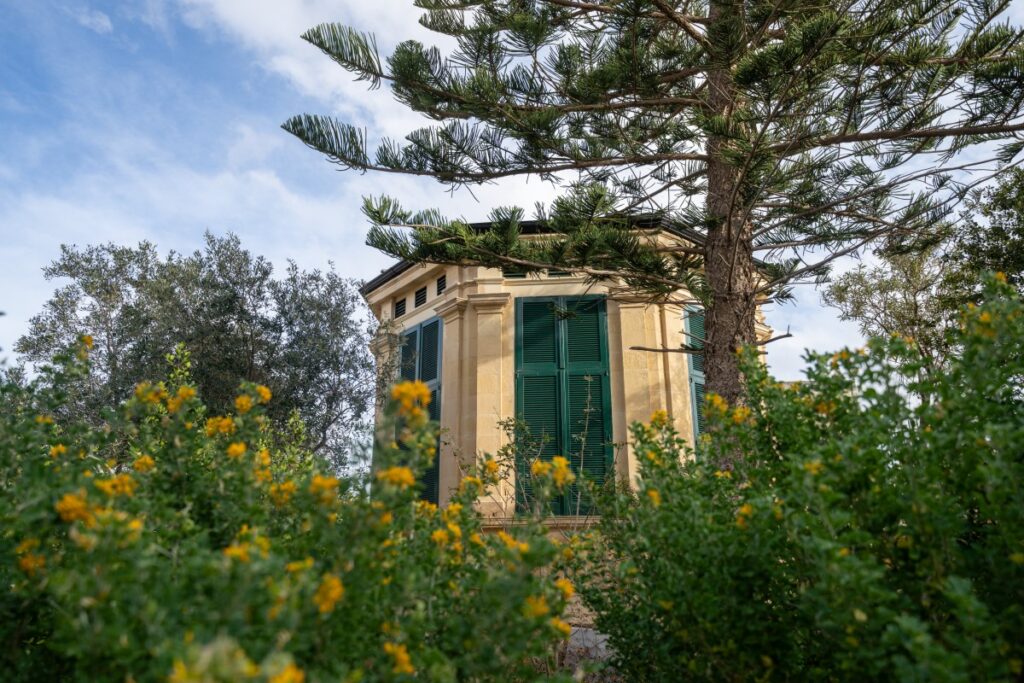
Heritage Malta has reached the final stages of restoring a historic building located at the entrance to its own headquarters in Bighi, Kalkara. Although small, the structure immediately attracts attention because of its unusual shape. In fact, it is one of the rarest examples in Maltese architecture.
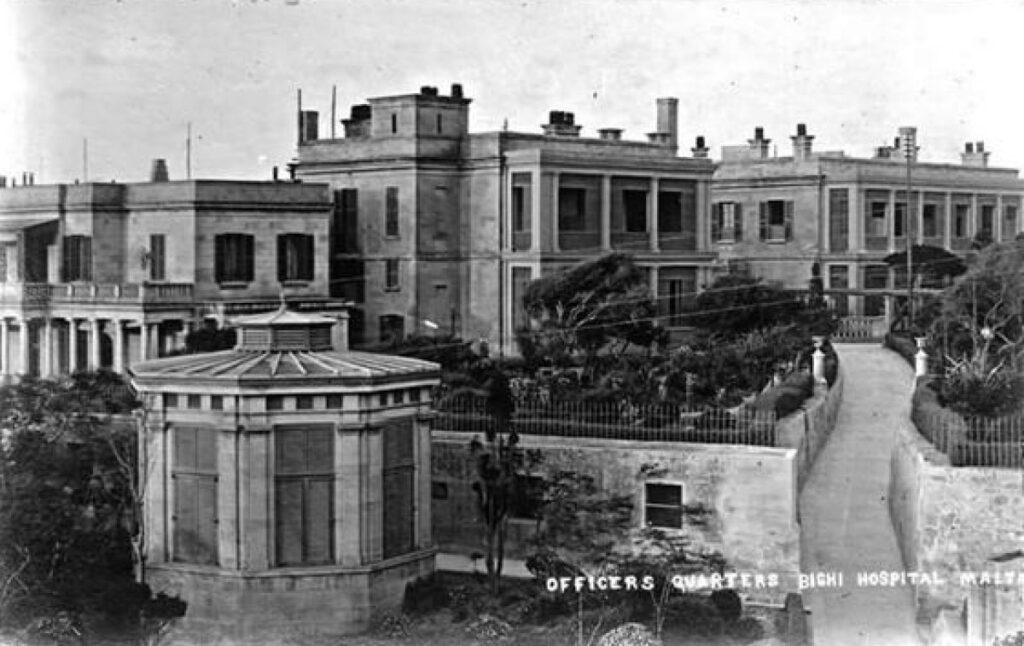
The building consists of a single octagonal room built in globigerina limestone in 1898 as part of the British Naval Hospital complex. Its purpose was to provide a space where hospital officers, doctors and patients could go to smoke away from the hospital wards, and it was therefore known as a ‘smoking shed’.
Historical plans show that another smoking shed once existed in another part of the hospital complex, where the Esplora Centre stands today. This earlier structure was built in 1889, with a slightly different design from the one just restored, but it was unfortunately lost sometime after World War II. Both smoking sheds appear in a historic aerial photograph documenting wartime damage.

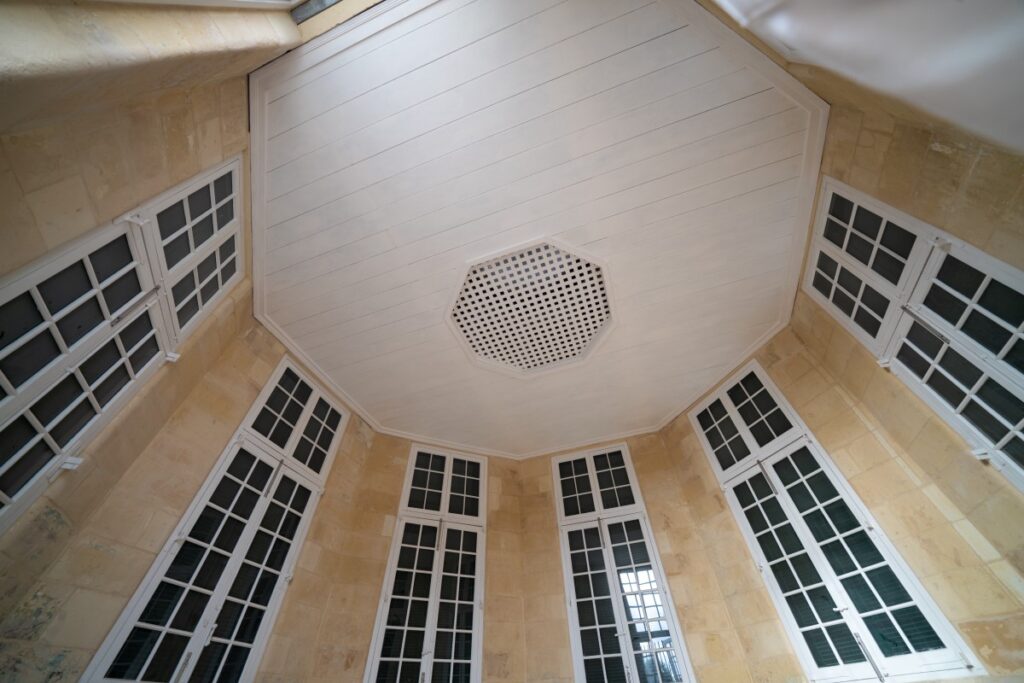
The value of the restored building lies not only in its aesthetic appeal and historical significance but also in the ingenious system incorporated into its architecture.
With large openings on every and a roof made of timber and zinc, the structure created passive ventilation: warm air and smoke would rise towards the soffit, pass through the central grille, and exit through the louvres at cornice level, while fresh air would enter through the louvres of the large openings.
At the same time, wind passing through the louvres of the upper lantern would create lower pressure within the ceiling, further drawing the smoke upwards. This was an innovative and highly sustainable solution for its time.
The building also reflects the technique and line of thought of the British engineers who designed it. Unaccustomed to using Maltese limestone, they did not fully trust it for certain structural elements. As a result, the lintels of the openings contain small iron beams inserted at their base, as the engineers feared the stone might not be strong enough to bear weight on its own.
In addition, large bronze staples were used to hold the two courses of the cornice together.
Over the years, the building suffered substantial deterioration, especially in its upper section. In 2015, Heritage Malta carried out the first preventive interventions, which included the dismantling and storing of the roof structure, the stone cornice, and the apertures, all of which were stored at Heritage Malta’s Bighi headquarters.

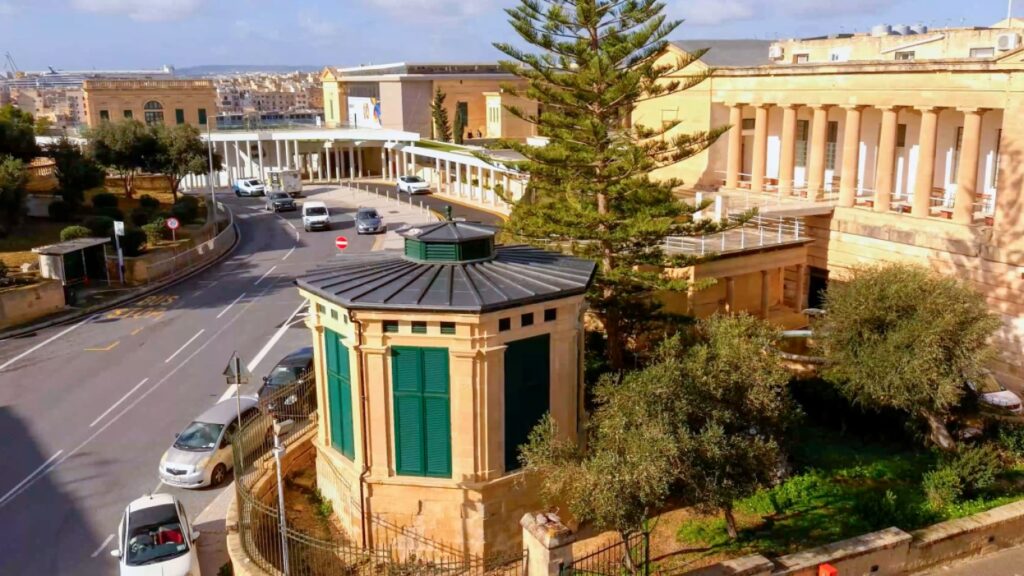
Full restoration works began in 2024 and are now in their final stages. These works involved restoring the stone elements, the apertures, and the roof structure. The latter was documented and carefully dismantled piece by piece so that every wooden element could be treated individually before being rebuilt according to the original technique.
During the research phase, the historical plans of the building were also discovered and used for reference throughout the restoration process.
The restoration of the smoking shed forms part of a major regeneration project that Heritage Malta is carrying out within its headquarters, which houses the agency’s administrative offices and restoration and conservation laboratories. The aim of this project is to restore the historic British Naval Hospital while creating a pleasant workplace for all employees.