

Visitors to the China Pavilion at the Malta Biennale 2026 will encounter the work of Ying Jinfei, an influential figure in contemporary Chinese art whose career spans artistic creation, education and museum leadership.
Born in 1967 in Xianju, Zhejiang Province, Ying is currently director of the Zhejiang Art Museum, one of China’s leading public art institutions, and president of the Zhejiang Printmaking Academy. Alongside these roles, he is also a professor and doctoral supervisor, mentoring new generations of artists and researchers.
With more than three decades of artistic practice, Ying’s work spans printmaking, watercolour and mixed media. Deeply rooted in the tradition of Chinese water-based woodblock printing, he also experiments with contemporary techniques including digital printmaking. His work is recognised for its refined craftsmanship and conceptual depth, often exploring the relationship between personal experience, cultural memory and wider social narratives.
Projects such as Portraits of the Zhejiang Spirit reflect Ying’s ability to convey profound humanistic ideas through intimate-scale imagery, balancing figurative elements with abstraction. His achievements have earned him major honours, including Silver Awards at the National Exhibition of Fine Arts, China’s most prestigious national art exhibition, and Gold Awards at the Zhejiang Provincial Exhibition of Fine Arts.
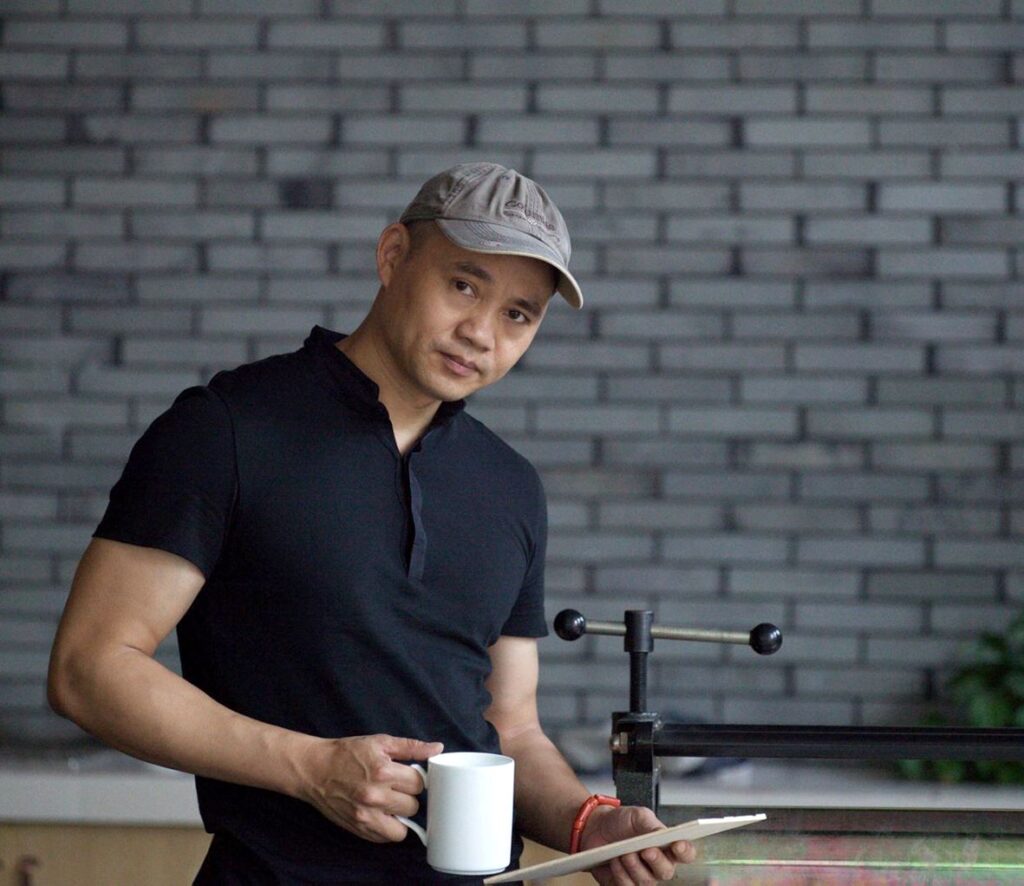
Beyond his own artistic practice, Ying plays an important role in shaping the cultural landscape. Under his leadership, the Zhejiang Art Museum has gained international recognition, becoming a National Key Art Museum in China and joining the International Committee for Museums and Collections of Modern Art. He continues to teach, curate exhibitions and foster international cultural dialogue while contributing to the development of contemporary art in China.
Curator and exhibiting artist
At the Malta Biennale 2026, Ying serves as curator of the China Pavilion, located at the historic Fort St Elmo. He is also one of the participating artists.
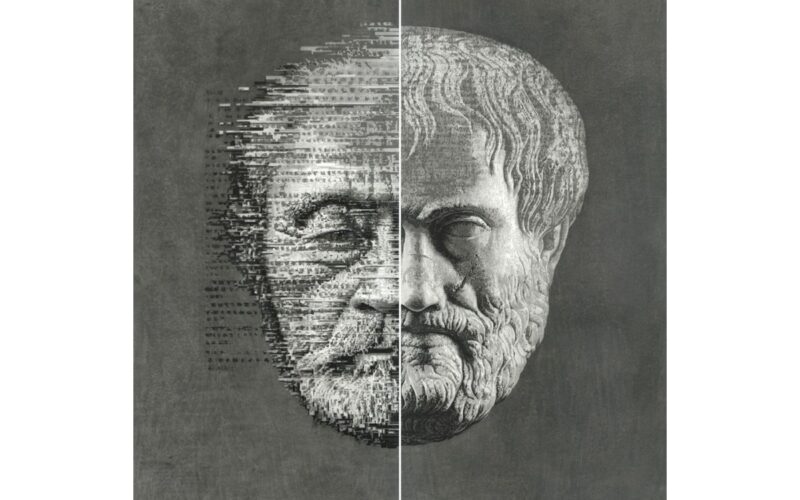
His water-based woodblock print Mutual Learning Among Civilisations: The Mohists and the Peripatetic Schools visually brings together two influential philosophical traditions by merging the faces of Mozi and Aristotle, symbolising dialogue between Eastern and Western thought.
Mozi, who lived around 470-391BC during China’s Warring States period, founded a philosophical movement later known as Mohism, which emphasised practical ethics, fairness and the welfare of society as a whole. Mohism was one of the major schools of thought in ancient China, alongside Confucianism, Taoism and Legalism.
“Ying plays an important role in shaping the cultural landscape”
Aristotle, who lived around 384-322BC is one of the most influential thinkers in Western history who developed a philosophy grounded in observation, logic and ethical balance. He founded the Lyceum in Athens, where his students became known as the Peripatetics.
In Ying’s artwork, the writings of both philosophers are subtly integrated into their faces, visually reinforcing the idea that philosophical traditions, though separated by geography and culture, share a common human search for knowledge, ethics and understanding.
Visit the China Pavilion
The China Pavilion at Fort St Elmo forms part of the wider international dialogue fostered by the Malta Biennale 2026.
Visitors have the opportunity to discover contemporary Chinese art while reflecting on themes of cultural exchange, philosophy and shared human values.
The Malta Biennale 2026 runs until May 29.