
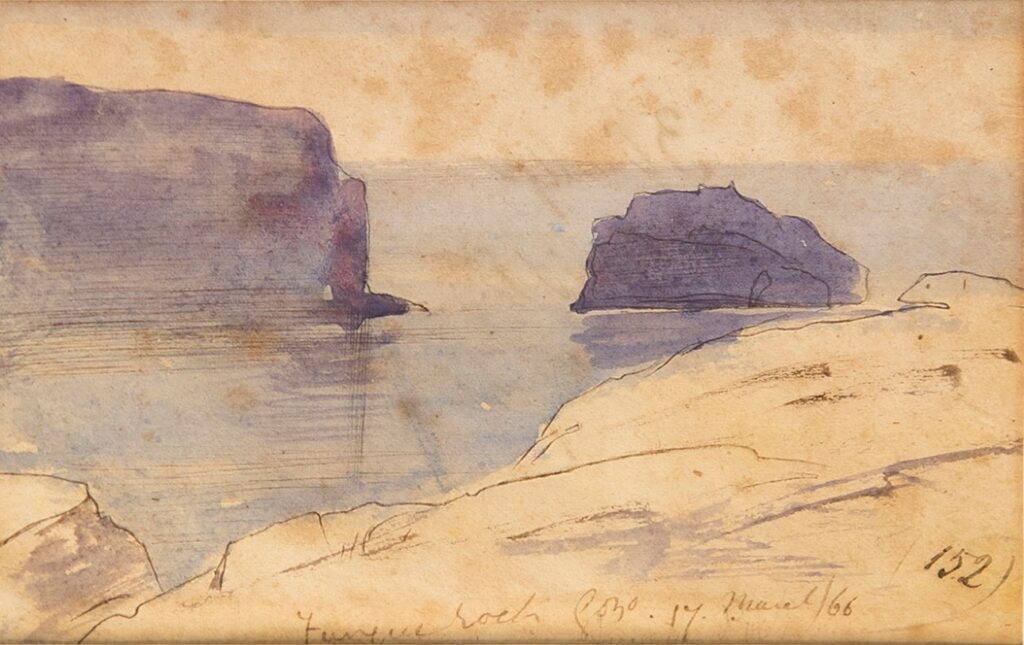
In March 1866, 160 years ago, Edward Lear, the English author and illustrator best known for his nonsense poetry, spent a week in Gozo. In a recent talk held at the Gozo Central Public Library, Nicoline Sagona from Heritage Malta retraced his steps through Lear’s illustrations and selected readings, performed by professional actor Antony Edridge.
Sagona first came across Lear’s work as an art history student while delving into the history of foreigners visiting the islands.
“It’s a tradition that goes back to the Knights’ period,” she explained. “It was fashionable for European nobility to take a grand tour to see historical monuments in Italy, and Malta and Gozo became a popular destination too. The three main points of interest for visitors back then – as now − were the Citadel, Ġgantija and Fungus Rock in Dwejra Bay”, although Lear himself did not find himself particularly wowed by the latter and described it as a “noombug”.

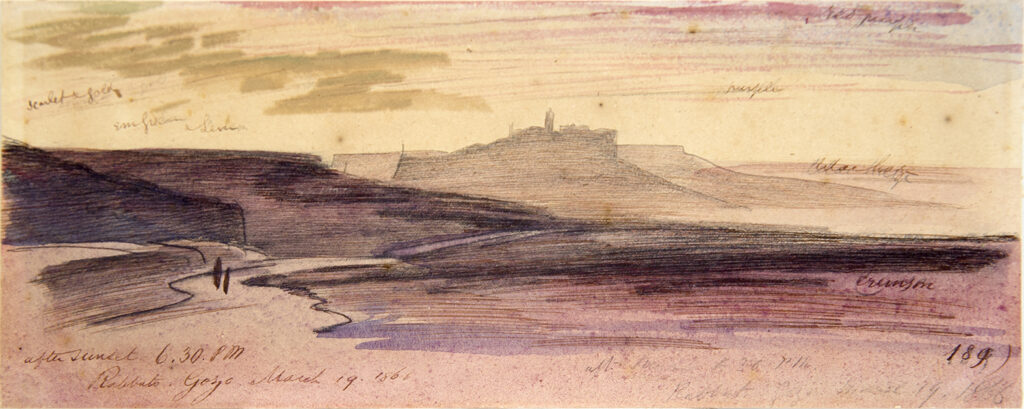
Lear did, however, fall in love with Gozo and, after his visit, wrote to a friend that “the Gozo scenery may truly be called pomskizillious and gromphibberous, being as no words can describe its magnificence”.
“In both literature and art, Lear was brilliant,” Sagona enthused. “He had originally trained as a draughtsman, and as a teenager, he was being paid for ornithological works which he drew with great precision. Although he made a name for himself as a writer, he declared in his late 20s that he’d rather be a landscape artist.”
Lear travelled widely in southern Europe, the Mediterranean and the Orient for health reasons, and he not only recorded what he saw in drawings and paintings but also wrote detailed diaries.
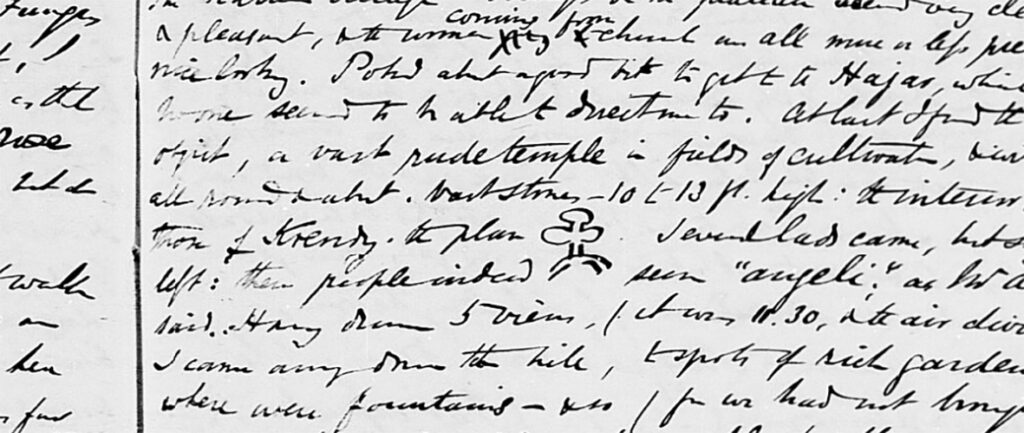
As an art historian, Sagona was fascinated by Lear’s diary in which he logged his movements over the eight days he spent walking, drawing and painting in Gozo. Although these diaries had already been transcribed by professor emeritus John Varriano, Sagona chose to look back to the originals which, held at Harvard, are also available online.

A number of letters in which Lear wrote to friends and relations about his adventures on Gozo also exist.
As a Gozitan who knows the island intimately, Sagona felt she would be well-placed to notice details or nuances in Lear’s descriptions that might not be seen by a researcher who lived elsewhere.

“When you are familiar with the place, you see it through with a different perspective,” she said.
“Lear’s handwriting is not always very legible,” she continued. “Many of his spellings were phonetic, for an Englishman. For example, he wrote words beginning with an X with an Sch.”
“In both literature and art, Lear was brilliant. He had originally trained as a draughtsman, and as a teenager, he was being paid for ornithological works which he drew with great precision”
The diaries are injected with humour and insights into life in the 1860s such as how Lear travelled to Gozo with two fellow British travellers and stayed in a hotel in Rabat, where they found lice on their pillows. Despite this (and the population increase and proliferation of buildings that would have horrified Lear who hated crowds and noise), much about the island remains the same.
“The wind really bugged him,” Sagona laughed. “He describes weather conditions − the Scirocco wind and the hazy air − that are as typical today. On a different day, when it was clear, as he climbed the steep hill to Xagħra, he could see Sicily and Etna.”

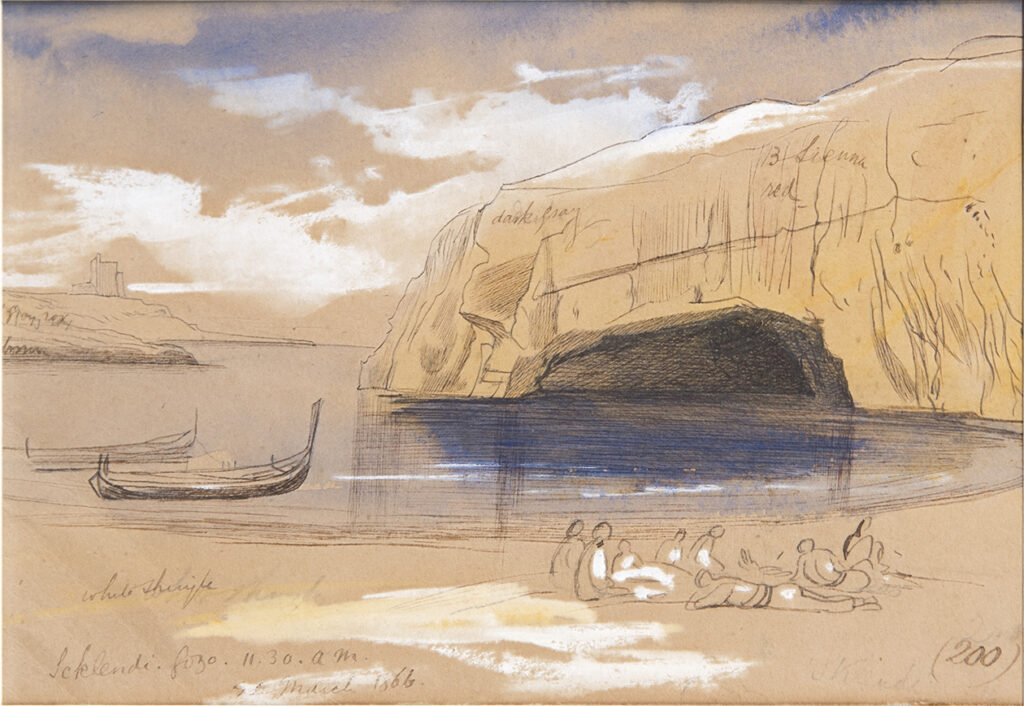
Interesting, given his previous great interest in nature, in his text Lear makes no mention of the island’s flora and fauna, bar a reference to goats in Żebbuġ, which he describes as being up a “tortuous” hill. In the drawings themselves, however, Lear included many annotations about the local flora, noting the “crimson clover” many times.
“It was clearly one of his favourites,” Sagona pointed out.
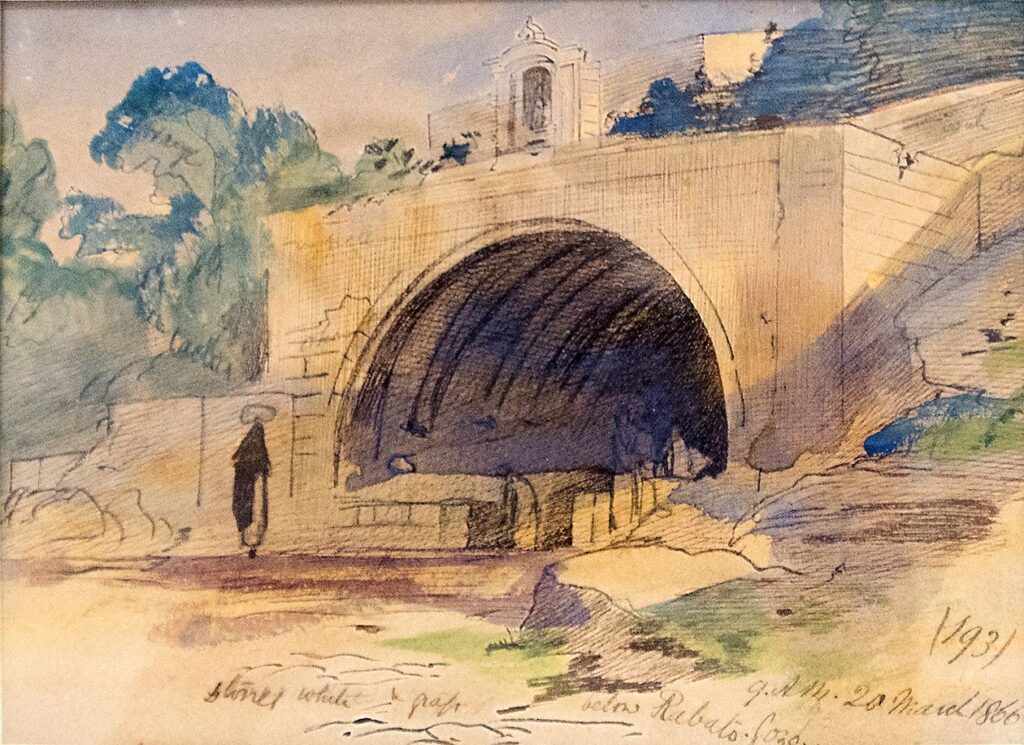
She also searched out the watercolours of Gozo by Lear held in the Heritage Malta collection, and although there was a comprehensive publication, Edward Lear in Malta by John Varriano (Fondazzjoni Patrimonju Malti, 2014, which Sagona recommended as an excellent reference), she shared several additional views during the talk.


Lear’s art is now scattered all over the world and many of his works have been lost or no longer exist.
“However, we know that he drew more than 80 Gozo scenes, stopping whenever he came across a beautiful view. He took great pride in having walked all over the island and seems to have drawn more prolifically here more than in other places. He felt there was something particularly special about this little island,” she said.

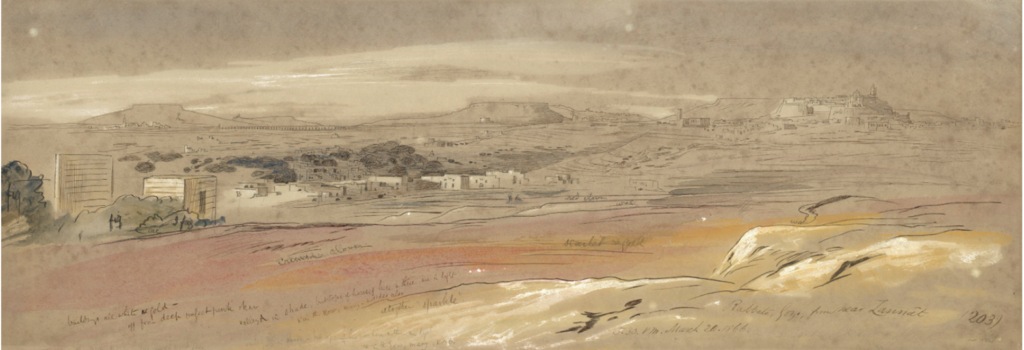
“Because his sketches were numbered, we also know about gaps in the record. It’s clear that Lear drew four or five scenes of Ġgantija but only one is known – and interestingly Lear never called the temple Ġgantija – instead he called it Hajar, or The Giant’s Tower as it was known locally in the British era.”
Sagona also showed the audience an image of a more recent acquisition (2021), a view of the Citadel from Sannat, which had never been exhibited. This will be held in the new Gozo Museum − where Sagona is senior curator − when its doors open early next year.
Lear’s sketches are fresh and dynamic, drawn in pencil after which he added ink and wash with loose brushstrokes while remaining faithful to the scenes in front of him.
Often, Lear went on to produce oil paintings from his sketches but it is not thought that any have resulted from his trip to Gozo, his first, on his seventh – and final visit − to Malta.
Lear afterwards told a friend that he hadn’t sold anything while he was here, citing the increasing availability of cheap postcards, which made him rather dissatisfied with the Maltese art-buying population.
“Before photography, drawing and painting was the only way to record or recollect a view, and at the time Lear was in Gozo, photography was becoming fashionable. Lear’s visit to Gozo, therefore, perhaps marks a moment in art history when paintings as a necessary record of the landscape began to decline,” Sagona concluded.