
We all want the same thing for our children. We want them to grow into confident, capable, thoughtful individuals who can engage with the world and make the most of their abilities. Schools play a vital role in that journey but they cannot do it alone.
Education is not something that happens only between the first bell and the last. It continues at home, in small daily moments that carry lasting impact. When parents and schools work together, children thrive; they build stronger habits, develop resilience and begin to understand that learning is not a task to complete, but a lifelong process.
Life is busy, with many of us balancing work, household responsibilities and the constant pull of everyday demands. By the evening, our energy is low and our patience can be thin. On top of this, children today are growing up in a world where information is constantly flowing and instantly accessible, which brings both opportunities and challenges for parents. As a parent myself I understand this deeply because I live it too.
But even within this reality, our role in our children’s education does not stop at the school gate. It continues at home, every day, in ways both big and small. And these small efforts often matter more than we realise. Learning is not a one-time event. When children are introduced to new information at school, their brains begin forming neural pathways – connections between brain cells that carry information. Initially, these links are fragile and quickly fade if they are not used again.
This is where the home environment becomes essential.
Homework, revision, reading and even casual conversations about what was learned during the day all serve one purpose: they strengthen those neural pathways. Each time a child revisits a concept, the connection becomes more stable. Over time, it becomes easier for the brain to retrieve that information. This is how learning moves from short-term memory into long-term understanding.
So when we encourage our children to do their homework, we are not just enforcing a rule. We are supporting their brain development. We are helping their minds grow stronger, more efficient and more capable. Repetition is not punishment. It is practice, which is what builds mastery.
Children who regularly revisit what they learn develop better recall, improved focus and greater confidence in their abilities. They begin to approach challenges with a mindset that says “I can figure this out”, rather than “I don’t understand”. That shift is powerful and it often starts with consistent support at home.
“Even the most effective teaching cannot reach its full impact without reinforcement”
Teachers work to nurture each child’s potential by planning lessons, adapting teaching approaches and delivering relevant educational experiences. But even the most effective teaching cannot reach its full impact without reinforcement.
When we show interest and ask our children “What did you learn today?” or “Can you explain that to me?”, we are doing much more than striking up a conversation. We are prompting retrieval – one of the most effective ways to strengthen memory. We also show our children that their effort matters.
And children notice that. They become more engaged. They take on more responsibility. They feel supported from both sides, school and home. That consistency builds a sense of security, and with that comes confidence.
This is not about being perfect, or having all the answers, or turning your home into a classroom. It’s about being present in the learning process. It is about creating a routine where education is valued, even in small ways.
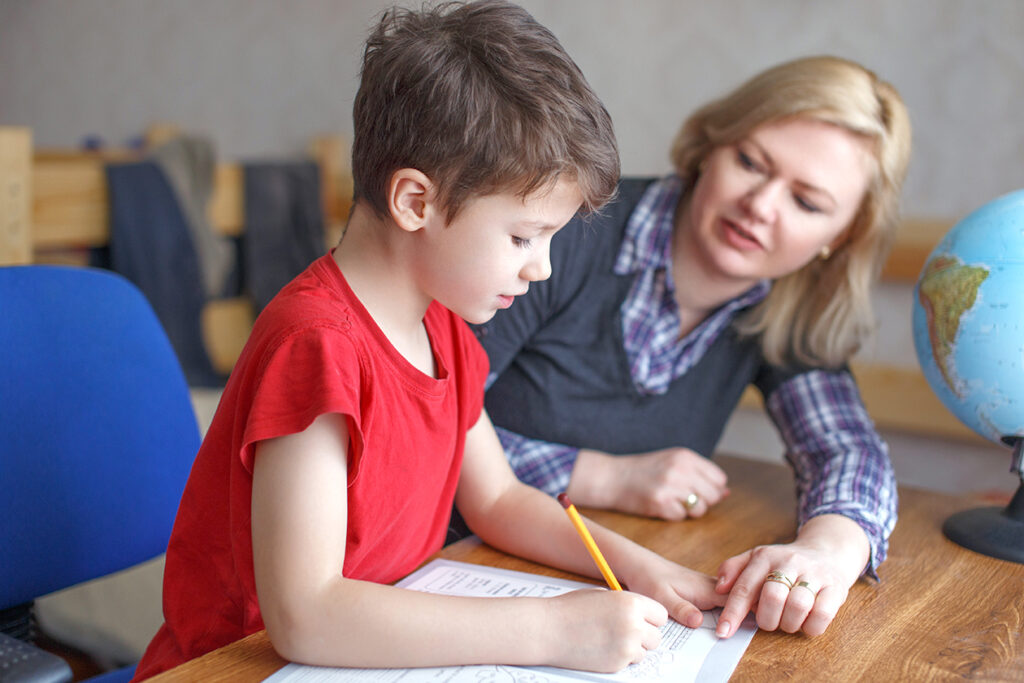
Some days, that might mean sitting down for 10 minutes to go over homework. Other days, it might simply mean checking that it has been done or listening while your child explains something new.
These moments may seem small but their impact is not. We would help our children truly understand what they are learning, not just memorise it for a test. We would help them build the thinking skills that will serve them for life. And we help teachers build on a solid foundation rather than constantly revisiting what could have been reinforced.
If we each do our little bit at home, the results can be extraordinary. As a former educator and a school’s senior leadership team member, I have seen this first-hand. Education works best when it is a partnership.
So let us not see schools as separate from us. Let us see them as allies. Let us trust educators to do their job while we commit to doing ours. Because when we work together, we create the conditions our children need to flourish.
This is the truth we cannot ignore: no curriculum, no teacher, no system can replace the influence of a parent who is present, engaged and invested. If we want our children to reach their full potential, we must meet schools halfway.
Because in the end, it is not about doing everything. It is about doing something small, consistently. And that something could change everything in our child’s life.
Erika Galea is founder and director of the Educational Neuroscience Hub Europe (Malta).