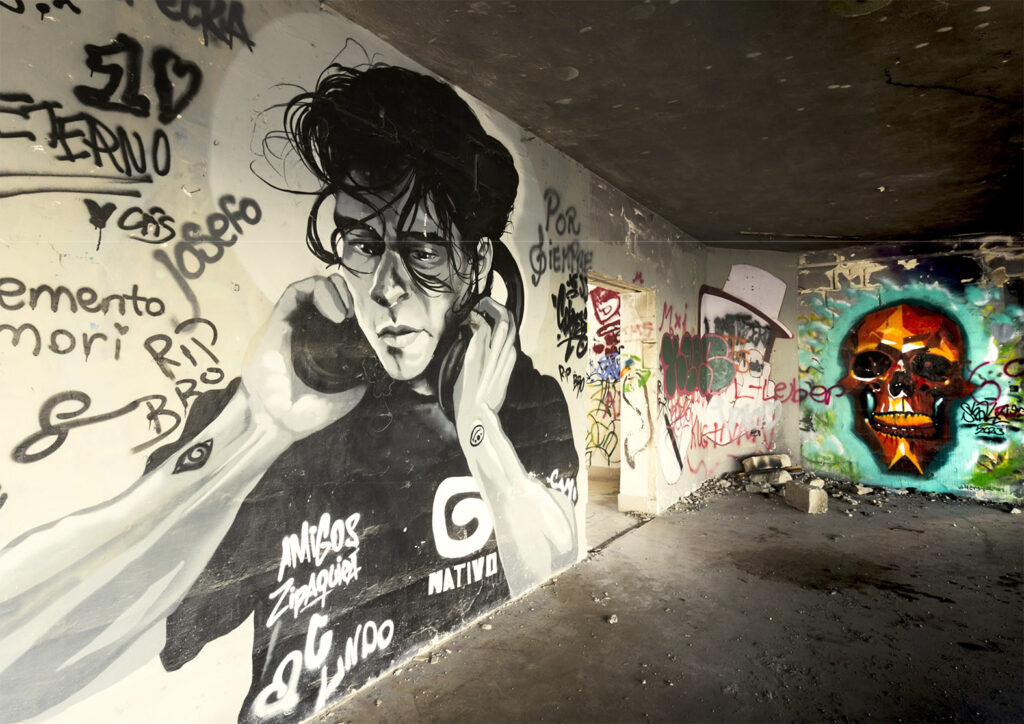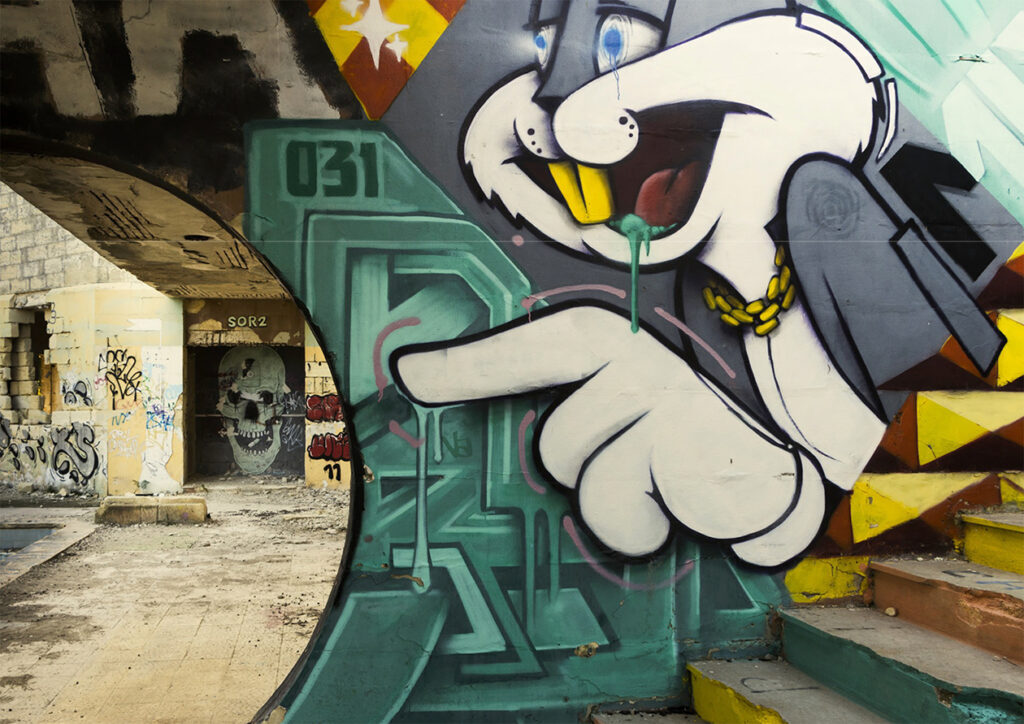
The derelict White Rocks Complex in Pembroke, abandoned since 1995, has long drawn urban explorers, graffiti artists and photographers. Now, following Prime Minister Robert Abela’s announcement that the 450,000-square-metre site will be transformed into a national park, its future as a public space is finally being secured.
For photographer Pierre Cuschieri, White Rocks offered more than visual intrigue. Over the past year, he has documented the murals, graffiti and architectural decay that define the site, producing his series Echoes on Broken Walls.
“I wasn’t just documenting a site,” Cuschieri says. “I was capturing a conversation from ruin that had turned into canvas and expression.”
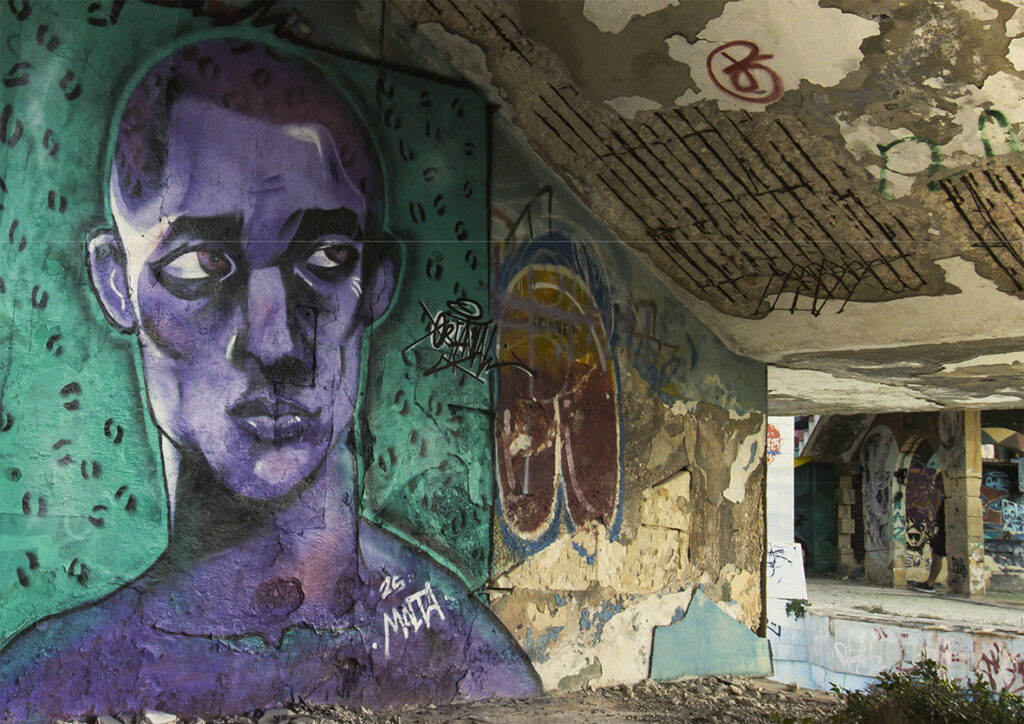
Cuschieri first visited the complex with friends on a Sunday morning. It was meant as a casual photographic outing, but when he reviewed the images at home, he realised the walls were telling stories shaped by time, human presence and memory.
“Stories started forming in my mind, compelling me to return repeatedly at different times of the day,” he says.
Each visit deepened his understanding of how abandonment, light and shadow interact with human expression.
“These works are deeply human”
The walls carry an astonishing range of emotions from anger and rebellion to humour, nostalgia and tenderness.
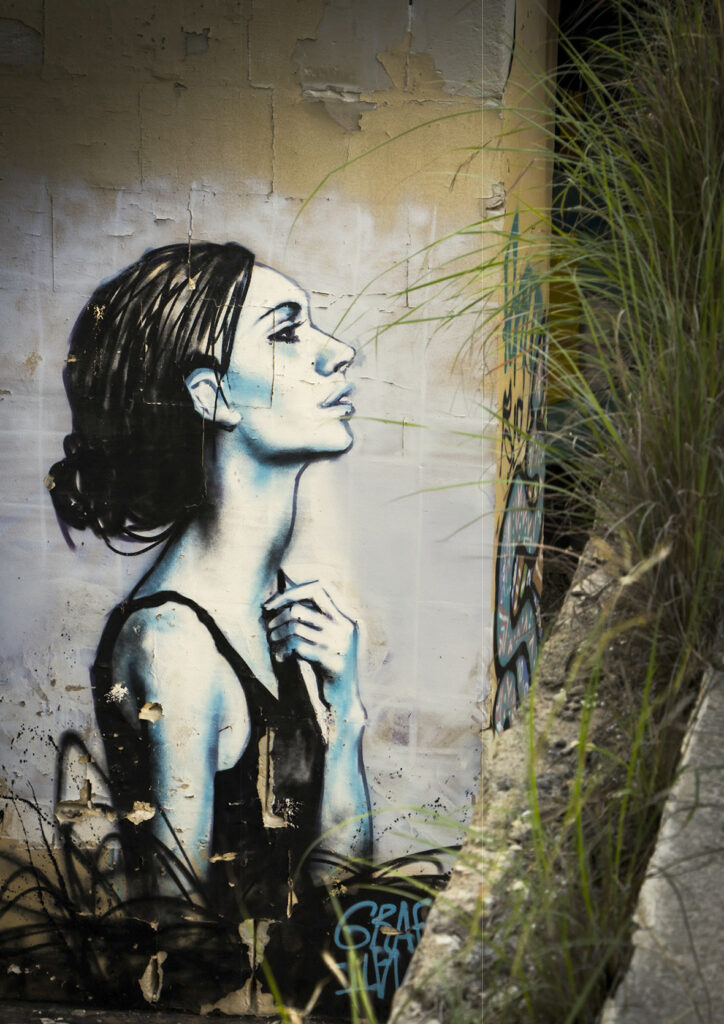
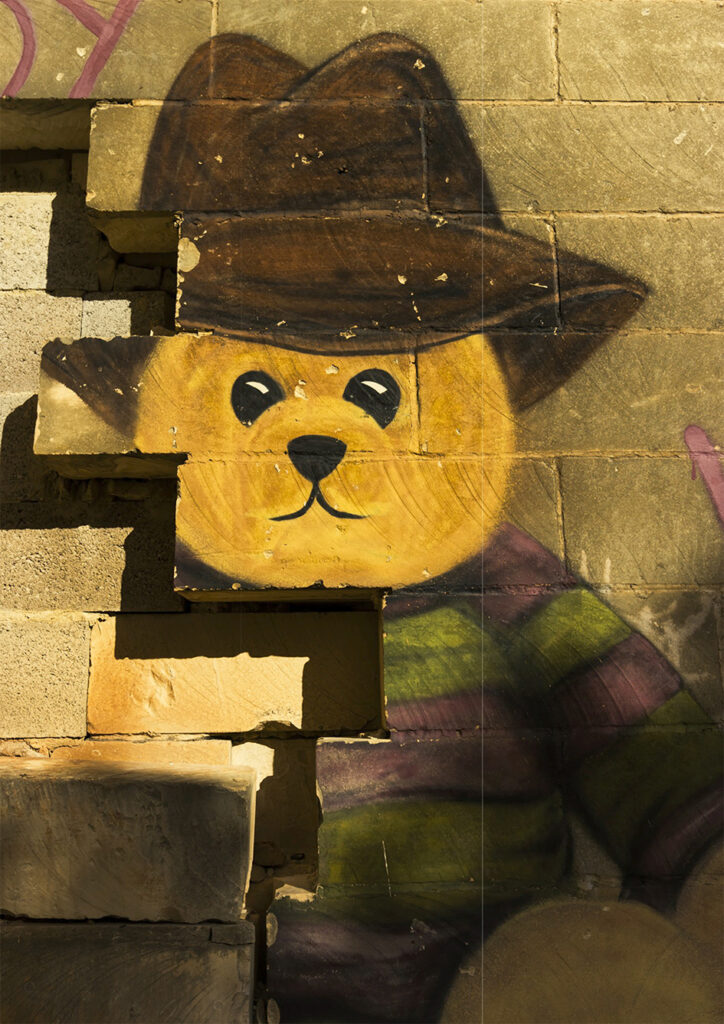
Cuschieri highlights details such as a frail young woman gazing skyward, a mischievous Bugs Bunny, a child in boxing gloves and the playful ‘Teddy with Indiana Jones’.
Large murals critique consumerism through the Monopoly Man or urge environmental responsibility with a young woman holding Earth.
In the shadowed corridor known as the ‘Hall of Death’, a young DJ is observed by a skull, reflecting vulnerability and contemplation.
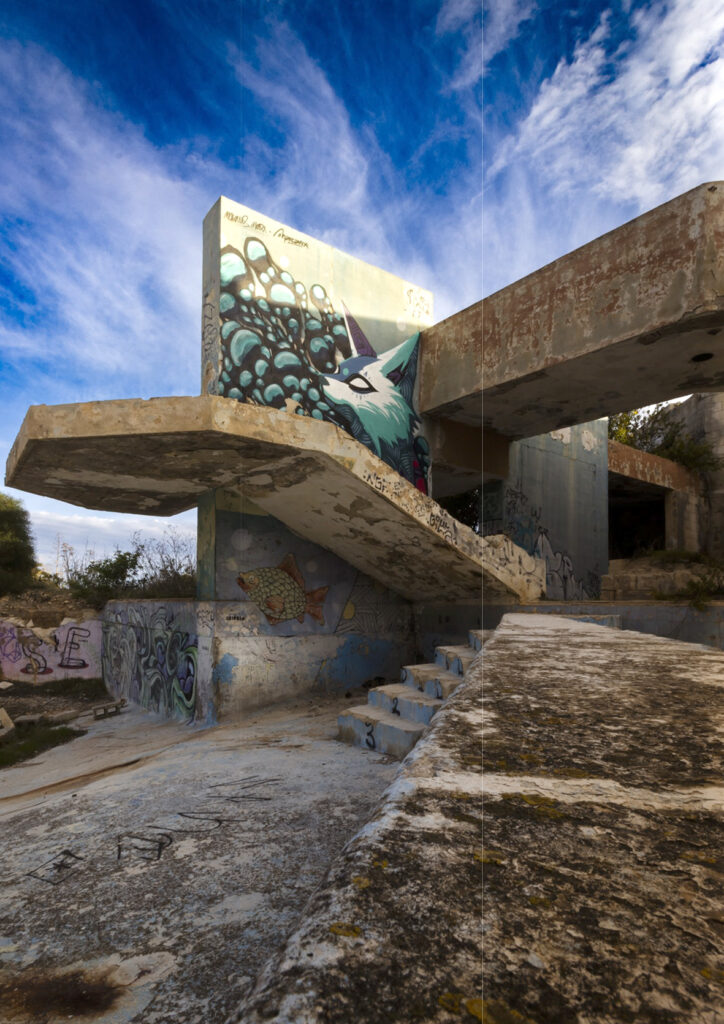
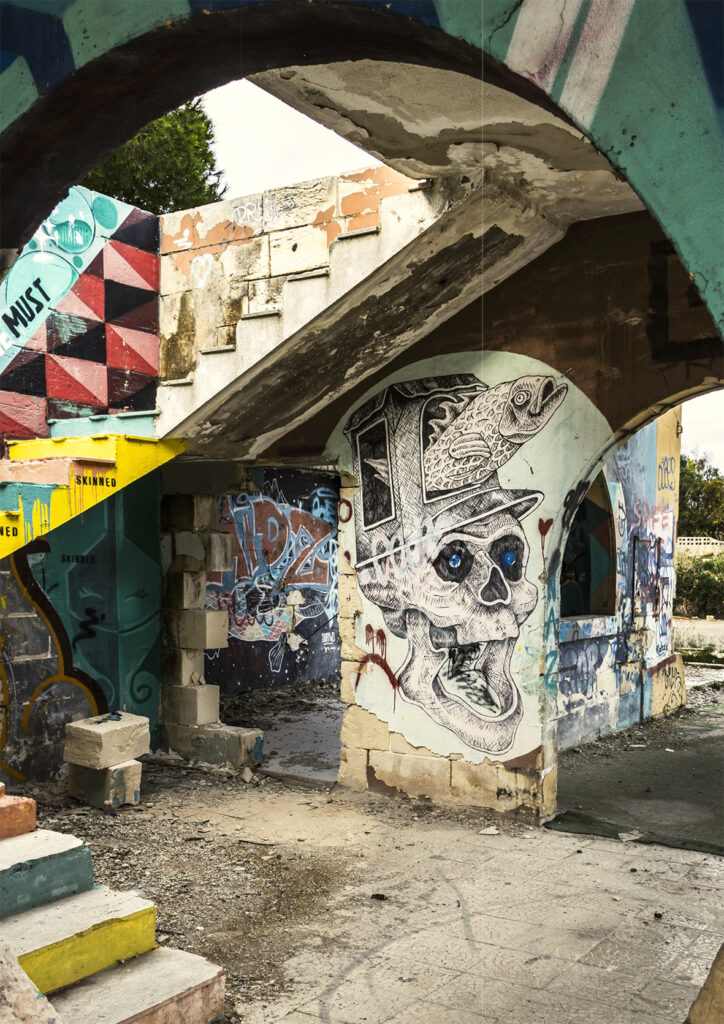
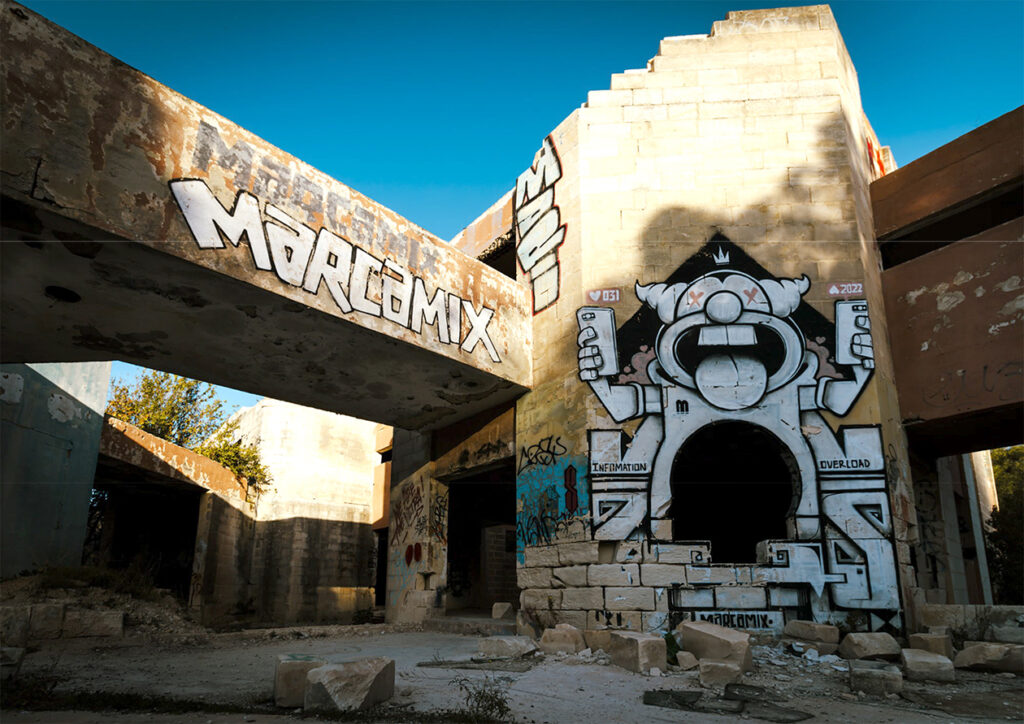
“These works are deeply human,” Cuschieri says.
“Some feel personal, others confrontational or political. I avoided staging or dramatic lighting. I worked with natural light and restrained compositions, framing fragments, cracks and shadows to let the walls speak for themselves.”
He aimed to capture the incomplete and layered nature of memory, rather than presenting a polished or finished scene.
Alongside the photographs, Cuschieri developed a short conceptual narrative (see below) imagining a future where machines become the next storytellers, observing what remains after human activity withdraws.
“As White Rocks moves towards redevelopment, its current identity is already slipping into the past,” he says.
“Even as the space is transformed, traces of what existed will persist, remembered, erased or repurposed. I used AI to help develop this narrative, which made the idea of machines as future storytellers feel tangible.”

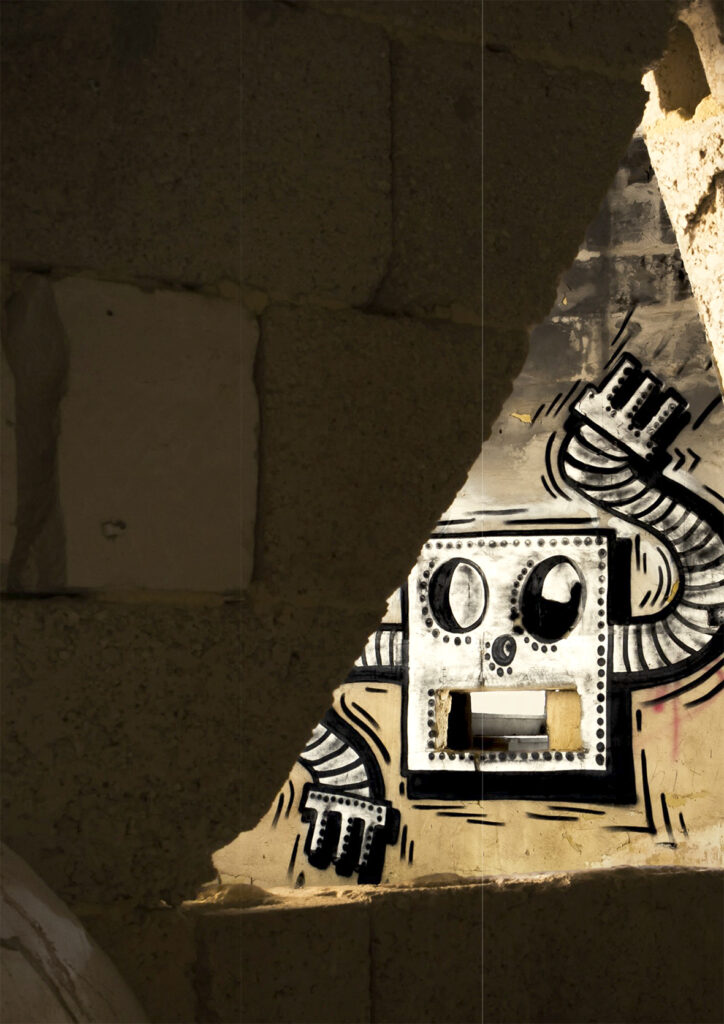
The transformation of White Rocks marks the end of a long saga. Originally built in the 1960s as housing for British military officers, the complex briefly operated as a holiday resort before abandonment.
Over the years, governments attempted to privatise and develop the site, including a stalled €400 million luxury village proposal. With plans now to create a national park alongside Manoel Island, the land is set to return to public use permanently.
Cuschieri’s work captures this liminal moment.
“Before fences come down and redevelopment begins, I wanted to preserve the human stories embedded in the walls,” he says.
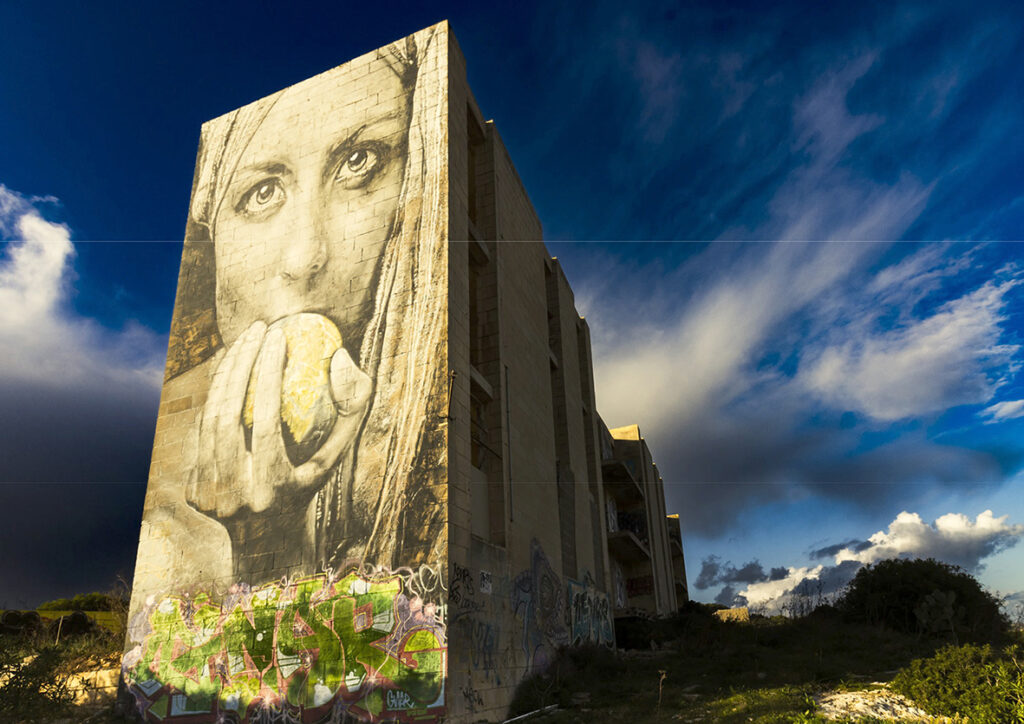
“Echoes on Broken Walls is about transition, what we leave behind and how it continues to speak.”
The series is both a visual record and poetic reflection, reminding viewers that even abandoned spaces are alive with expression, memory and possibility, and that the stories of a place do not vanish when its walls are repurposed.
Echoes on Broken Walls by Pierre Cuschieri
She stood painted in silence, her gaze lifted towards a sliver of distant light. Around her, ruins whispered of what had been lost. Hope lingered, fragile, flickering, almost ashamed to still exist. Nearby, a cartoon figure pointed forward, a trace of humour left behind by a world that had forgotten how to smile.
Deeper inside, tunnels swelled with skulls and half-remembered faces, each stroke of colour preserving the dead in pigment. Even the walls seemed to breathe with memory. Above them, a solitary building kept its vigil, crowned with a burning skull, neither warning nor comfort, simply truth made visible.
A young fighter stared defiantly through the dust, bruised but unbroken. Even childhood had been pulled into the struggle. A bear in a murderer’s hat grinned from a shattered wall, innocence and fear fused into one uneasy symbol.
Across the fortress, warped portraits melted into surreal colours, minds unravelling under the weight of survival. Stairways erupted in chaotic paint, humanity’s last rebellion against silence.
At the centre of the ruins, a towering figure rose from concrete and shadow, part idol, part machine. Its open mouth marked a threshold beyond human expression.
Outside, broken bunkers surrendered to the sky. And when the first machine finally emerged, small and emotionless, the truth settled in.
The walls still echoed, but the storytellers had changed.