
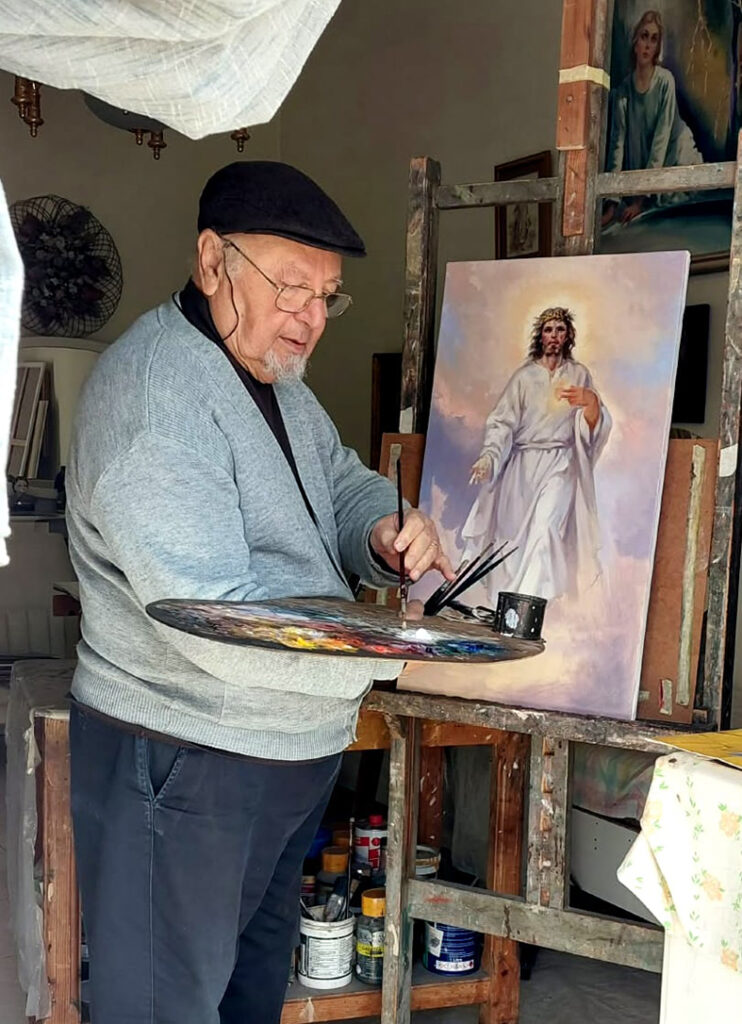
Paul Camilleri-Cauchi, recently honoured with the distinguished Ġieħ il-Wirt Artistiku 2025 by Arts Council Malta, is a prominent figure in religious and sacred art. His artwork is displayed in diocesan and religious churches throughout the Maltese islands, where his unique style adorns vaults and altars.
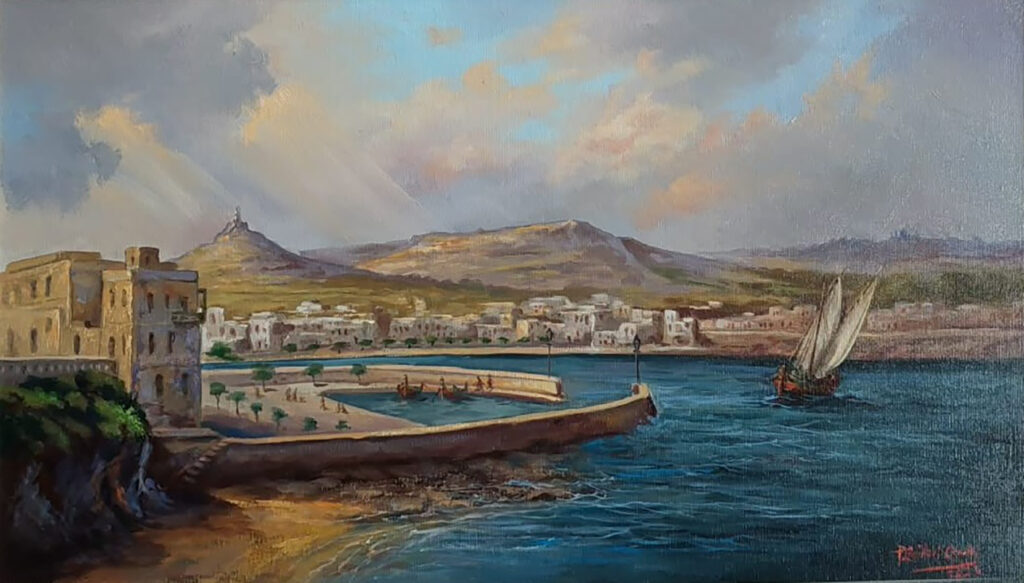
While Camilleri-Cauchi’s principal focus has been religious themes, his reputation also extends to his vivid use of colour, which enlivens a range of subjects including picturesque Gozitan landscapes, reimagined historical events and various artistic studies. His artistic versatility is further demonstrated by his proficiency in a variety of media beyond traditional oil and acrylic paintings.
His latest exhibition, entitled Riflessi, is currently being showcased in the foyer of the Banca Giuratale in Victoria. This collection presents a wide thematic spectrum, with each work reflecting Camilleri-Cauchi’s thoughts and responses to contemporary events.
Camilleri-Cauchi’s disciplined approach and dedication to his art stem from his early academic training. His journey began in his father’s ‘bottega’, under the mentorship of sculptor Agostino Camilleri.
Further guidance came from artists such as Gianbattista Conti, Toussaint Busuttil, Joseph Caruana and Joseph Briffa. He enhanced his skills at the Accademia di Bella Arti in Perugia and Rome during the 1960s. This comprehensive training fostered a meticulous attitude towards the artistic process, from conceptualisation to execution, resulting in works notable for their pleasing colours and thoughtful composition.

The works featured in this exhibition are predominantly figurative, though some portray Gozitan rural and maritime landscapes, alongside a selection of abstract pieces.
Camilleri-Cauchi’s distinctive use of colour, a hallmark since his formative years in Perugia, remains evident throughout. This talent was notably recognised by esteemed Italian artist Gerardo Dottori, who referred to Camilleri-Cauchi as a “colourist”.
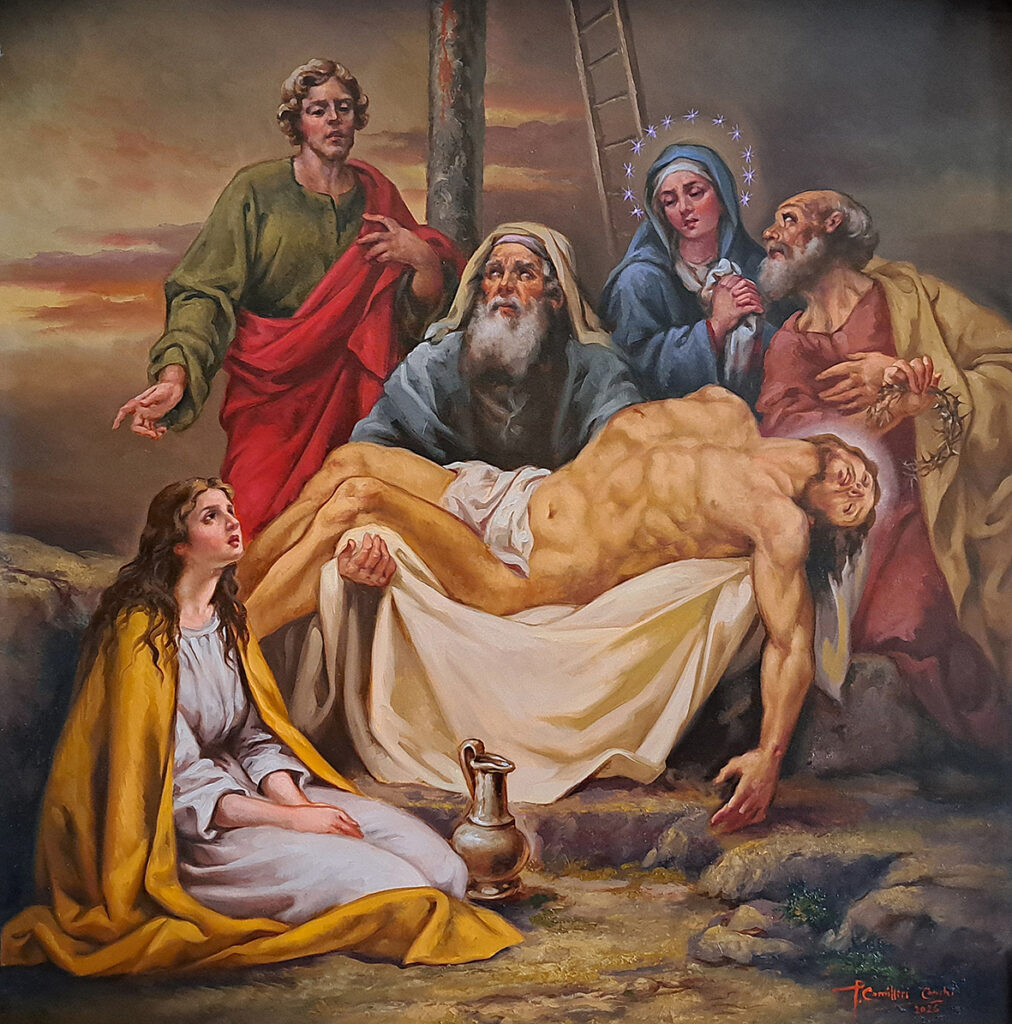
A standout painting in the exhibition, initially reminiscent of a traditional Pietà, presents the dead Christ resting on the lap of Joseph of Arimatea, with the Virgin Mary positioned in the background. Through this unique arrangement, Camilleri-Cauchi suggests that Mary’s missionary role concludes with Christ’s death, symbolically presenting Christ to humanity.
In several religious-themed works, Mary is depicted in white attire, diverging from the customary red and blue. This artistic choice alludes to the Book of Revelations (Chapter 12:1) – ‘The Woman Clothed with the Sun’ − emphasising her as the Queen of Heaven and the emblem of a Church untouched by original sin.
Other religious canvases are presented as preliminary sketches, constructed with expressive lines and subtle colours, each narrating biblical stories simply yet powerfully.
Camilleri-Cauchi’s adeptness at working with a limited palette is especially evident in his sacred figure paintings, where striking colours and robust designs provide clarity and immediacy to each subject.

His smaller paintings of Gozitan landscapes evoke a strong sense of nostalgia, capturing memories of Gozo from his childhood − scenes that are now scarcely recognisable.
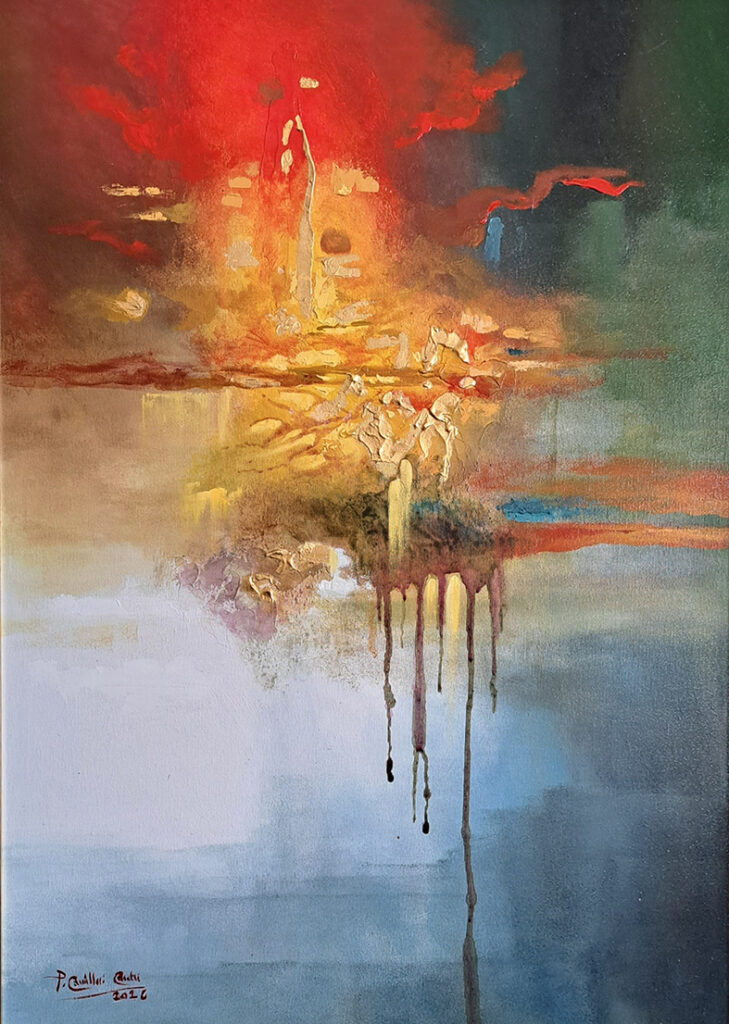
The exhibition also features a range of semi-abstract works with contemporary themes and entirely abstract pieces. Maintaining his focus on colour, Camilleri-Cauchi’s art reflects upon pressing current issues such as abortion and global conflicts, using painterly techniques to express his internal contemplations.
The theme of abortion is conveyed through a female half-figure, depicted as startled and looking towards another figure representing the potential future of the aborted child, illustrated by a sequence of babies fading upwards into thin air.
The theme of world conflicts is rendered on a backdrop of colours traditionally associated with conflict, with a subtle suggestion of hope during the countless meetings and handshakes that sometimes yield little progress.
Among these semi-abstracts, the abstract works stand out for their erratic yet harmonious designs, where colour and texture command the viewer’s attention and admiration.

This exhibition is a testament to the fact that, despite the artist’s advancing years, his hand maintains command over creativity, design, composition and colour. His thoughts are vividly translated onto canvas, even without strict adherence to academic conventions. He demonstrates the ability to distil both design and colour to their essentials without losing the intended message, echoing Pablo Picasso’s sentiment, “Learn the rules like a pro so you can break them like an artist”.
Camilleri-Cauchi’s future artistic journey is set to continue experimenting and innovating, drawing upon academic foundations and the influences of past masters. As Henry Moore famously observed: “There is no retirement for an artist; it is his way of living so there is no end to it.” Camilleri-Cauchi’s works encapsulate this enduring dedication to art, uniting tradition with a deeply personal vision.
Riflessi runs at the Banca Giuratale, Victoria, until April 12. For those interested in learning more about Paul Camilleri-Cauchi and his artistic journey, Aaron Attard-Hili has authored the biography The Academic Colorista – Paul Camilleri- Cauchi.