
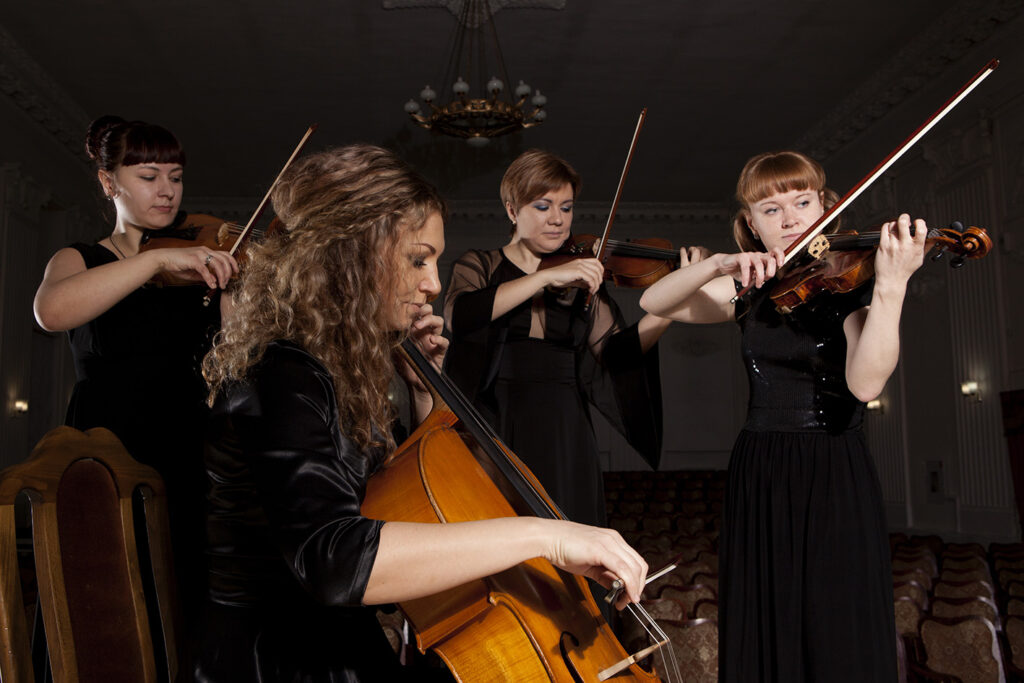
March comes and suddenly women in music are everywhere. Concert programmes, articles and social media fill with recognition of their achievements, only for this visibility to fade as quickly as it appeared. If Women’s History Month is meant to correct historical imbalance, it also reveals an uncomfortable truth: for the remaining 11 months of the year, women are still largely overlooked.
Recently, I came across an article from BBC Music (‘Synaesthesia: these eight composers saw sound in vivid colours’, by Michael Beek, published: June 15, 2025) about composers with synaesthesia. This is a neurological condition that makes the person ‘see music as colour’, which means that one can associate different tonalities or chords with a particular shade or hue.
What particularly struck me in this article was the total absence of women from the list of composers cited. Had he tried to employ his time doing some research, it wouldn’t have taken him long to encounter the name of Amy Beach. This pioneering American composer was famously known for her synaesthesia. Beach lived at the turn of the 20th century and, among other things, was the first American woman composer to write a symphony. In the contemporary music, there are others like the Finnish composer Kaija Saariaho or the Australian Miriam Hyde or the Polish Jagoda Szmytka, to name just a few.
It perhaps doesn’t come as much a surprise that in 2026 (the article is from 2025), the reference points in music remain mostly men. The reality is that women still have to struggle to be rightly appreciated. For example, take the world-renowned Vienna Philharmonic that opened its doors to female members only in 1997, and by 2019 just 24 out of the 145 members of the orchestra were women. A mere 16%.
According to the study ‘Donne: Women in Music’, which examines the repertoire of 111 orchestras across 30 countries, in the season of 2023-24 only 7.5% of the programmed works were by women, almost three quarters of which was by white women. This data underscores a growing trend towards the consolidation of what’s considered to be the ‘classical’ canon, historically composed of predominantly white men, at the expense of broader diversity.
Locally, we have a good number of women in the music industry, mainly working as teachers or in the Malta Philharmonic Orchestra where the ratio between men and women seems to be on an equal standing. But there is still scarcity of women in top artistic and leadership roles. It is revealing that the appointment of composer Dr Veronique Vella in 2025 was the first time a woman was employed full-time to lecture within the Music Department at The School of Performing Arts, at the University of Malta.
One might ask why such an imbalance still exists in 2026?
Mostly it is due to a historical bias against women and the lack of advocacy for their work. Many concerts fall under programming habits which prefer the male dominated canon. Women who in their own right contibuted significantly to music throughout the ages remained mostly ‘hidden’, their works not properly valued and appreciated, and today the canon still views them as ‘minor’ or fringe artists that don’t deserve the same recognition reserved for ‘great’ men.
We need to programme our concerts more consciously to give voice to work by artists that were overlooked due to gender and racial bias. This shouldn’t take the form of mere tokenism, but in full appreciation of the quality and the standards presented by these artists. Similarly they should find their place in music education. That would provide inspiring example to those inclined towards making music not just their art but also their livelihood. The recognition of women’s contribution to music and the arts cannot be merely symbolic, in March only, but must become structural and continuous.
Julia Miller is a pianist, music educator and concert organiser, recently graduated with DMus from University of Malta with her thesis titled: ‘Comparative analysis of performance issues and piano idiom in chosen compositions of Amy Beach and Valborg Aulin’. The author is a recipient of the Malta Arts Scholarship Scheme, financed by the Government of Malta.