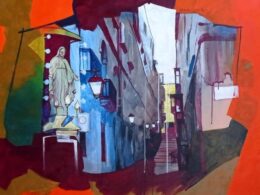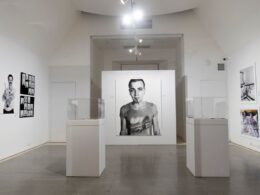





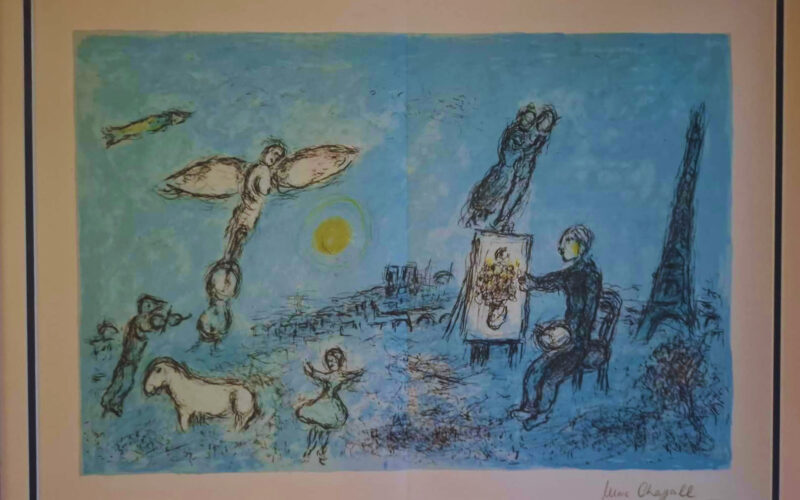
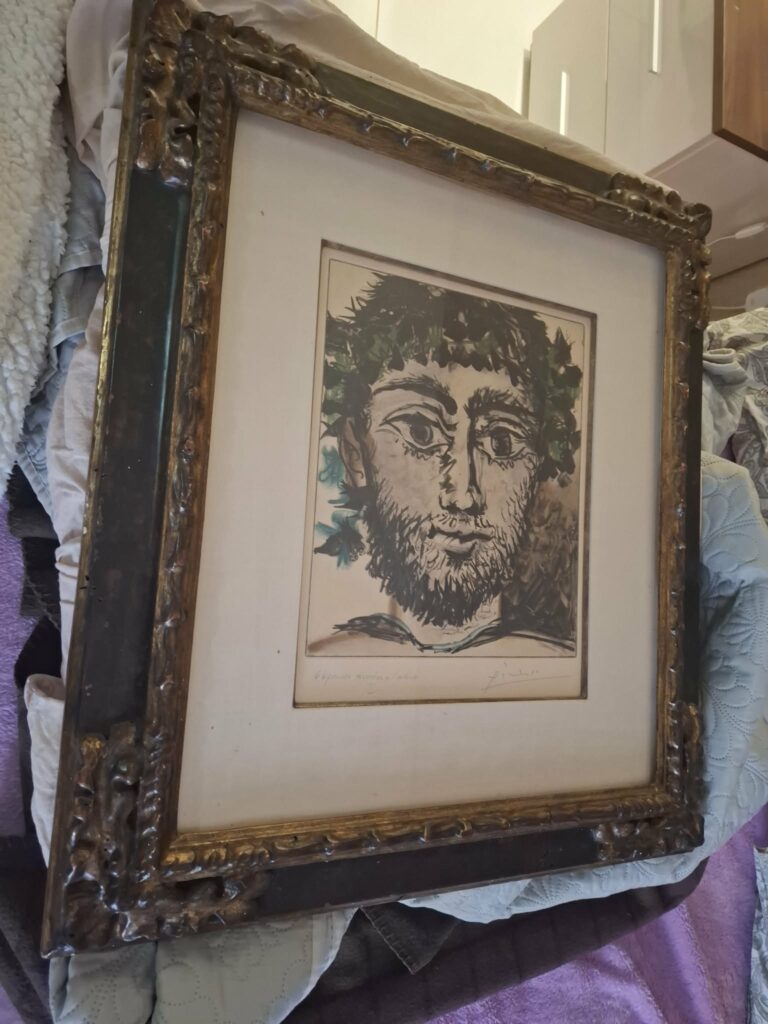
Arthall in Victoria is presenting a curated selection of eight artworks, including lithographs, etchings and pochoirs (stencils), by some of the most influential artists of Modernism: Henri Matisse, Pablo Picasso and Marc Chagall.
These works form part of the remarkable collection of the late Ingeborg Mehren-Hitchock (1926-2026), a pioneering entrepreneur and businesswoman who carefully assembled an extraordinary body of work during the 1950s and 1960s, the flourishing period of Modernism in Paris and New York.
The value of these cornerstone pieces of modern art lies in the rarity of the selection, which exists outside standard numbered editions. All works were created during the artists’ lifetimes, and most include pencil signatures, references to special editions and documented provenance.
A search for beauty
Mehren-Hitchcock’s story reflects her search for beauty and meaning amid the tumultuous labyrinth of the 20th century.
Born in Moravia to an established Viennese family of mixed ethnicity, she narrowly escaped the Nazi occupation and the horrors of World War II, settling with relatives in the United States. After completing her university studies and working as a lecturer and accomplished stage actress, she eschewed serious offers from Broadway to pursue opportunities in international commodities trade.
Still in her early 20s, her first major business success came during the great steel shortage of the late 1940s, when she was the only businessperson able to arrange steel imports into the US. In the following years, her business activities brought her to Central and South America and ultimately back to Europe.
In the mid-1950s, she briefly moved to Paris, where her partner, Fernando Puma (Friedman), an accomplished modern artist and publisher of Seven Arts magazine, who introduced her to the burgeoning cultural circle of the era, which included personal acquaintances with such artistic and literary luminaries as Pablo Picasso, Dorothy Parker, and Henry Miller. Her sincere passion for modern art continued after Puma’s untimely passing at age 36.
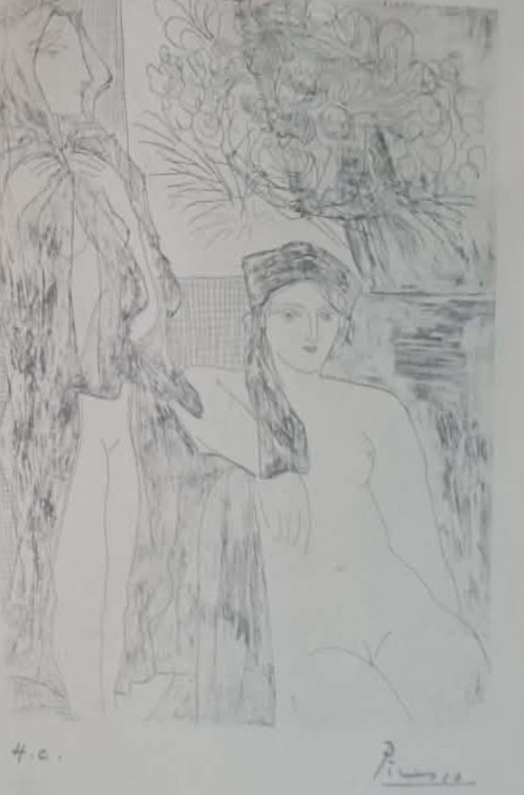
voile, modèle assis et tête de Rembrandt) from the Vollard Suite, Pablo Picasso.
Original lithograph from the 1956 Sauret edition (not an etching from 1939)
In the 1960s, Ingeborg returned to the US, from where she achieved unparalleled success at a time when the term ‘businesswoman’ did not yet exist in the contemporary lexicon.
She introduced over 60 US products to Europe, including the first USDA beef, the first American turkey, and the first ruby red grapefruits.
Her cooperation with the firm of Tropicana introduced her ‘Hitchcock’ line of fruit juices, which are still available in stores today.
For Ingeborg, increasing success meant the ability to devote more resources to her expanding art collection, which continued to grow after her marriage to US Secretary of Agriculture and Special Ambassador George L. Mehren.
After living in Washington, DC, and Panama, the couple resettled in Manhattan, where Ingeborg again became deeply involved in the New York art scene of the 1960s and acquired the most significant additions to her collection.
In 1969, her husband was selected by Nelson Rockefeller and Jack Heinz as the first President of the US Agribusiness Council − a position that saw the couple travel on official missions and meet with leaders in more than 36 countries over the following three years. Ingeborg used the assignment as an opportunity to expand her collection further, establishing an Asian antiques collection alongside her fine-arts palette.
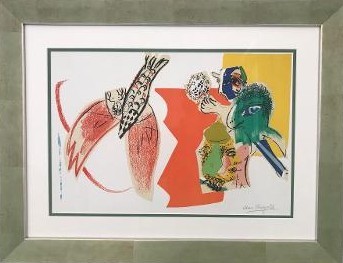
siècle, Paris. 1966. Pencil signature
In the 1970s and 1980s, Ingeborg expanded her activities to include significant wine and beverage imports into the US. In the 1990s and 2000s, she became involved in film and television production, dividing her time between Europe and Hollywood, while also chairing numerous philanthropic and charitable events based in Luxembourg.
In later life, she devoted more time to her passion for art and opened two “hobby” galleries − each called Belle Epoque −in Wiesbaden, Germany, and Maastricht in the Netherlands.
Of course, navigating her 100-year journey from penniless refugee to marketing pioneer and fine-arts patron brought prominent companionships and friendships that included many of the most notable names of the 20th century. World leaders such as US presidents Lyndon Johnson, George Bush Sr, George Bush Jr, US vice presidents Hubert Humphrey and Walter Mondale, German Chancellor Ludwig Erhard, and Shah Mohammad Reza Pahlavi of Iran were among her associates.
She also maintained relationships with Nobel Peace Prize winners Norman Borlaug and Muhammad Yunus, as well as cultural icons such as Pablo Picasso, Orson Welles, and Sir Peter Ustinov, while remaining connected to notable families including the Rockefellers, Heinz-Kennedys, H. L. Huntfamily, the Hohenzollerns, Habsburgs and Romanovs.
The exhibition is open until tomorrow, Sunday, May 3, at Arthall, Triq Agius de Soldanis, Victoria. One may view the works today from 10am to 1pm and 5 to 7pm and tomorrow from 10am to noon.
For more information, visit the gallery’s-Facebook and Instagram pages.