



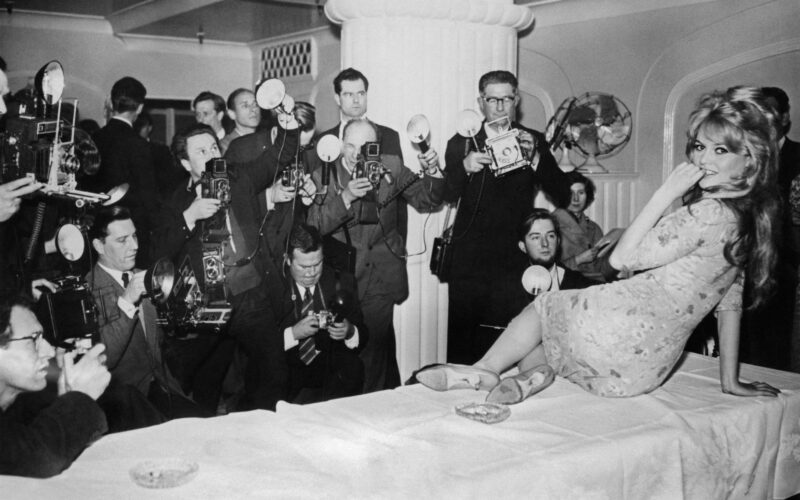
She was the ultimate sex symbol whose voluptuous figure and libertine lifestyle sent tremors through the straitlaced 1950s, but Brigitte Bardot soon tired of the male gaze and walked away from it all to care for animals.
In the early days, when her curves, kohl-rimmed eyes and pout were plastered on French film posters, the actress known widely by her initials BB drew comparisons with Marilyn Monroe.
But from one day to the next in 1973 she turned her back on celebrity to look after abandoned animals, saying she was “sick of being beautiful every day”.
And God created BB
In her brief film career, Bardot enjoyed a string of popular successes, without garnering much critical acclaim.
Most of her 50-odd films were fun but forgettable flops − with a few exceptions.
In 1956 she set the screen alight as an 18-year-old caught up in a love triangle in And God Created Woman, directed by her then husband Roger Vadim.
Vadim’s promise that the young dancer would become “the unattainable fantasy of all married men” proved prescient.
A scene of unbridled sexual energy, in which Bardot dances a mambo in a flowing skirt slit to the waist, sealed her goddess status, while incurring the wrath of film censors.
Seven years later, her role as the sullen, frustrated wife of a screenwriter in Jean-Luc Godard’s Contempt also resulted in scenes that became part of cinema folklore.
Playing with the expectations of producers and spectators to have shots of Bardot’s naked body in the film, Godard created a montage of her limbs as she lay in bed with her husband, asking him which part of her body he liked best.
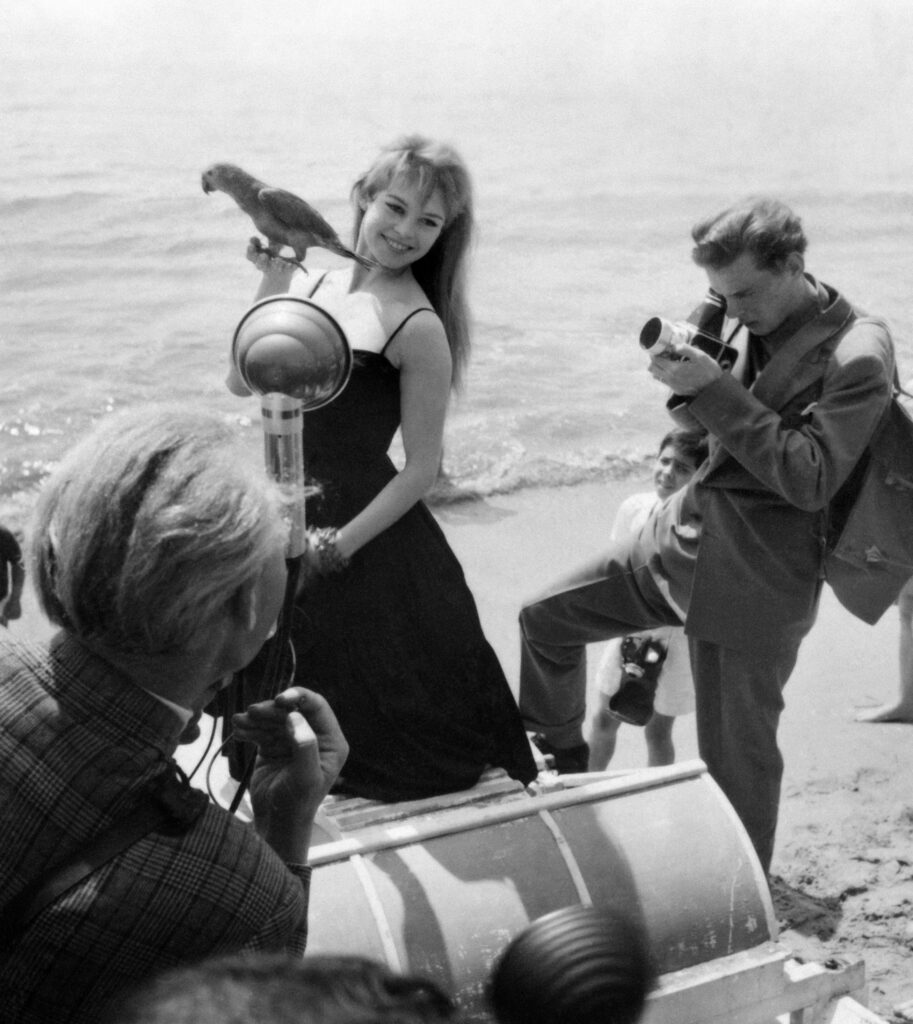
Leaving first
“Queen Bardot stands there where morality ends,” French author Marguerite Duras wrote in 1958.
“She does as she pleases, and that is what is disturbing,” philosopher Simone de Beauvoir declared a year later.
But far from revelling in her role as libertine, Bardot struggled with objectification.
On her 26th birthday in 1960 she attempted suicide, and then in 1973, just short of her 40th birthday, she turned her back on it all.
“I knew my career was based entirely on my physique,” she explained in 1978, “so I decided to leave cinema just as I have always left men: first.”
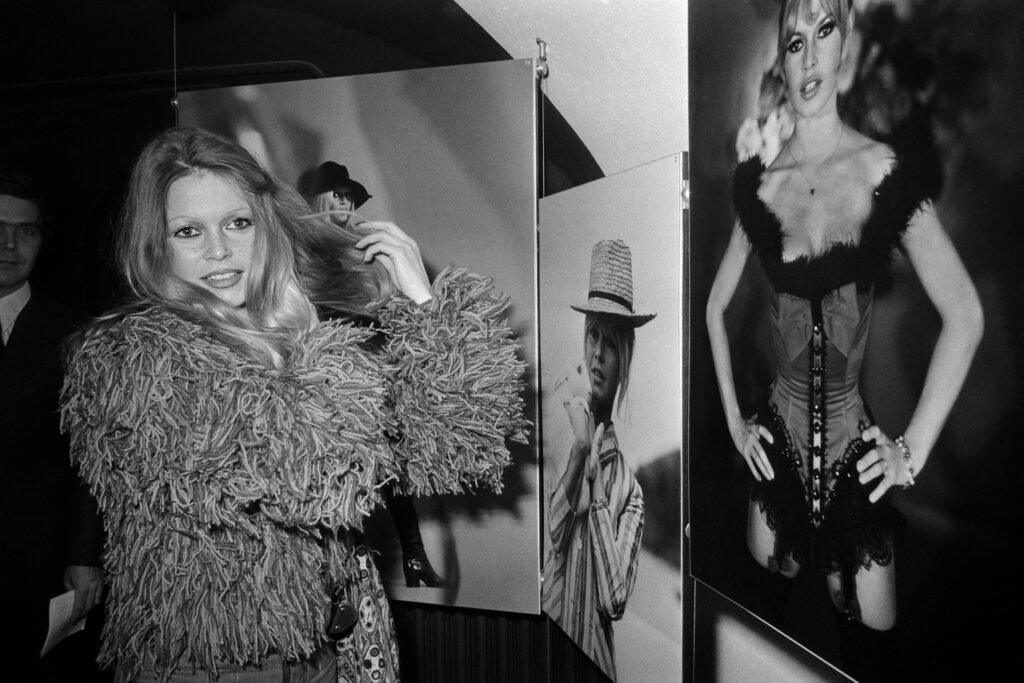
Animal love
Born on September 28, 1934 in Paris, Bardot was raised in a well-off traditional Catholic household.
Married four times, she had one child, Nicolas with her second husband, actor Jacques Charrier.
Animal activism became the dominant feature of her life after film, as she retreated into a hermit-like existence in the French Riviera resort of Saint-Tropez at the age of just 39.
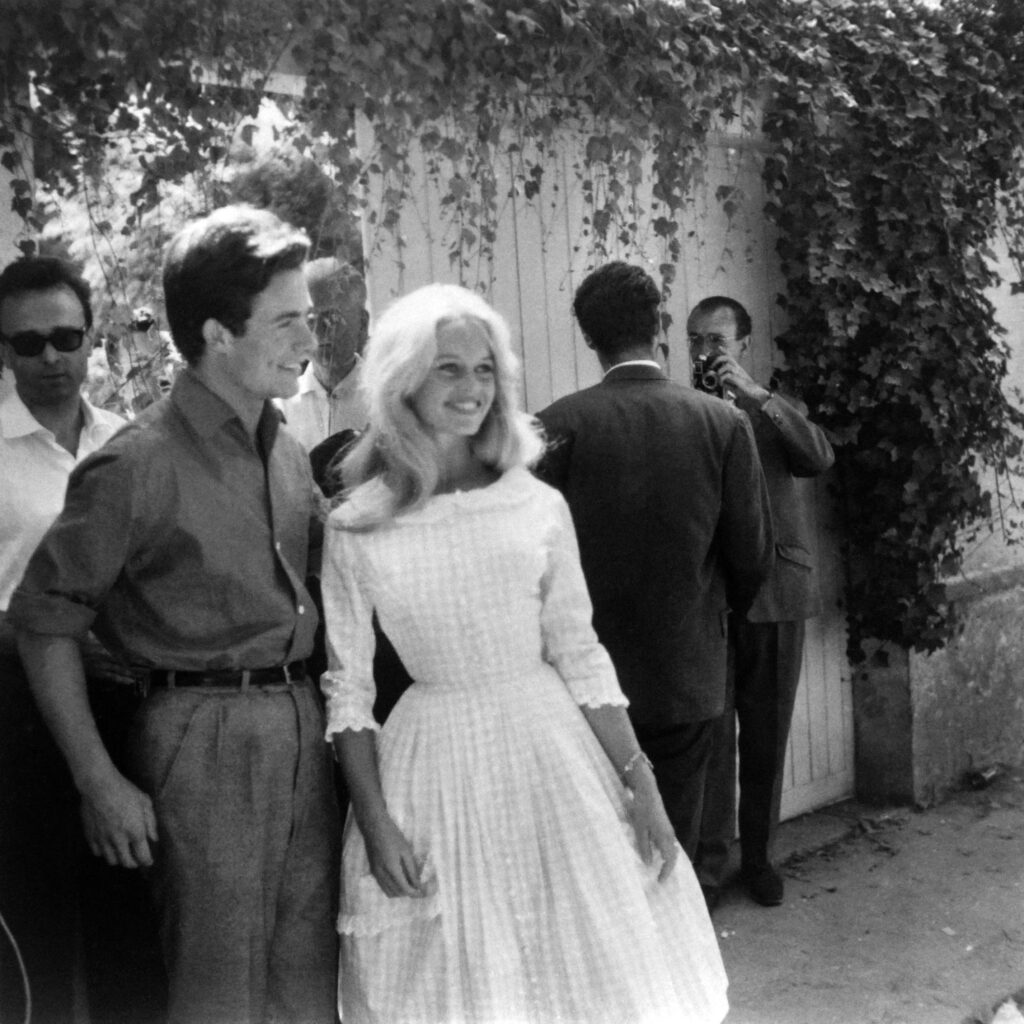
In a 2011 letter to conservation group WWF, Bardot recounted her life-changing visit to Canada in the 1980s when she witnessed its annual seal cub culls.
“I will never forget these pictures, the screams of pain, they still torture me but they have given me the strength to sacrifice my whole life to defend the animal’s one,” she said.
In 1986 she set up the Brigitte Bardot Foundation dedicated to animal protection. She has crusaded for baby seals and elephants, called for the abolition of ritual animal sacrifice and the closure of horse abattoirs.
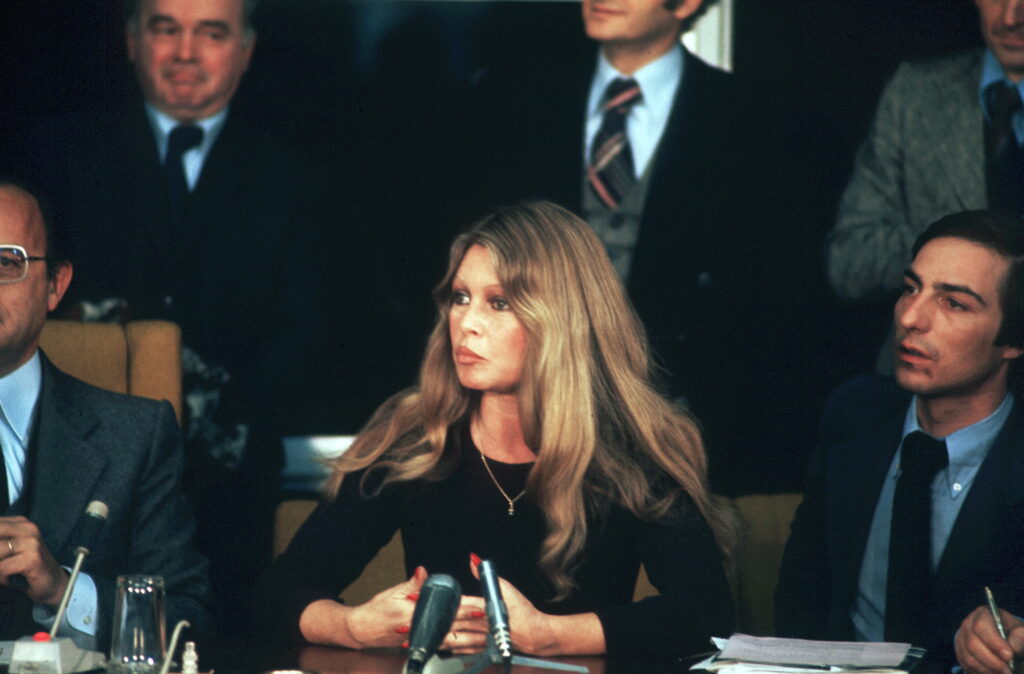
Far-right ‘Joan of Arc’
In later decades Bardot veered to the far-right, increasingly prone to disparaging remarks about gays, Muslims and immigrants that led to five convictions for inciting racial hatred.
In her 2003 book A Cry in the Silence, she warned against the “Islamisation of France” and a “subterranean, dangerous, and uncontrolled infiltration”.
In the 2012 and 2017 presidential elections she publicly supported far-right leader Marine Le Pen, who called her the “Joan of Arc of the 21st century.”
Not #MeToo
Bardot continued to shun the fashion and film worlds long after her retreat from both, frequently outspoken against the wearing of fur and proudly refusing to resort to plastic surgery.
In the whirlwind of the Harvey Weinstein scandal that unravelled in 2017, she again swam against the tide, hitting back at the #MeToo campaign which denounced the abuse of women.
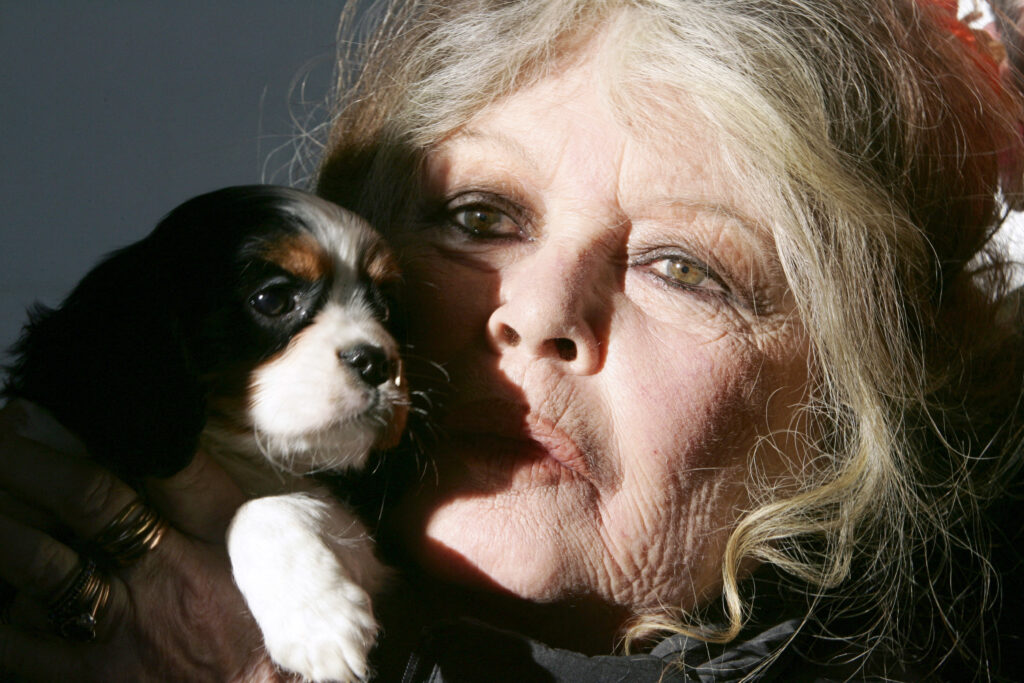
“The vast majority are being hypocritical and ridiculous,” she told Paris Match in 2018, referring to the actresses who had come forward with stories of abuse.
“Lots of actresses try to play the tease with producers to get a role. And then, so we will talk about them, they say they were harassed. I found it charming when men told me I was beautiful or I had a nice little backside.”
Three myth-making moments
Long a symbol of glamour and desire, Brigitte Bardot’s image was forged in a cluster of cult films and pop duets. Here are three of the most memorable:
…And God Created Woman (1956)
‘And God created Brigitte Bardot’ ran the headline in the Financial Times in 2009 when the actress turned 75, capturing the enduring connection between Bardot and the film that catapulted her to stardom as a sexually charged 18-year-old orphan in Saint Tropez.
The image of a bikini-clad, bronzed Bardot emerging from the sea was the “original epitome of the youthful sexuality that tanned itself on the Cote d’Azur once the austerity of war had worn off,” US film historian David Thomson said in his bestselling The New Biographical Dictionary of Film (1975).
Made by her husband at the time, Roger Vadim, the film was a hit both in France and the US, where it took in $4 million at the box office.
It inspire Simone de Beauvoir in 1960 to say, “BB now deserves to be considered an export product as important as Renault automobiles.”
Contempt (1965)
Jean-Luc Godard’s arthouse classic set on the island of Capri opened with what would become one of Bardot’s most famous scenes but also her most subversive: intercut shots of her body as she lies on a bed in a dark room, asking her husband, “Which part of me do you like best”?
Bardot’s full naked figure is never shown as Godard resisted the demands of his producers, and in doing so encouraged a more critical gaze on the sexualised Bardot body on screen.
Playing a jilted wife whose disdain for her husband swells as the film progresses, Contempt was one of Bardot’s rare critically acclaimed films, with The New York Times praising it as her best acting performance.
Bonnie and Clyde (1968)
Bardot had a brief and tumultuous affair with legendary French songwriter Serge Gainsbourg.
Their dalliance gave rise to a track based on a poem written by the notorious US outlaw Bonnie Parker, before she and her partner in crime Clyde Barrow were shot dead.
For the video clip of the duet shot in a hay barn, Gainsbourg and Bardot dressed as the legendary pair, with Bardot donning a black beret, dragging on a cigarette and clutching a machine gun around her neck.
The single was from an album of the same name that reached number 12 on the Billboard Top 200.
Gainsbourg also first recorded his famously steamy Je t’aime… moi non plus duet with Bardot but she later opposed its release.
He re-recorded the hit with Jane Birkin.