

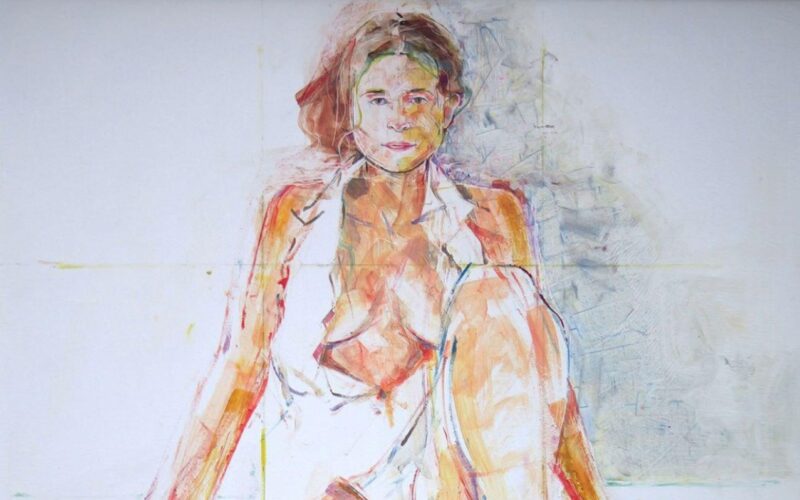
What does it mean to look, to be looked at, to desire? These are questions that come to mind when viewing Lawrence Buttigieg’s exhibition Desire & Its Excess.
Buttigieg’s exhibition, which also challenges conventional depictions of womanhood, draws you into a restless interplay of perception, co-creation and desire.
Presented at Spazju Kreattiv, the exhibition brings together 25 years of practice-based research through a constellation of works: 27 painted female nudes, two box assemblages, four working drawings, six plaster casts, as well as a 14-second stop-motion film, alongside a three-minute short film titled Pros-thesis.
Read together, these varied media form a sustained inquiry into the body as both subject and process, where repetition, material experimentation and fragmentation operate not in isolation but in dialogue.
Trained as an architect and working across artistic practice and research, Buttigieg has long engaged with questions of womanhood, a concern developed through his doctoral research at Loughborough University in 2014. Across his practice, he interrogates the dominant perspective shaped by male subjectivity within Western culture while exploring themes of identity, otherness and spirituality, particularly the liminal space where the feminine intersects with the transcendent.
But what does desire, and its excess, constitute?
In Lacanian terms, desire is the desire of the Other: it can never be fully satisfied, it’s always just beyond reach, producing an excess that fuels fantasy, longing and continual motion.
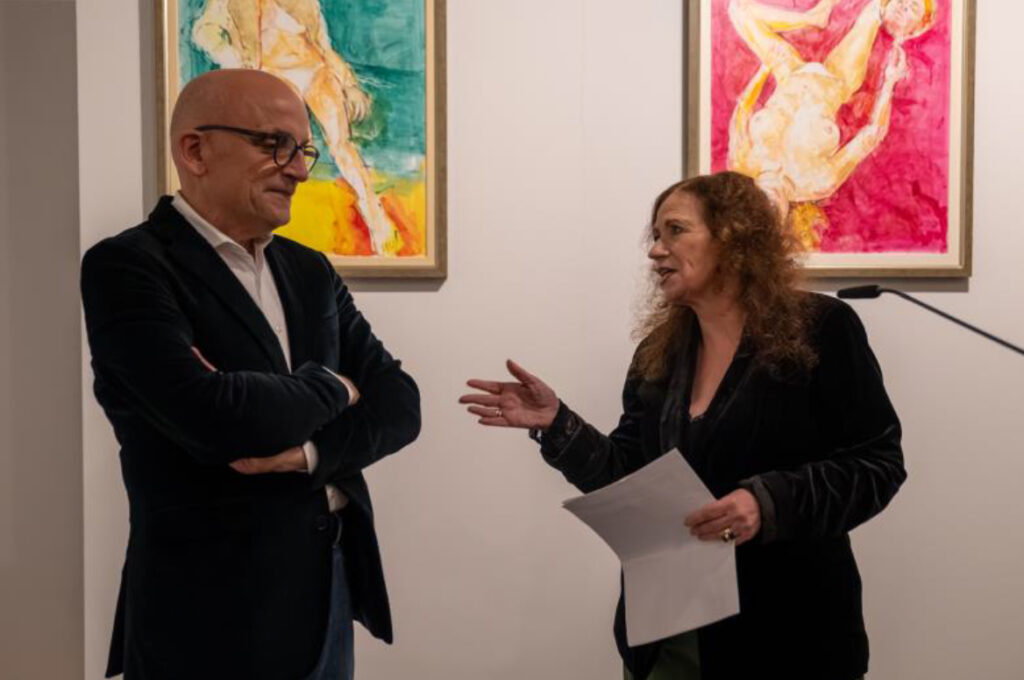
As the curator, Gloria Lauri-Lucente, notes: “What we encounter is not desire resolved… but desire in motion. Desire circulates between the artist, the model and also the viewer.”
This framing positions the exhibition itself as a space that is always dynamic and relational.
Drawing from feminist thinkers such as Simone de Beauvoir, Luce Irigara and Judith Butler, whose work traces a progression from existential becoming to the conceptualisation of gender as constructed and contested, Buttigieg’s practice is grounded in the simple act of looking and perceiving.
As he said: “Mutual attention shapes the work,” and it is precisely this relationality that unsettles the conventions of the classical female, blurring the boundaries between observer and observed, and generating an energising tension. When this dynamic enters the public sphere, viewers themselves become participants in the interplay, entangled in the ongoing negotiation between gaze and presence.
“What we encounter is not desire resolved… but desire in motion. Desire circulates between the artist, the model and also the viewer”
The paintings present imposing portraits of female nudes, materially and emotionally anchored yet suspended in time. Their luminosity emerges from thin, translucent layers of oil, often revealing the white of the gessoed canvas beneath. The effect is closer to watercolour than traditional oil, mirroring the delicacy of skin and establishing an intimate dialogue between paint and flesh.
Mirrors, self-reflection and mediation between self and Other, where in this case the Other is anyone beyond the model, add further complexity, layering the artist’s subjective perspective with the pursuit of truth.
Repetition of the central model, presented under the alias Cesca, reinforces this dialogue. Her recurring presence reflects shared time, trust and familiarity between artist and model, while the use of an alias introduces conceptual distance, allowing the figure to move beyond the individual.
As Buttigieg says: “The artworks are shaped by our shared time and attention, so there’s a high degree of co-creation.”
The paintings are complemented by plaster casts made directly from the model’s most intimate areas, offering an unmediated encounter with the human form. This process is documented in the meditative film Pros-thesis, in which the model, Cesca, actively participates in constructing and presenting her image, a representation without idealisation.
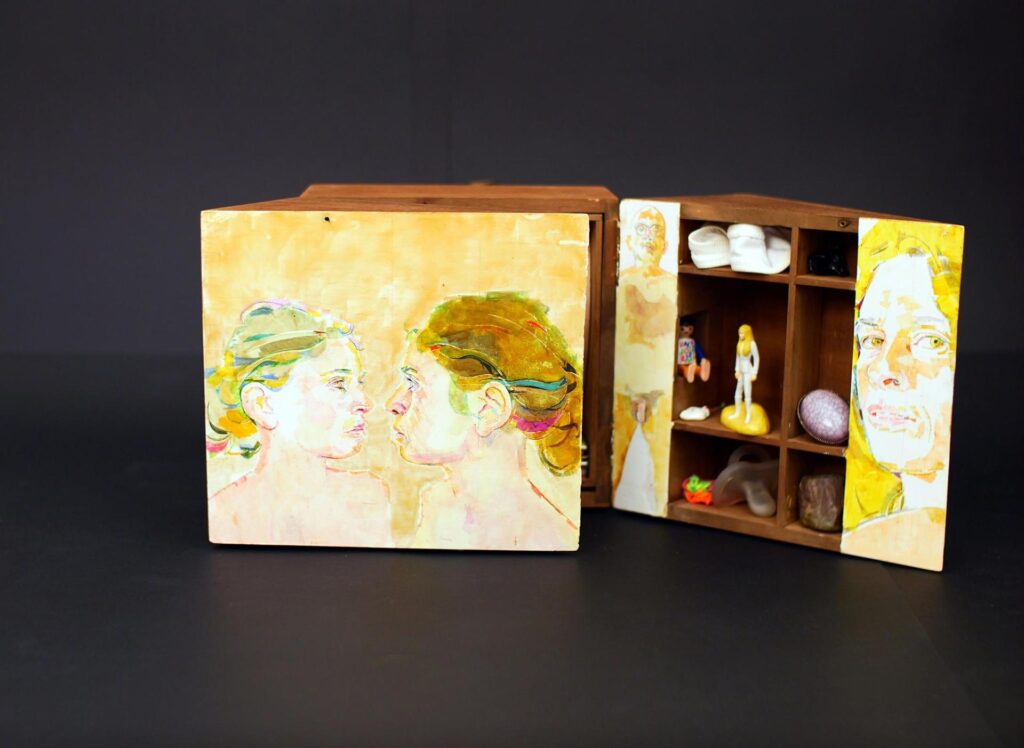
One of these casts appears in the box assemblages, which are highly curated and require meticulous preparation. Four working drawings reveal the underlying processes for these structures.
A short stop-motion film of one assemblage pairs the meditative qualities of Pros-thesis with a playful, temporal dimension. This playfulness, central to Buttigieg’s practice, links fragmented encounters with the body to personal gesture, imagination and the passage of time.
Buttigieg’s exhibition plays with how we have traditionally perceived the female Other, teasing the line between perception and subjectivity. Paintings, casts and films pull viewers into the interplay. It is intimate, teasing, restless and, in the end, it leaves you asking: if desire is never fixed, what does it mean to you?
Desire & Its Excess, curated by Gloria Lauri-Lucente, is open to the public until March 1 at Spazju Kreattiv, Space C.
Chrisallo Borg is pursuing a master’s degree in history of art at the University of Malta.