



For the second year in a row, a Brazilian movie has wowed international audiences and critics, securing multiple Oscar nominations and drawing fresh interest in the Latin American giant’s film industry.
Experts say the success of The Secret Agent, which has won four Oscar nominations, a year after I Am Still Here won Brazil its first Oscar, is no fluke, with a bit of a push from the country’s political climate.
“This is neither a coincidence nor a miracle. It is the result of a lot of work, consistent policies and, of course, talent,” Ilda Santiago, director of the Rio International Film Festival and an Oscar voter, said.
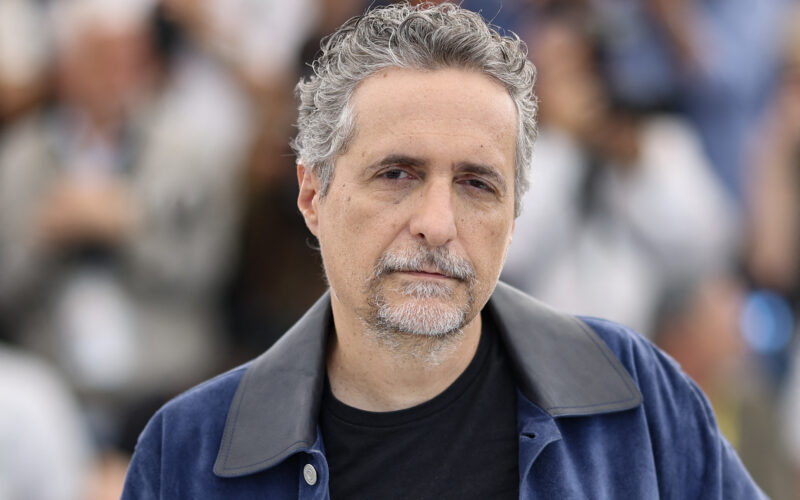
Directed by Kleber Mendonca Filho, The Secret Agent is a political thriller infused with magical realism. Like I Am Still Here, it is set during Brazil’s 1964-1985 military dictatorship.
It has been nominated for Oscars in the categories of best picture, best international feature film, best actor for Wagner Moura and best casting.
Santiago said these two big Brazilian movies resonated with foreign audiences “because they show how our daily lives can be transformed by governments, and that is a mirror of today’s world”.
This is especially true for Brazil, whose far-right former president Jair Bolsonaro − an open admirer of the dictatorship − is serving a 27-year prison term for plotting a coup.
Before Bolsonaro came to power in 2019, Brazil’s film industry had well-established financing mechanisms, much like those in countries like France, Canada and Germany.
Brazil has enjoyed waves of international breakout moments, with films such as Central Station in 1998, City of God in 2002 and Elite Squad starring Moura in 2007.
Mendonca Filho was also behind the art house hits Aquarius (2016) and Bacurau (2019).

Film revived under Lula
During his time in office Bolsonaro cut the budget of the Audiovisual Sector Fund by almost half, froze bidding for film project grants and threatened to shut down the national film agency if it did not impose an ideological “filter”.
“Brazilian cinema was plugged back in with Lula’s election in 2022, after four years in which culture, in practical terms, was extinguished,” Mendonca Filho said in an interview.
Lula’s government reactivated the funding application process and injected record amounts into the sector. The film industry received 1.4 billion reais ($269 million) in 2025, 180% more than in 2021.
Nevertheless, “putting each of those bricks that were dismantled back in place is a task that takes years”, said Santiago.
Influential film critic Isabela Boscov said that in the past “there was a failure to take advantage” of hit films.
She said Brazil was now “breaking out of the bubble”, much like Iranian cinema in the 1990s, Mexican cinema in the 2010s, and more recently, South Korean cinema.
‘Small and big victories’
Last year, I Am Still Here racked up several international awards, and won Fernanda Torres a Golden Globe for best actress.
The film won Brazil its first Oscar − for best international feature film.
The Secret Agent first earned plaudits at the Cannes Film Festival, where it won for best director and Wagner Moura won best actor.
The film then won two Golden Globes, for best non-English film and best male actor.
“It’s an accumulation of small and big victories, like Cannes, which form the foundation on which a campaign is built,” said Boscov.
She also pointed to the charm and wit of actors like Torres and Moura on the talk show circuit ahead of awards season as playing a fundamental role in promoting their films.
Several other movies have scored successes at film festivals, such as Manas in 2024 which tells the story of a 13-year-old confronting abuse on an Amazon island, and the dystopian 2025 drama The Blue Trail − in which Brazil’s elderly are ordered to move to remote housing colonies.
The Secret Agent is showing at Spazju Kreattiv, Valletta, on February 21, 24 and 27 and March 1, 7, 12 and 15. Tickets from spazjukreattiv.org.