Opening on Thursday (April 16), the Drama of Smaller European Languages (DoSEL) showcase is an international festival at which four different shows will be performed in Valletta’s Manoel Theatre over a two-week period. Hosted by the National Agency for the Performing Arts Malta and Teatru Malta, it’s an important celebration of how small languages can carry big ideas.
During the event, a new Maltese production and touring shows by established writers from three partner countries will be presented in their respective languages with English surtitles.
As the culmination of a two-year Creative Europe project, the festival also provides a space for theatre-goers who are interested in the process of theatre; for theatre-makers, emerging playwrights and translators; and for all those interested in the use of language in theatre, whatever that language may be.
It also includes talks, post-show Q&As and workshops at which visitors are invited to join the discussion about translingual writing and dramaturgy, contemporary European texts, translation and AI, and other topics.
“Like Maltese, other small European languages are facing challenges such as ‘how do we compete with the bigger languages?’ and ‘how do we get a good play in our small language to be heard, to be programmed?’” Sean Buhagiar, artistic director of Teatru Malta, says.
“These shared conversations, new thinking and international networks are exciting for us, helping our writers produce Maltese classics and to internationalise their work.”
The opening performance of the festival is Ir-Rebħa tal-Ħuta Li Ttir, or The Victory of the Flying Fish, a powerful historical drama, which is performed by a cast of six on a stylish set designed by award-winning set designer, Anthony Bonnici. It is directed by Philip Leone-Ganado.
“For the Maltese contribution we chose to present a work by the important theatre-maker Carmel Aquilina (1946-2020), who wrote plays that are seldom performed and are at risk of being forgotten,” Buhagiar points out.
“We picked Ir-Rebħa tal-Ħuta Li Ttir because it came second in the Francis Ebejer Prize over 20 years ago and was never performed. We liked the idea of putting on a ‘lost’ play with a nostalgic history which remains topical today.”
Inspired by real events from Malta’s colonial history, and blending history with symbolism, the play centres on the 1807 rebellion at Fort Ricasoli, when a regiment of Greek mercenaries revolted against the British authorities over poor pay and harsh treatment. The uprising ended violently, with the revolt brutally suppressed and several rebels executed.
Against this turbulent historical backdrop, the story explores the clash between empire and identity, and the sacrifices demanded by the hope for change as Constance, a young British woman, encounters the realities of colonial power and resistance.
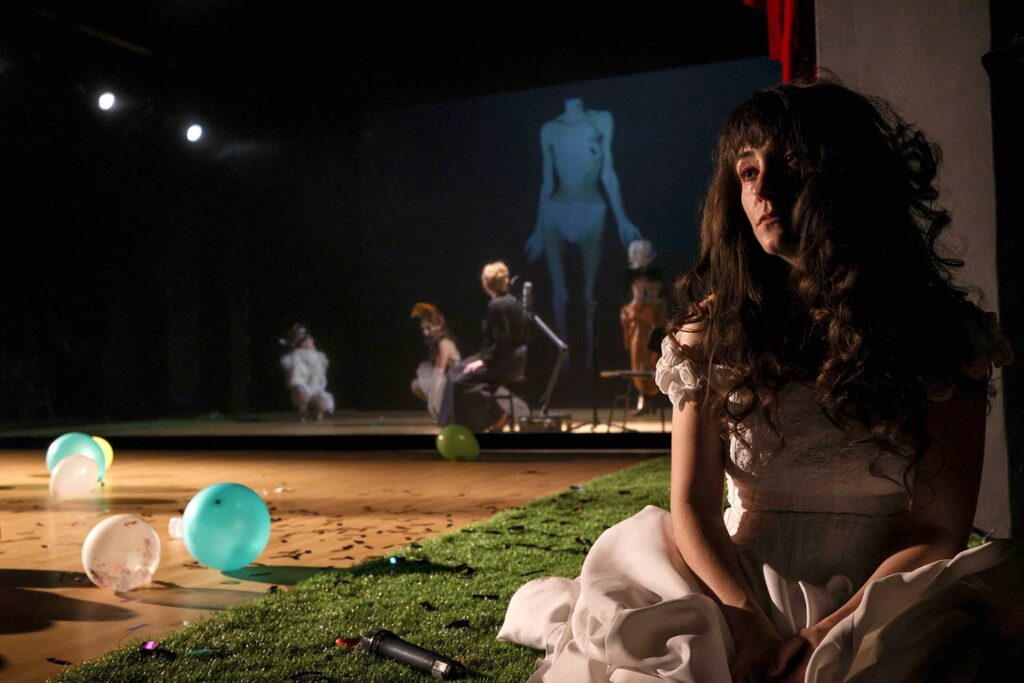
The cast stars Michela Farrugia, Jacob Piccinino, Miguel Formosa, Peter Busuttil, Simone Spiteri and Mikhail Basmadjian.
“We’re also excited to be bringing theatre from the Balkans to Malta,” Buhagiar continues. “It has a different history that gives it an aesthetic to which we’re rarely exposed. There are also language-based differences, and it’s interesting to explore the ways different languages approach theatre differently.”
On April 18, the newly premiered Tekst Telesa (Text of the Body) by Slovenian playwright Anja Novak is a powerful and contemporary drama that places the body itself at the centre of the story. Through illness, symptoms and physical experience, the body becomes a medium that reveals the world around it and the relationships that shape it.
By tracing the stories of three generations of women − a grandmother confronting questions of female pleasure and social expectations, a mother dealing with sexual abuse, and a daughter struggling with anorexia – it explores the way societal pressures, gender roles and power structures leave traces of personal and social history on the body.
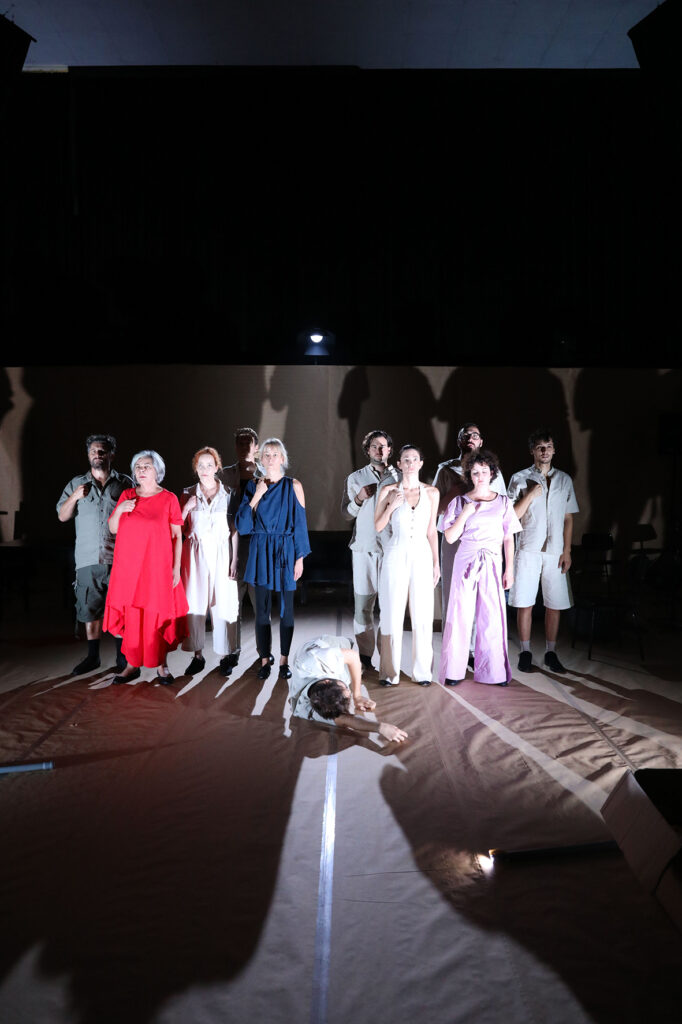
Always Be Like a Dragon, the powerful Croatian contribution to the festival’s performance programme by Espi Tomičić, also explores the impact of our experiences, blurring the line between drama and therapy as it moves between memory, imagination and reality, blending documentary realism with poetic reflection.
The play follows Petar, a trans man in therapy, as he revisits fragments of his childhood. Through conversations with his therapist and a chorus of voices from past and present, Petar reconstructs memories of a defining moment in his life, when he was still Matea. At the heart of the story is an abandoned apartment where Matea, her mother Jana and her siblings seek refuge from poverty and homelessness.
“Like Maltese, other small European languages are facing challenges”
Within this fragile space, the children invent a game of war, transforming the empty apartment into a military base. But beneath the playfulness, deeper tensions emerge as the children begin to confront questions of identity, family relationships, class insecurity and the unspoken traumas that shape their lives.
Although all four performances appear to coalesce around a common theme in which the past leaves its mark on the experiences of individuals, this is a reflection of the European collective subconscious and the conversations that have taken place over the last two years, rather than a deliberate decision to present a programme with a particular theme, Buhagiar explains.
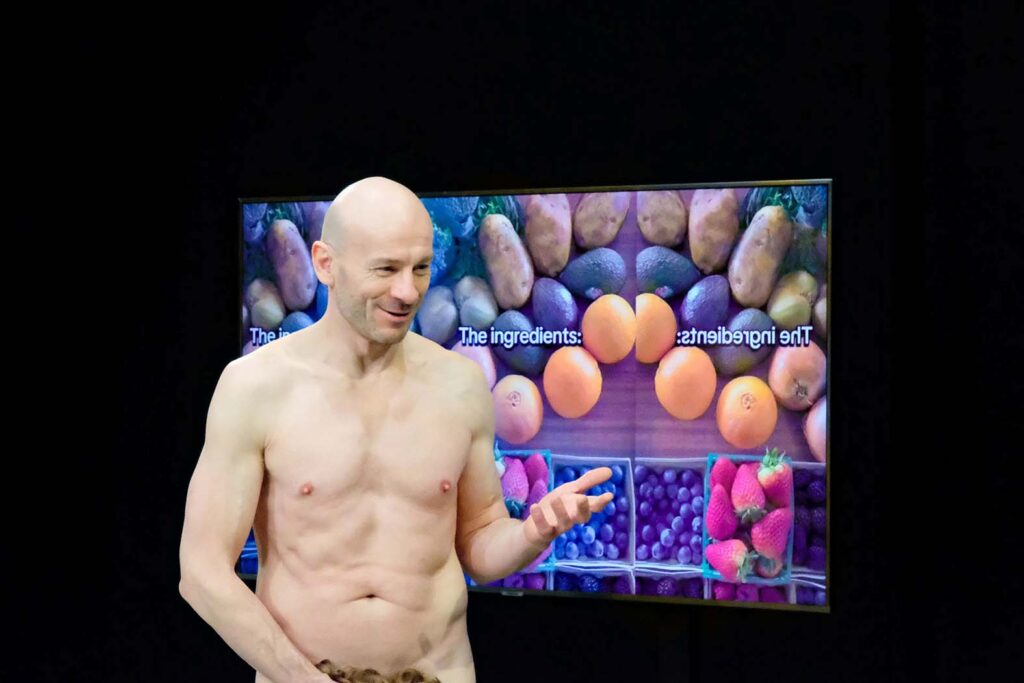
The Estonian National Agency presents the fourth performance, MEDIUM, a humorous thoughtful solo show by choreographer and performer Mart Kangro on April 22. It explores the complex relationship between the body, the media and the information overload that shapes our lives, of which we’re critical while finding ourselves strangely addicted.
Again, the body takes centre-stage as Kangro places himself at the centre of today’s overwhelming media landscape and pieces together an unexpected narrative about the modern condition through fragments of movement, text and reflection. Surrounded by a relentless stream of news, images and messages, there is only a thin line between the physical world and the digital one and the show asks, ‘How much of who we are is shaped by what we consume online?’
This question is particularly pertinent as larger global languages threaten their smaller but equally rich counterparts, clearly underlining the need for the DoSEL festival and its fresh thinking.
How are languages themselves shaping the stories we allow to influence us? What role can translations play in sense of self, in the maintenance of a country’s culture, and in our future?
Let’s hope Malta’s emerging playwrights and theatre-makers continue to be given the opportunity to make such a valuable contribution.
Tickets for DoSEL are available at teatrumanoel.mt/event/dosel.