




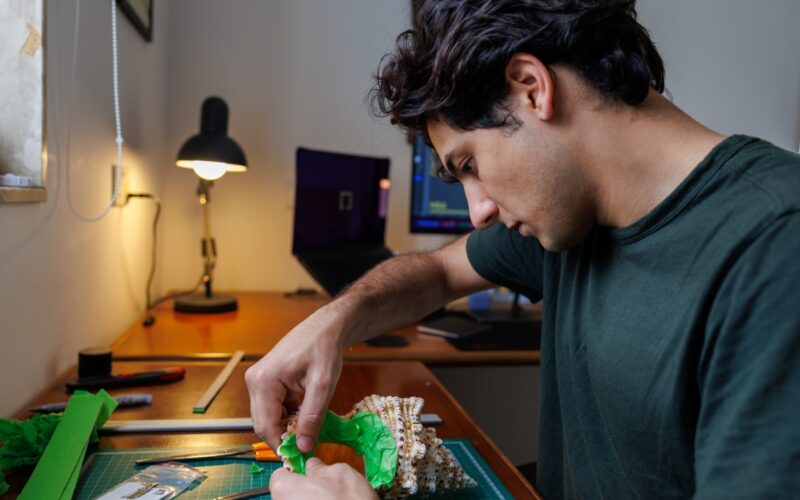
Josèf Farrugia’s exhibition Tabula Rasa opens today at the Malta Society of Arts in Valletta.
The exhibition has its roots in Farrugia’s interest in redefining and exploring the role of the audience. He observes how, despite his enthusiasm for the arts, he often feels traditional exhibition spaces to be “restrictive and almost anti-human”.
Farrugia is, therefore, resolved to give more space to visitor interaction, ultimately developing this project as a way of “demonstrating that exhibition spaces do not have to follow the same repetitive, ocular-centric model”.
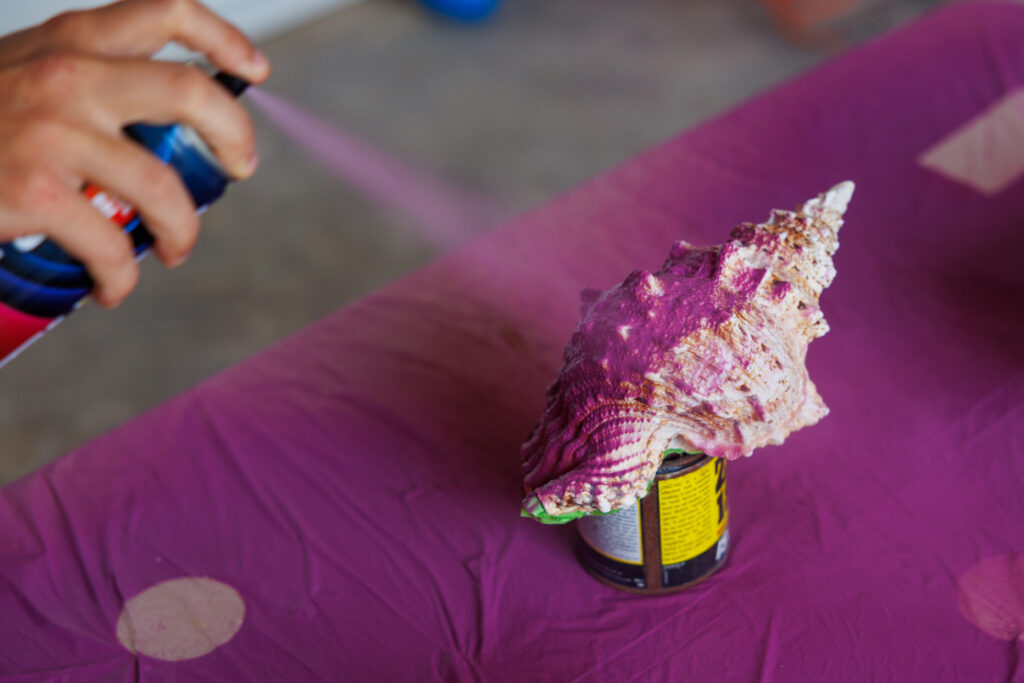
Exhibition spaces may be “challenged, reimagined and reshaped,” and Farrugia’s goal is to ensure that visitors have the agency to do exactly that, recognising their role as participants in the process. This meant “carefully rethinking how the work is encountered. Rather than presenting something to be passively viewed, the installation subtly disrupts those expectations through its method of spatial arrangement,” he says.
Tabula Rasa consists of five installations, engaging the full sensory spectrum, to deliberately break away from the dominance of sight. By creating immersive environments that appeal to the senses, Farrugia aims to encourage visitors to become aware of how they “perceive, interpret and construct meaning”.
Farrugia’s background as a multidisciplinary artist is key to creating such holistically experiential environments using mixed media; however, he specifies that “this project makes use of the human nervous system as its primary medium. My installations are not the artwork here; the true artwork is only created once the nervous system of the visitor is stimulated through the use of my installations. That moment of contact is the artwork.”
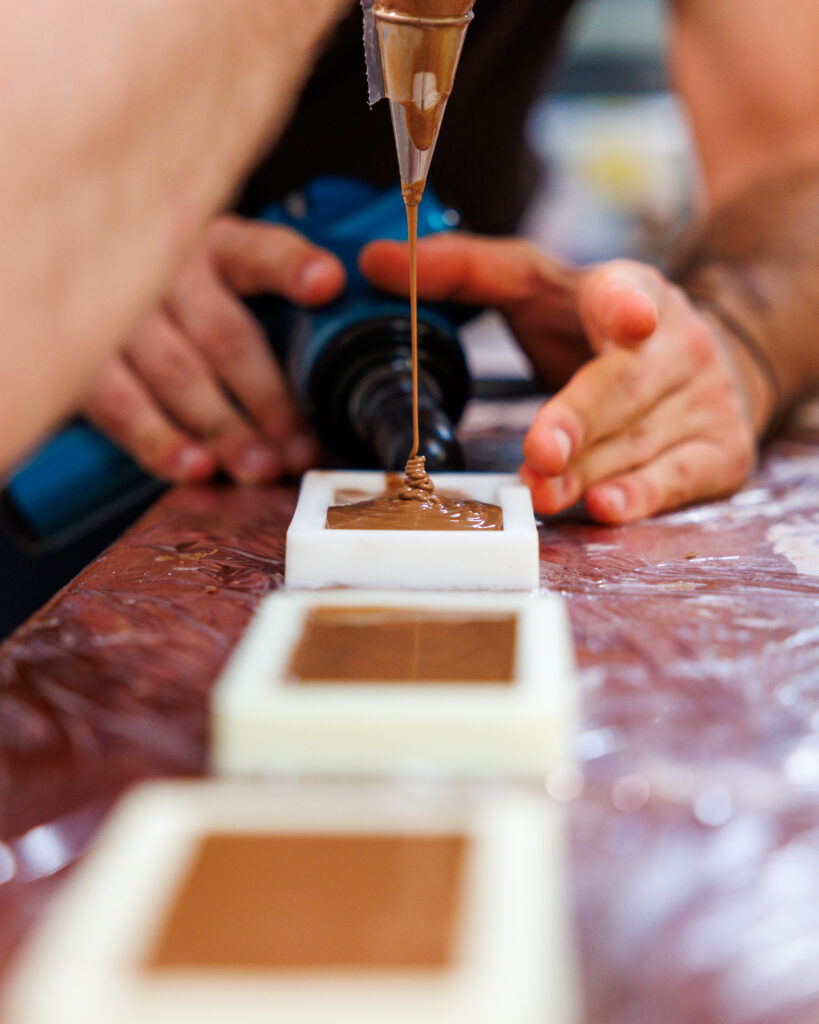
The idea for this exhibition emerged from research into the contexts of exhibition design, followed by interviews with industry professionals, including both artists and curators. This laid the basis for Farrugia’s practice-based research, which centres the visitor’s experience through a series of installations.
The exhibition becomes a space in which to experiment with the “relationship between perception, expectation and interaction”.
As Farrugia puts it: “It questions the conventional ‘white cube’ model and the passive role often assigned to viewers, instead proposing a more active, embodied form of engagement”.
As Tabula Rasa seeks to explore different facets of the ‘exhibition experience’, Farrugia’s vision also involved approaching the installation design by uniting the perspectives of different roles. The artistic motivation and the curatorial organisation of the exhibition converge in the visitor’s encounter.
“I curated from the perspective of a visitor. I curated with the expectations I have in mind as a visitor. I curated for people,” he says.
The exhibition journey is, therefore, not guided by a “fixed narrative”, but rather open to the visitor’s playful interaction.
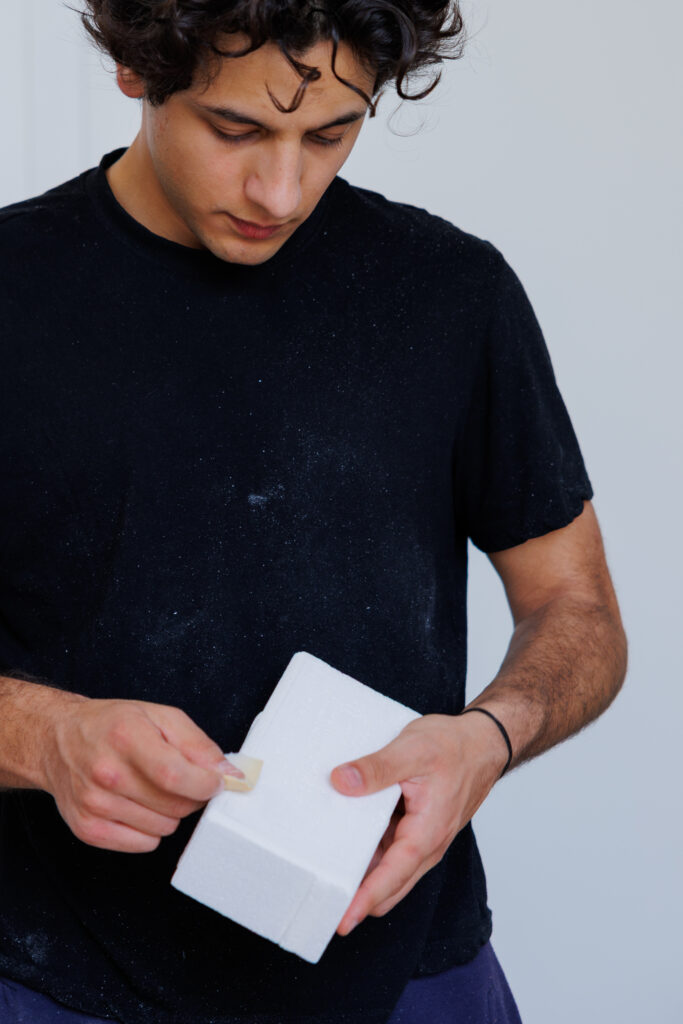

“The exhibition offers a series of encounters that unfold through movement, curiosity, and interaction.”
As a result, no two experiences are exactly the same: “Each visit becomes a personal negotiation between the individual and the space.”
Rather than presenting something to be observed at a respectful distance, the exhibition creates a situation to be experienced – one that is “designed to quietly challenge expectations and linger beyond the visit itself,” Farrugia concludes.
Tabula Rasa is on from today, April 23, to Sunday, April 26 at the Basement Vaults of the Malta Society of Arts, Palazzo de La Salle, 219, Republic Street, Valletta. The exhibition is open on Thursday from 7 to 10pm, and Friday to Sunday from 10am to 1pm and from 7pm to 10pm. Admission is free. For more information, visit www.artsmalta.org or www.facebook.com/maltasocietyofarts.