


Firmament presents a new body of work by Ryan Falzon. It is the artist’s most introspective collection to date. The exhibition takes its cue from the concept of the firmament, described in various ancient texts as the threshold between this world and the next, sometimes heaven, at others hell.
Drawing on philosophical, alchemical and religious texts, the exhibition unfolds through painting, writing and installation, tracking a desire to move beyond stable and hierarchical cosmologies that no longer serve contemporary needs. Lying hidden beneath it all is Falzon’s own recent experience of loss.
“The selection of sources is both intentional and restrictive,” Falzon tells me. “The references were not approached as a comprehensive archive, but rather as a curated field of inquiry shaped by resonance and relevance.
“Throughout the process, I felt that this area of research could easily expand without limit. Its density and symbolic richness invite digression, where aesthetic or conceptual fascination can begin to dominate the work, so a certain distance was essential.
“The aim was to maintain a balance between depth of research and clarity of direction, keeping sight of the larger conceptual framework while avoiding over-determination by any single source or system.”
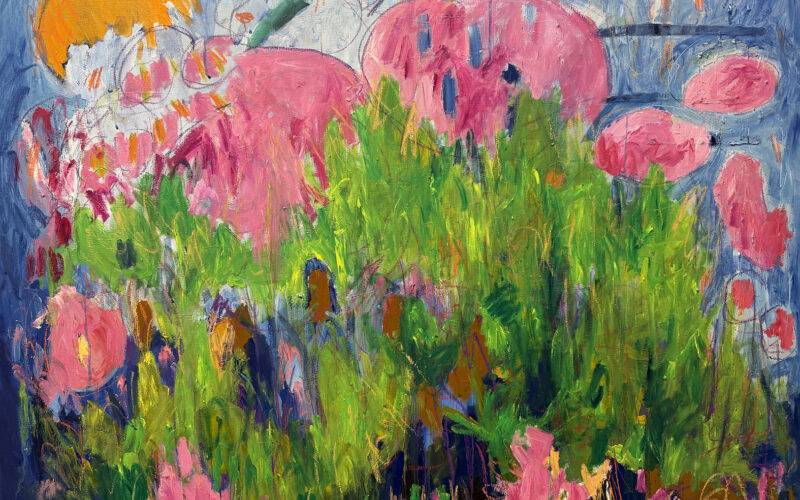
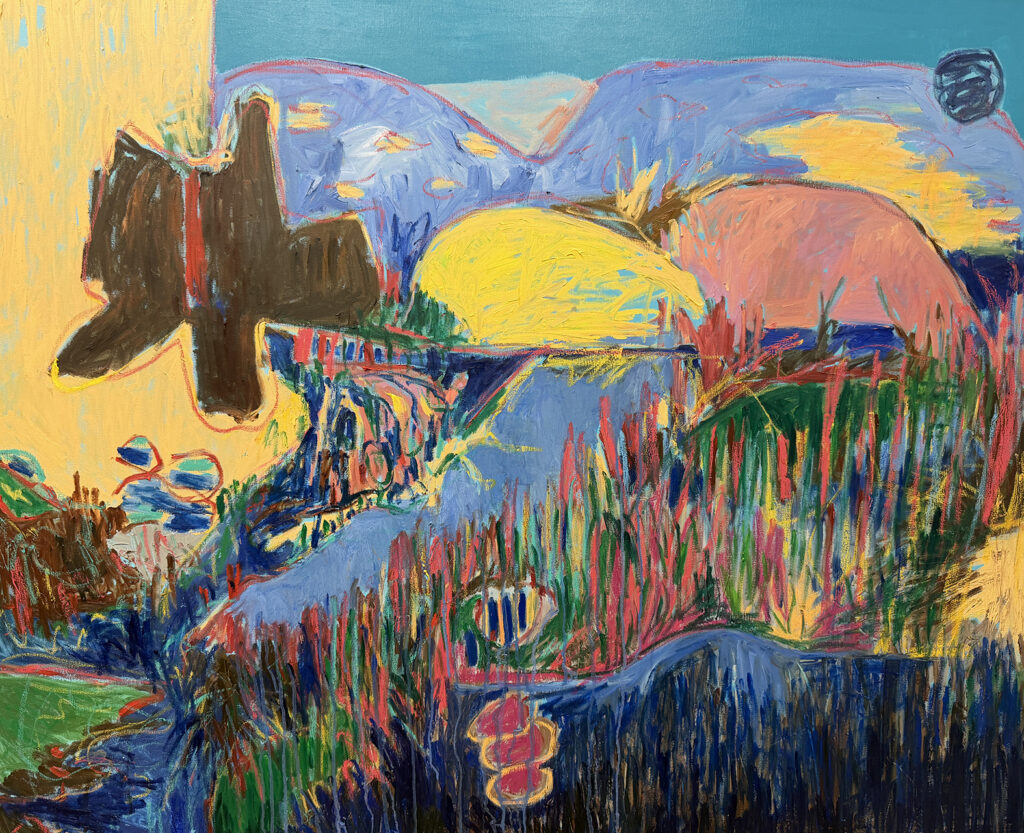
The paintings that result from this approach are not entirely abstract, but are the furthest that Falzon has gone towards non-representation. I ask about the experience of moving from the Arcana series, that merged pop symbolism and gestural painting, to these new works.
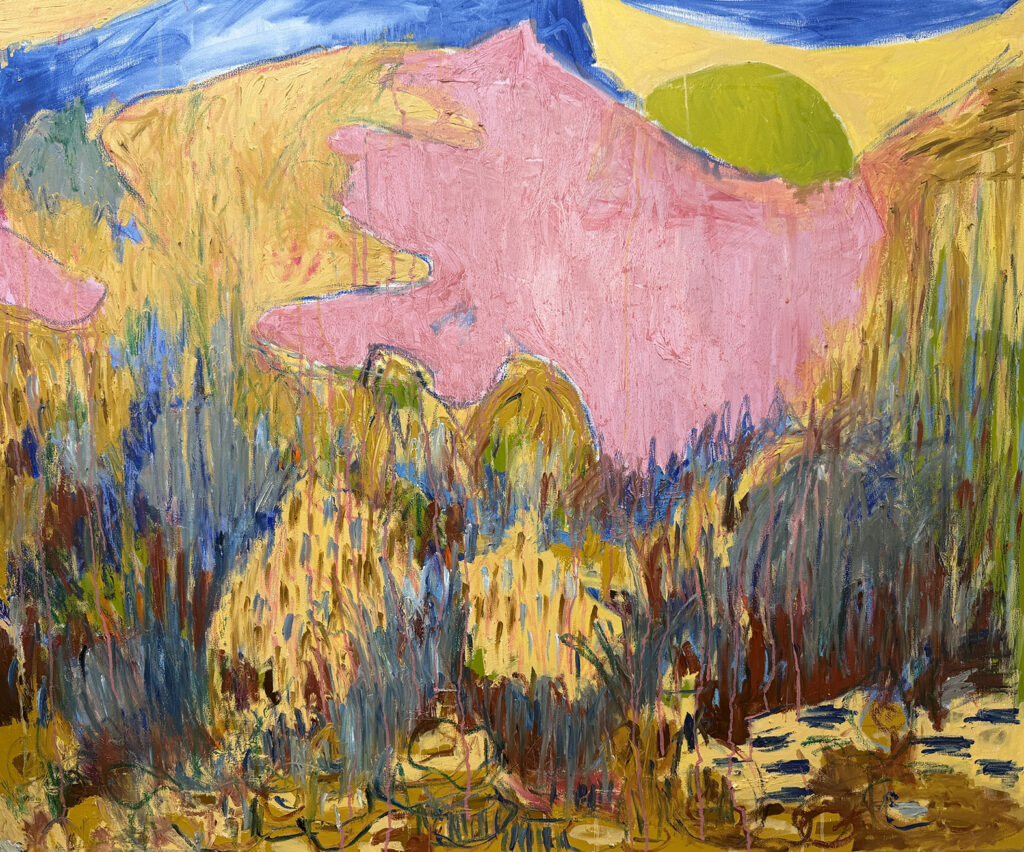
“The pop symbolism that featured strongly in earlier works has suddenly dissolved,” Falzon notes.
“Looking back, those elements now feel like a kind of crutch or façade, a way of keeping the viewer at a distance from the deeper layers. I used to speak about literal layering; now it feels as though the upper layers have been eroded, or washed away, revealing a surface that is more raw, vulnerable and direct. I tend to think of these paintings as suspended terrains, though not landscapes. During the painting process, I often imagine an act of unveiling, and the slow exposure of what lies beneath.”
He adds that he works “in series” and approaches painting intuitively, usually without extensive preparation.
“The paintings are allowed to grow organically, with the most important stage being revision. Stepping away and returning with a fresh eye allows the work to settle and deepen. The pieces remain present in my thoughts even when I’m not physically in the studio, and that slow, ongoing reflection becomes part of the process through which the paintings continue to develop and are eventually, if ever, concluded.”
This concern with ancestry and slow revelation repeats itself in the writing that is featured in Firmament, which is markedly different from what Falzon has written before.
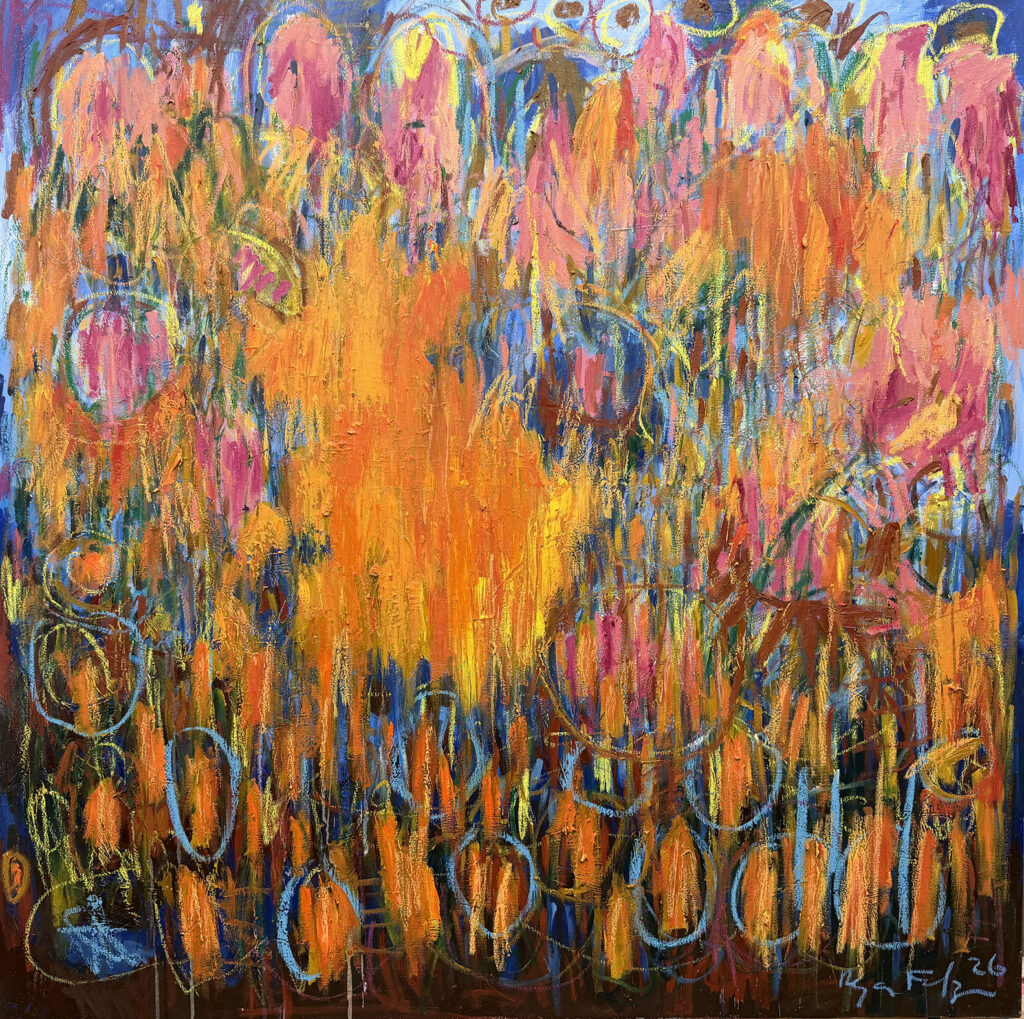
“In the writings, the past continuously informs the contemporary quotidian. I attempt to explore how inherited narratives, histories and symbols continue to shape our understanding of ourselves today. Themes of nostalgia, space and identity are recurring preoccupations within my work,” Falzon notes.
“In the case of Firmament, the subject matter originates from the ancient world, so adopting a retrospective approach felt entirely natural. The writing moves unapologetically between fact and fiction, research and constructed narrative, aiming to capture a contained cosmos under a firmament.”
The paintings and texts balance each other by reflecting the conceptual tension between world and elsewhere.
“The paintings emerge from a place of imagining what could have been, both through an adaptation of past symbolism and through envisioning how previous civilisations may have perceived the beyond. The subject of the firmament, being inherently mystical and intangible, naturally invites one to construct dream-like worlds.
“The writing, on the other hand, comes from the present, from lived experience and observation, and aligns itself with contemporary preoccupations and tensions.”
I am curious about the point at which the work comes into contact with lived experience. As the election loomed, the perennial feeling that the system must be transcended or torn up, was heightened. Is this exhibition a proposition for how to do things differently?
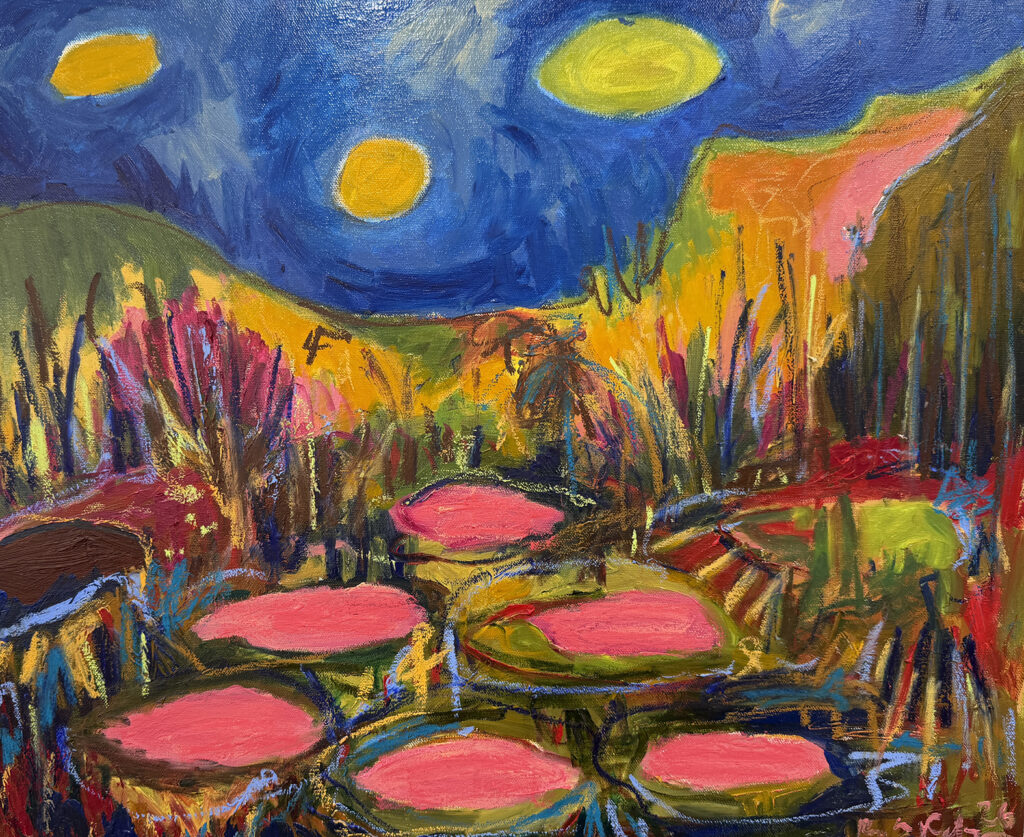
“I intentionally sought to keep this body of work, particularly the paintings, as pure as possible, distancing them from the social and political influences that often become embedded within layered imagery. Of course, the viewer has every right to project such readings onto the works, and I welcome that openness. Yet for me, this process also became a kind of respite from those persistent tensions, an intention I hoped would extend to the audience as well,” Falzon says.
“The writing, however, operates differently. It is more immediate, cynical and grounded in the present. The transition created through the exhibition’s multimedia approach between painting, text and the interventions reflects the complexity of human experience.”
Falzon has recently gone through a period of personal grief and loss. With its repeated mention of death, it is impossible not to connect Firmament with that experience.
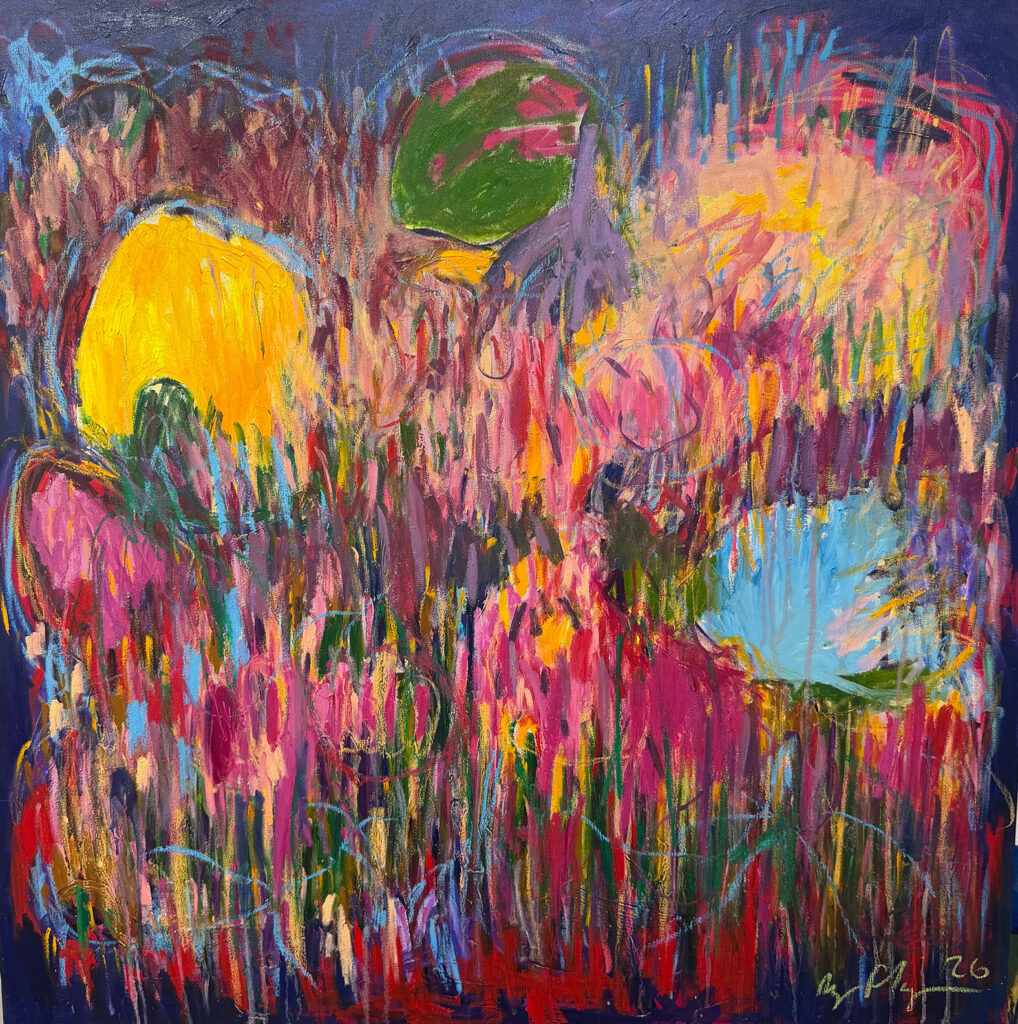
“Death emerges most directly within my writing. It surfaced almost instinctively while writing intensely at night, a time which, for me, feels like a veil drawn over the sensory world. Experiencing the night in a rural environment alters one’s perception entirely: the world quietens, an underlying sense of fear slowly creeps in, and one begins to long for the first bursts of light,” the artist shares.
“There is also an interplay between personal and spiritual essences. This internal retrospection echoes throughout the exhibition, culminating in a breakthrough in the last room. In many ways, the exhibition suggests that truth ultimately resides within the self.”
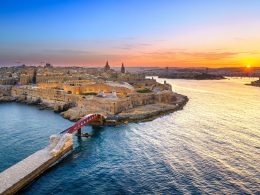
Firmament is on display at Spazju Kreattiv, Valletta, until June 28. It is curated by Veruschka Götz and François Zammit.