




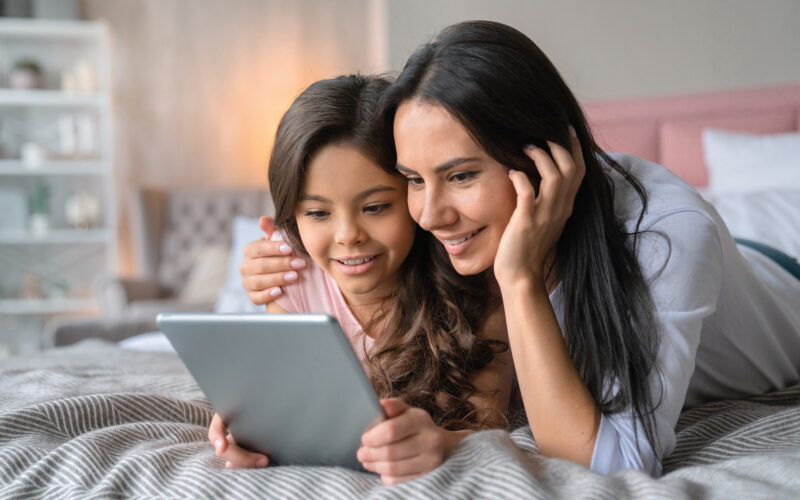
If you’ve ever quietly slipped a phone into a small pair of hands just to get through ironing the clothes, cooking dinner or even to use the bathroom in peace, don’t worry, you’re in excellent company.
A cursory glance around restaurants, supermarkets, shopping malls, playgrounds and your own living room will attest to the fact that screens have become part of modern family life in Malta. We don’t introduce tablets to toddlers because we’re careless; we do it because we’re human, and sometimes technology feels like the only thing standing between us and total chaotic meltdown
That’s the reality many shared with us in our recent study of 2,017 children aged seven to 15 across Malta and Gozo (Attard et al, 2025)*, entrusted to the Faculty for Social Well-being, University of Malta, by the Office of the Commissioner for Children, with the support of the Ministry for Social Policy and Children’s Rights.
By surveying a nationally representative sample of children, it aimed to understand what children are actually doing online, how they feel there and how we − imperfect, overstretched, loving parents − fit into the picture through interviews with various stakeholders, including parents, of course.
What we learned is that screens enter children’s lives gently at first. A cartoon to soothe a toddler. A game on mum’s phone during a long wait. But little by little, the relationship deepens.
By age seven, many children already have gaming consoles. Almost half of 11-year-olds are confidently navigating the online world alone. And by 12, despite official age restrictions, a significant number, almost 40 per cent, are already on social media, sometimes with parental knowledge, sometimes without.
By the teenage years, digital independence is almost universal: 97% of 13- to 15-year-olds are online every single day, on average for eight hours, and nearly two-thirds do so without any adult nearby. It’s not that they want to shut us out. It’s just that the digital world has become where life happens and where friendships are maintained, where stuff is shared, where insecurities brew, comparisons bloom, and where curiosity leads to exciting places… and sometimes into much darker, cobwebbed corners.
When we asked children what they saw online, their answers were both unsurprising and difficult to hear: 68% had watched violent content and 61% had seen videos that frightened or disturbed them – over half of the seven- to 10-year-olds had. The older the kids, the worse the online bullying and mean comments they had been exposed to. And 22% of the youngest children in this study had seen self-harm content − a number that should make every parent pause in their tracks.
What struck us most wasn’t just what they saw but how they coped with what they saw: 52% simply ignored it, avoidance and possibly desensitisation at its best, and 36% told no one at all. Not because they didn’t care, of course they did, but very probably because they didn’t want to worry anyone or didn’t know how to begin that conversation.
One 11-year-old I spoke to recently said something that stayed with me long after they were gone: “Sometimes you scroll past something, but it doesn’t leave you. You just have to do what you can to keep it out of your mind because it will drive you crazy.”
“The real danger isn’t children going online, it’s children going online alone”
The risks aren’t only psychological and emotional. Some of the more dangerous behaviours skewed surprisingly young; 15.5% of children had spoken with an adult online they’d never met in person, and shockingly, 8.6% had arranged real-life meetings with those strangers − something younger children were more likely to report to have done than teenagers, not out of rebellion, but often out of innocence, naivety and curiosity.
Maltese children also spoke about how the digital world pulls them away from things they used to enjoy or need to do for their well-being. Almost 45% admitted they sometimes skip homework or studying because they’ve been online too long. Nearly one-third said they lose sleep − though for older teens, that number rises closer to 40%, many of whom watch videos or chat into the night.
Others said they often miss meals, hobbies or meeting friends face-to-face. Boys confessed more often to skipping hygiene routines, while girls admitted that academic work suffered when they lost track of time online. Screens don’t have to be “bad” to quietly reshape childhood − they just need to be ever-present, and from what we have seen, they are.
As for parents, they spoke about trying to set rules but struggling to enforce them, especially when work is long and demanding or older siblings have different privileges. Some admitted that they sometimes use their own phone more than they’d like and that makes setting limits feel hypocritical.
Others described wanting to monitor online activities but feeling outpaced by their child’s digital skills, and they also shared their dilemma about the tug of war between wanting to protect their child and not wanting them to feel excluded from their peer group.
What came through consistently, though, was the love, confusion and self-doubt behind every effort, every rule, every mistake. Parents weren’t failing. They were mostly trying, really trying to parent a child in a world that changed faster than any of us could adapt.
And amid all the worries, something hopeful emerges. Evidently, children genuinely want us involved, not hovering or policing, but simply being present. Clearly, they like it when a parent watches videos with them or listens to them describe a game, when a parent asks questions with gentle authority but without panicking, sounding angry or immediately blaming the child, or when someone laughs with them at something they’ve found online. What they want is not control, but safety and companionship found in the parent who is authoritative but not authoritarian.
For me, as a parent, that was the part that saved me from instant mind mayhem. We don’t need to throw our phones away, or ban everything for everyone, or suddenly become cybersecurity specialists. Our children aren’t asking for that.
What they need from us is smaller, gentler, more human. They need us to sit with them sometimes while they scroll, rather than ask what they’re doing from the kitchen stove with our backs to them, to ask questions that come from curiosity, not fear. To share their laughter over funny videos or check out the influencers they follow. To let them teach us a game we’ll always be terrible at, and they will inevitably trash us at. And, maybe most crucially, to be the person they come to when something online feels uncomfortable, or scary or wrong.
Conducting this study didn’t make me feel guilty about my own parenting (believe me, I have my own late-night screen battles and arguments over homework, sleep and YouTube). Instead, it made me feel hopeful, because the solution isn’t enormous or impossible. It’s connection. Not perfect connection − just presence, interest, conversation.
Some evenings, after the kids are in bed, I remind myself that I don’t need to be an expert to be part of their online world. I sit with them more often now, sometimes watching the videos they love, sometimes asking them to explain a game I cannot for the life of me make sense of. When something odd or upsetting shows up on one of their screens, I remind myself to breathe before reacting.
“Thanks for telling me,” I say first, even when my heart drops. And I’m learning to put my own phone down more often, not perfectly, but intentionally. They notice that too. It’s all a work in progress, but then again, so is parenting. And that’s okay.
In other words, they need us in the same way they always have, just now in a digital landscape as well as a physical one, because the real danger isn’t children going online, it’s children going online alone. What they lack, in fact, is not technical ability − they are true experts − they lack emotional and developmental readiness to navigate this world alone.
The truth is, childhood hasn’t been replaced by screens. It’s simply moved, partially, into them. And our children don’t want us to drag them out of that world. They want us to walk into it with them when it’s their time for them to be in it.
*The report is available here.
Roberta Attard is a clinical psychologist and researcher specialised in child and young person psychological issue.
If you’re interested in learning more about the counselling profession or would like additional information on mental health and self-care, visit www.macpmalta.org, www.facebook.com/ CounsellingMaltaMACP or e-mail info@macpmalta.org.
For more contributions by the MACP, click here. For more Child stories, follow this link.