


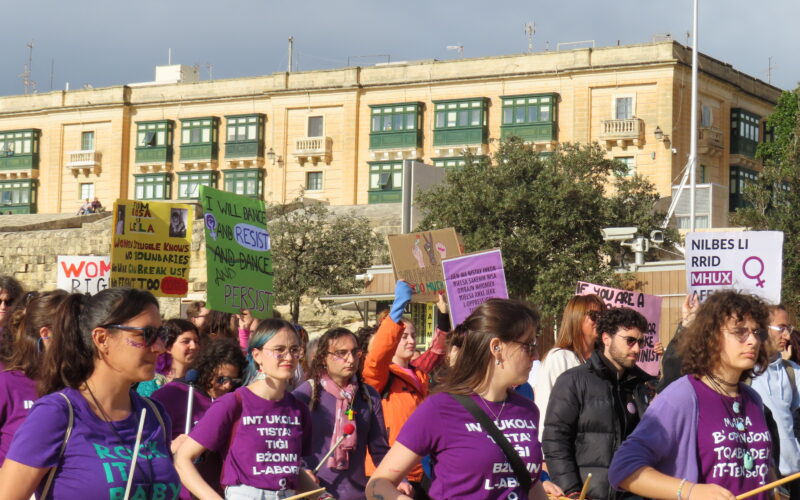
As conservative rhetoric rises across several European countries, pushing back social progress and minority rights, Malta is beginning to see similar patterns.
Far-right talking points “traditional values”, “protecting the family” and “gender ideology” are increasingly visible in online discourse, political conversations and everyday interactions.
Research across Europe has documented a clear connection between far-right politics and anti-feminist rhetoric.
A 2024 study by the European Policy Centre found that young men’s financial insecurity is strongly linked to anti-gender sentiment − a dynamic far-right movements exploit by framing feminism as the cause of their economic frustrations.
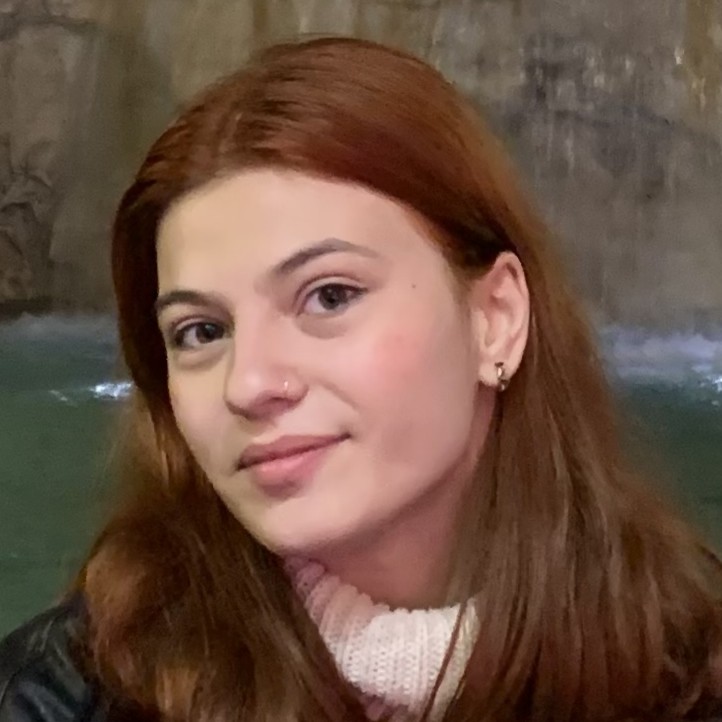
For Louiselle Vassallo, an academic and PhD researcher at the University of Malta, the consequences for women’s rights are already visible on the island. Vassallo’s academic interest focuses on activism, human rights and the protection of women journalists.
Although not a feminist at first, with direct exposure to inequalities and her years working in the media, she realised something.
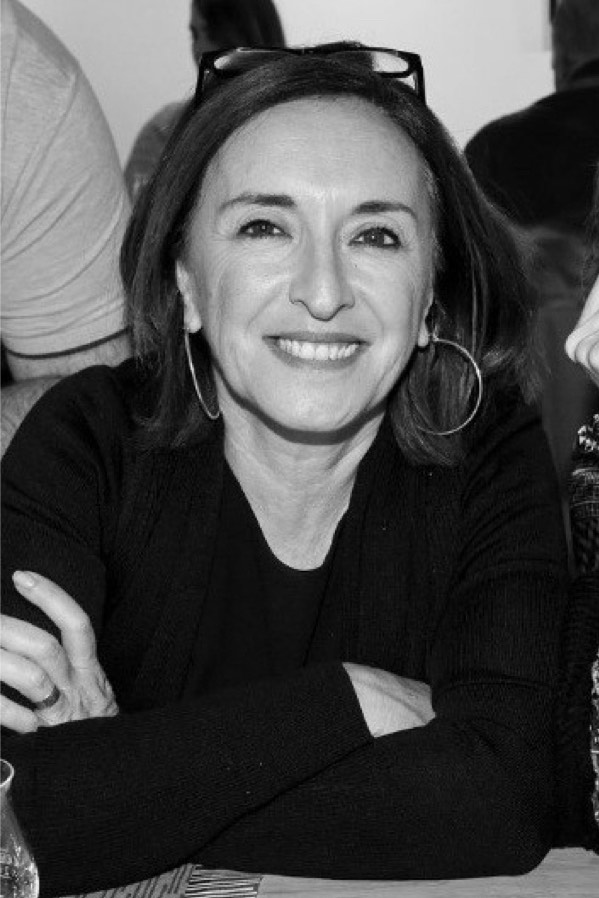
“I became more aware of the different expectations placed on women, the gender pay gap, the injustices I couldn’t articulate when I was younger,” Vassallo said.
Today, she sees feminism as a human-rights framework.
“Feminism is very relevant because no country has achieved full equality. And where equality is strong, the whole community benefits.”
When asked about Malta’s current feminist climate, Vassallo is cautiously optimistic.
“There are more women now claiming to be feminists. Younger women are more vocal, especially about abortion − a conversation that was unthinkable not long ago.”
Far-right narratives land locally
In Europe, far-right movements rely heavily on traditional gender roles, narrow definitions of identity and a nostalgia for hierarchical family structures.
In Malta, Vassallo says, similar messages can be seen sometimes through politics, other times through online discourse.
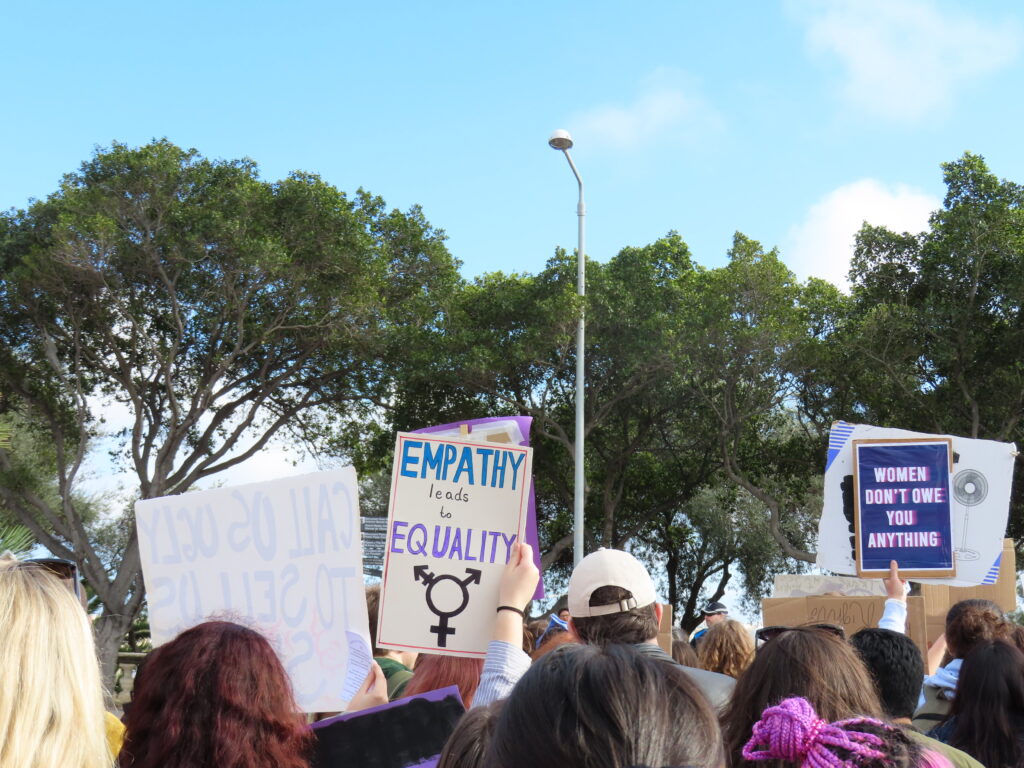
“There are far-right groups here, which especially gained traction in the MEP elections. I think the far-right enjoys the crumbs of the people who are disgruntled with their main parties, because, we’re quite polarised here in Malta. I see some politicians who manifest right-wing ideals in both parties as well.”
Feminism becomes an easy target in such environment, she argues.
“The far-right thrives on control over women’s lives. They promote unrealistic family models, like stay-at-home mothers, which no longer reflect economic reality. Women are damned if they do, damned if they don’t.”
Not all challenges come from explicit political rhetoric. Some of them have manifested themselves in the same women who are being attacked.
“Women are torn,” Vassallo says. “They want to be kind, maintain a good reputation, raise a family, have a career – and they’re navigating expectations shaped by religion, culture and the media.”
That tension often leads to internalised misogyny in women.
She sees it in public reactions to gender-based violence: “People know victim-blaming is wrong, yet they still say, ‘maybe she shouldn’t have worn a miniskirt.’ It contradicts their own values, but that’s how ingrained these misogynistic beliefs are.”
“Women are torn. They want to be kind, maintain a good reputation, raise a family, have a career – and they’re navigating expectations shaped by religion, culture and the media”
Media narratives often reinforce this. She recounts hearing a recent radio advert portraying a nagging wife and a mansplaining husband.
“I thought, oh my God, we’re still doing this.”
Weaponising women’s safety
One worrying trend across Europe is ‘femonationalism’ – the use of women’s safety to push xenophobic or conservative agendas.
“It patronises women, treats them like objects and exploits fear of migrants. It’s possesive and dangerous.”
She criticised politicians for promoting division instead of fostering traditional Maltese kindness, resulting in a “selective hospitality” and “selective kindness”.
A call for empathy
Despite all this noise, she sees hope in education, activism and young women’s confidence.
Progress requires persistence and the key is education, particularly comprehensive media literacy starting from a young age. In a time of rising polarisation, feminism’s role is not diminished − but more necessary than ever, she said.
“People ultimately want simple things − stability, safety, time with loved ones. Equality helps everyone get there. If everyone were kind, there would be no problems in the world.”