



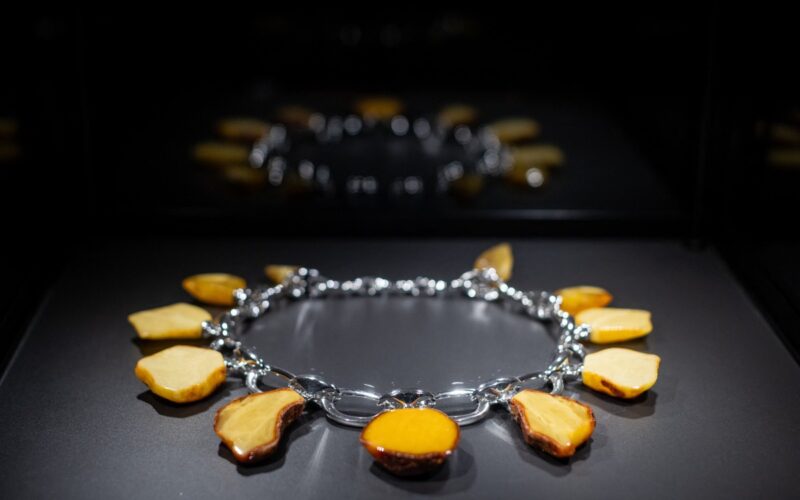
Long coveted for its golden colour, scientific value and alleged healing properties, young Polish jewellers are transforming ancient amber into trendy pieces for the contemporary consumer.
Designers working with the translucent fossil are combining traditional tools like drills, sanders, blasters and power saws with state-of-the-art technology at the Academy of Fine Arts in Gdansk, a city on Poland’s Baltic Coast known as the global amber capital.
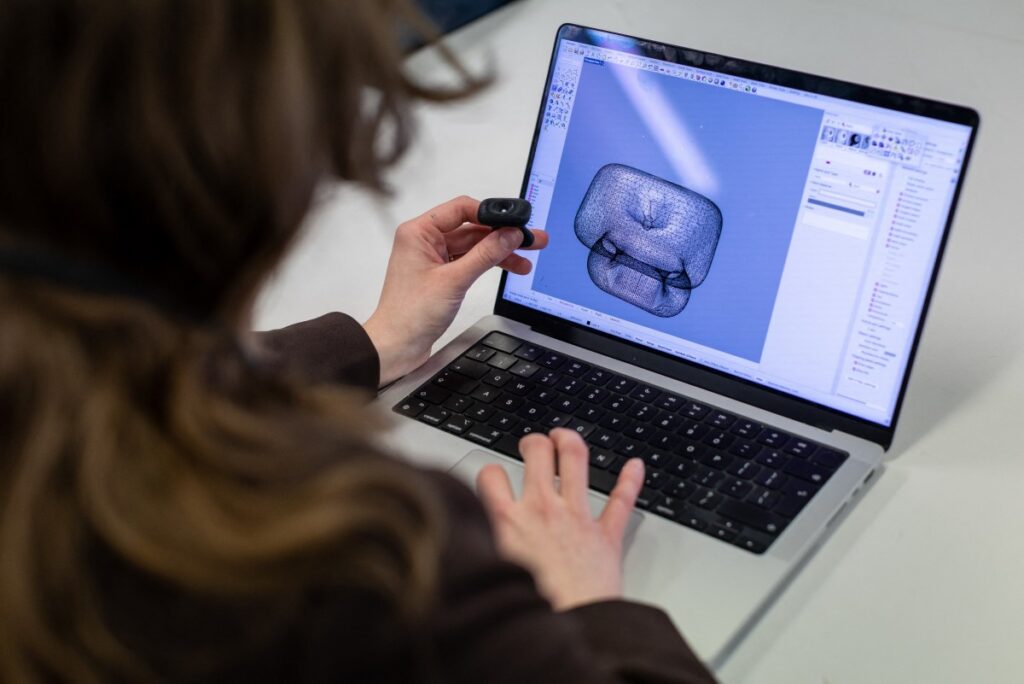
In virtual reality studios, students use their screens to silently assemble objects that spin, whirl and twist, and may one day become a new generation of prized jewellery.
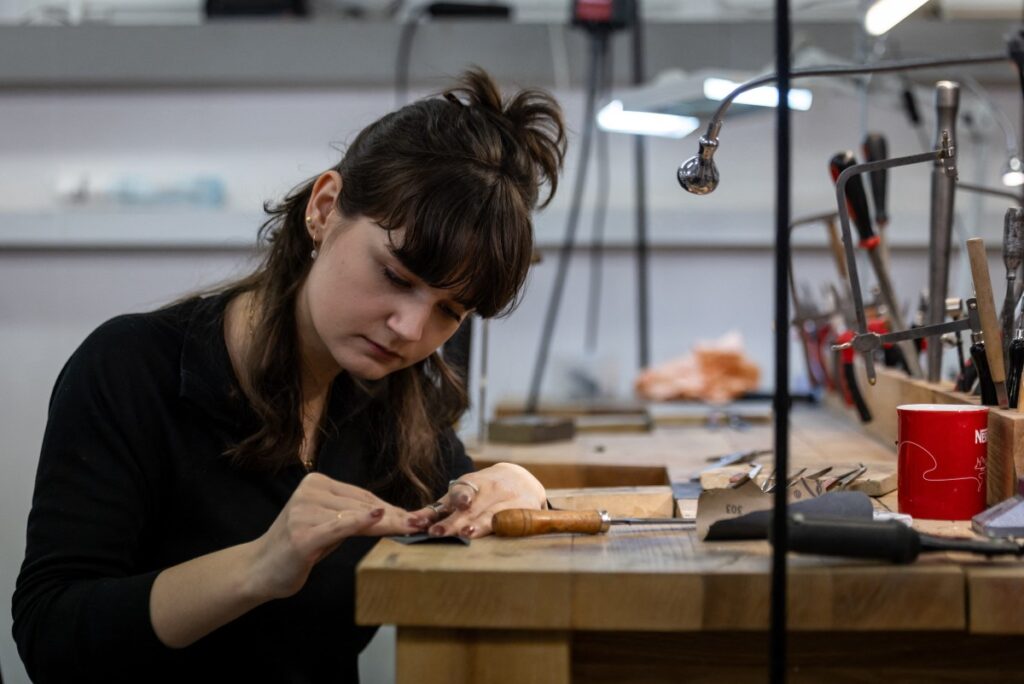
“From the very start, we learn the complete processes (of design), how to apply our creativity to them, how to use diverse technologies,” student Martyna Golinska, 26, said.
She is particularly drawn to the CNC numerical milling technique, most often used in the aerospace, automotive and medical industries.
‘Hacking’ technology
For fellow student Paulina Smigiel, the challenge in these simulations is to translate one’s artistic vision into the language of numbers a machine can understand.
“If we succeed,” she said, “no other mechanical intervention is necessary”.
This is how rings, necklaces, bracelets, masks, tiaras and more are brought to life: made from or adorned with amber dipped into or wreathed in gold, silver or titanium.
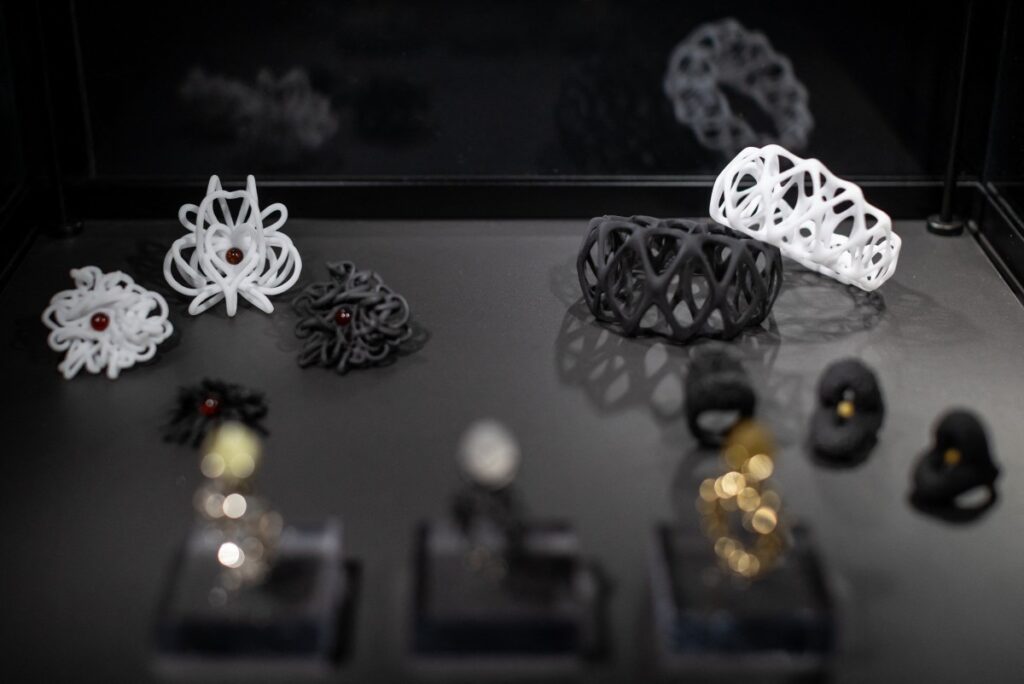
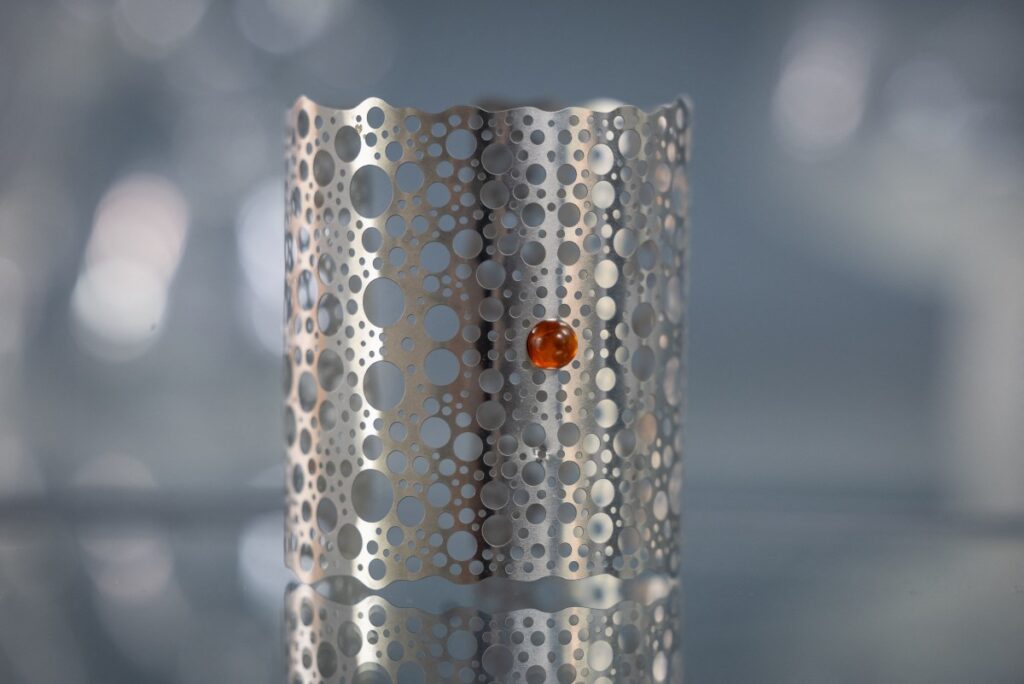
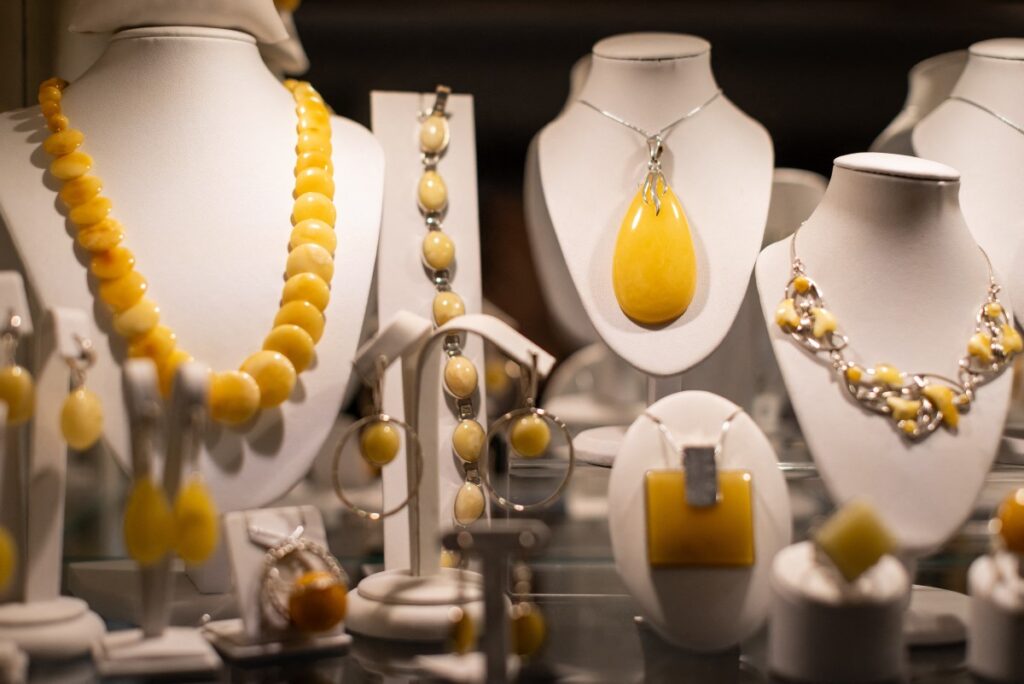
Whether they are milled or 3D-printed, standalone pieces or combined with other stones, minimalist or complex, they are not the traditional pieces of amber jewellery synonymous with Polish gift shops.
“We encourage students to look for their own keys, their own ways of ‘hacking’ different technologies, whether they are traditional or more recent, or still only just appearing on the horizon,” said 26-year-old graduate-turned-assistant instructor Zuzanna Franczak.
“It’s constantly evolving, and artificial intelligence is already starting to make an appearance,” she added.
‘Amber road’
The students’ creativity is showcased in pieces and catalogues as well as at a dedicated exhibition at the Amber Museum along the Baltic Coast, on what was once known as the “Amber Road”.
One of the most important trade routes of classical antiquity, it was here that so-called “Baltic gold” was transported to the Mediterranean.
Formed some 40 million years ago from conifer resins, amber often contains air bubbles, plant fragments or insects trapped before fossilisation, granting each piece a unique “fingerprint”.
Once lauded by Ovid, Nero and Pliny the Elder, amber is prized in China for its supposed therapeutic properties and sought-after in the Muslim world, most notably for use in prayer beads.
In Gdansk itself, workshops, shops and stalls dedicated to amber abound on every corner of the historic centre, each attracting flocks of tourists.
‘Something new’
For centuries, amber has been associated with traditional patterns which are still used by many local artists and artisans, according to 21-year-old student Dominika Afeltowicz.
But while their old-fashioned “holiday souvenir” appeal endures, “young people are looking for something new”, she said.
Budding designers like her must therefore “experiment” and “push the limits”, she said.
Relatively malleable, amber lends itself perfectly to experimental design, bending easily to the designer’s will.
The delicate material − whose colours range from dark red to opaque white − retains its distinct qualities throughout the working process.
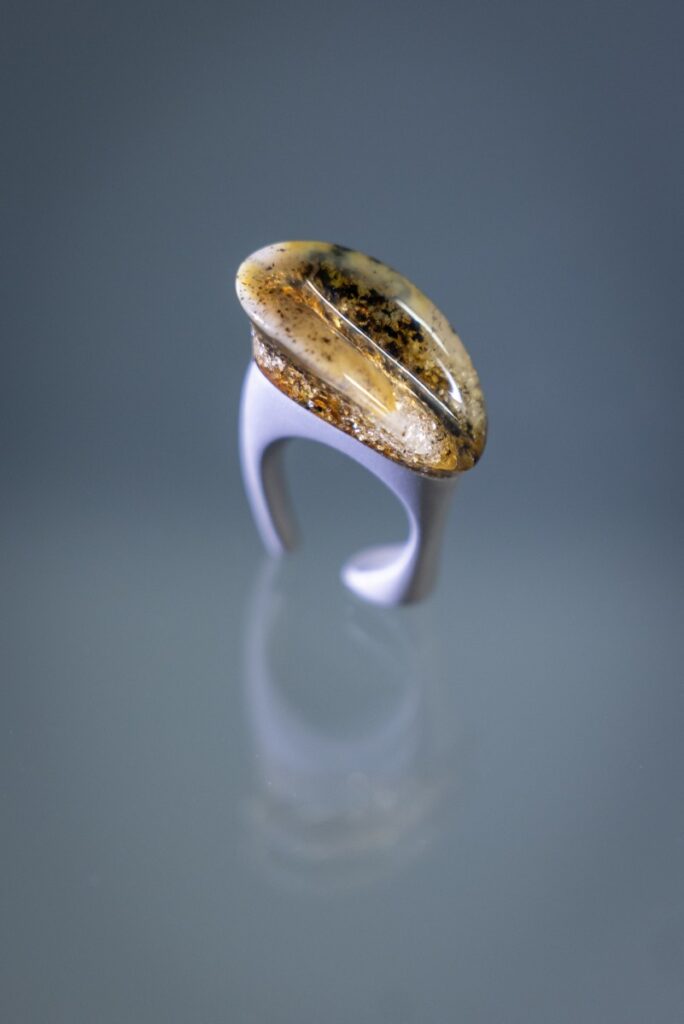
“This colour range means you can create similar shapes that each produce… utterly unique effects,” said Paulina Smigiel.
Her workshop is led by designer and jewellery artist Slawomir Fijalkowski.
“We’re opening doors,” he said of the classes, adding that he and his students “are learning together the difficult art of constantly forgetting and re-learning”.
It is then up to the students to choose their own path, somewhere between “ready-to-wear” design and “haute couture”.
Fijalkowski believes they will be ready to work just as well for industry as for art galleries around the world, simply because of the “good design” they represent.