
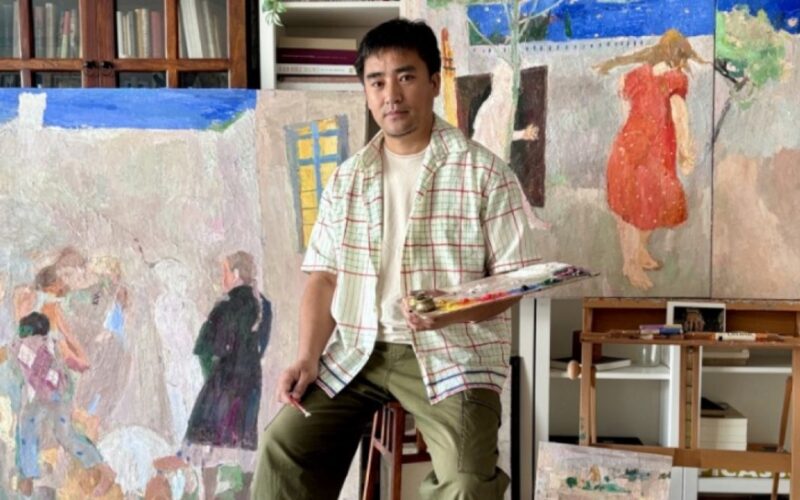
Hot on the heels of a select show of small paper works at Mqabba’s Il-Kamra ta’ Fuq last month, Malta-based Chinese artist Hui Sun is now presenting large-scale oil works at the Malta Society of Arts in Valletta.
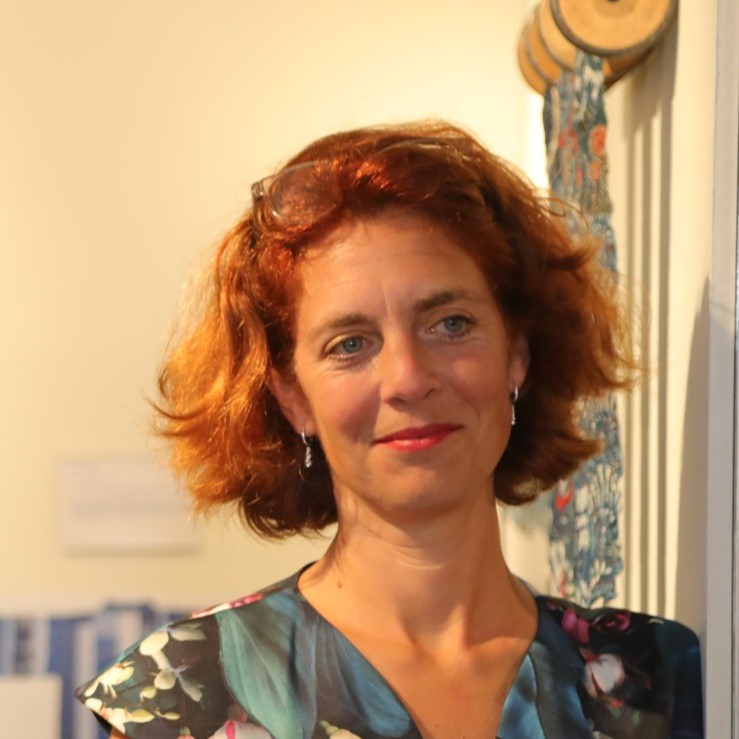
The exhibition, Vertigo, is curated by Marta Obiols Fornell of ArtHall (Gozo), who describes how Sun invites viewers to “explore his intuitive mind, as perspectives and different planes emerge in harmony beyond the visible”.
“Hui Sun’s paintings both reveal and conceal,” Obiols Fornell says. “His impressions include an element of vertigo, as the vanishing point is neither clear nor logical. He plays, for example, with disruptive elements such as impossible ladders whose origin and end remain unknown.”
She adds that she came up with the title of the show while reading Shitao’s Pumpkin Monk (Philosophy of Painting).
“I was surprised by the modernity of this 17th-century Chinese painter. His words felt relevant to today. I loved his phrase ‘The beards and eyebrows of the ancients cannot grow on my face, nor can their entrails take root in my belly; I have my own entrails and my own beard.’ This hymn demystifies blind obedience to the master, to antiquity, or reverence for tradition’s sake and this focus on individuality makes him universal, transcending East and West.”
Sun also unites and celebrates East and West, and both artists’ landscapes frequently create a dizzying sense of spatial ambiguity so the viewer questions what they are seeing − Where is the horizon? Where is the vanishing point? − and imagines other dimensions.
“Here Vertigo, one of Shitao’s six expression procedures, is the gateway to the sublime,” Obiols Fornell explains.
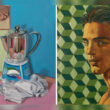
Sun’s latest works, a collection called Silent Spaces, is composed with layered brushstrokes in tender dove greys, across which a yellow glow infuses light and strong reds and blues add emotional and visual drama.
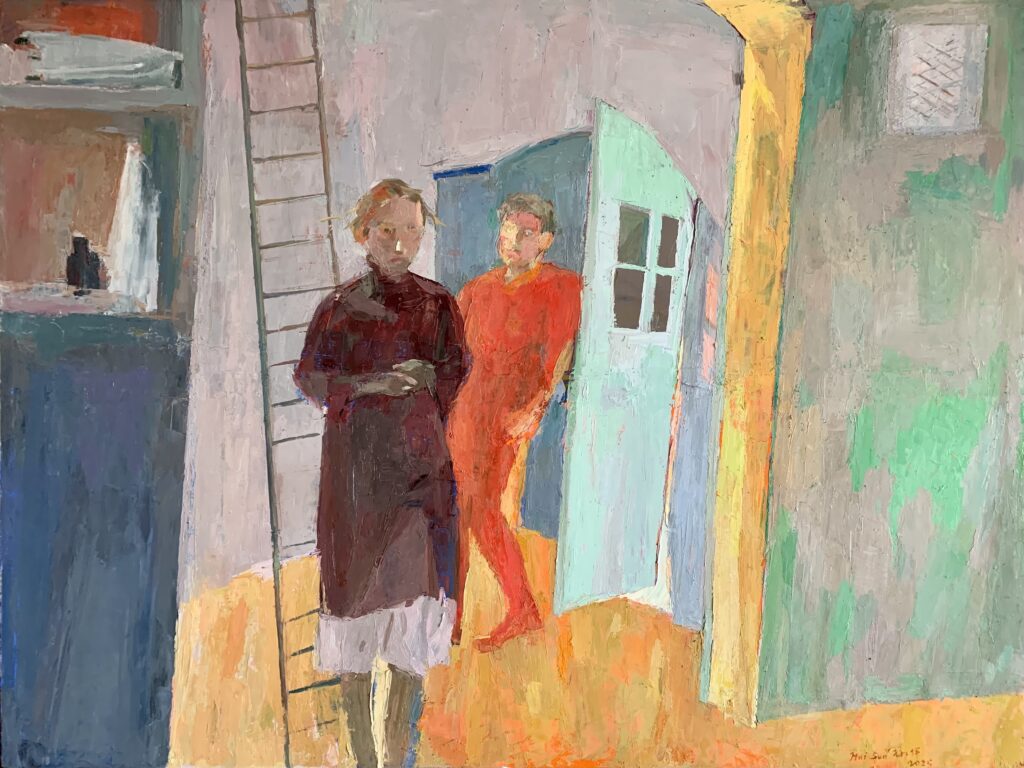
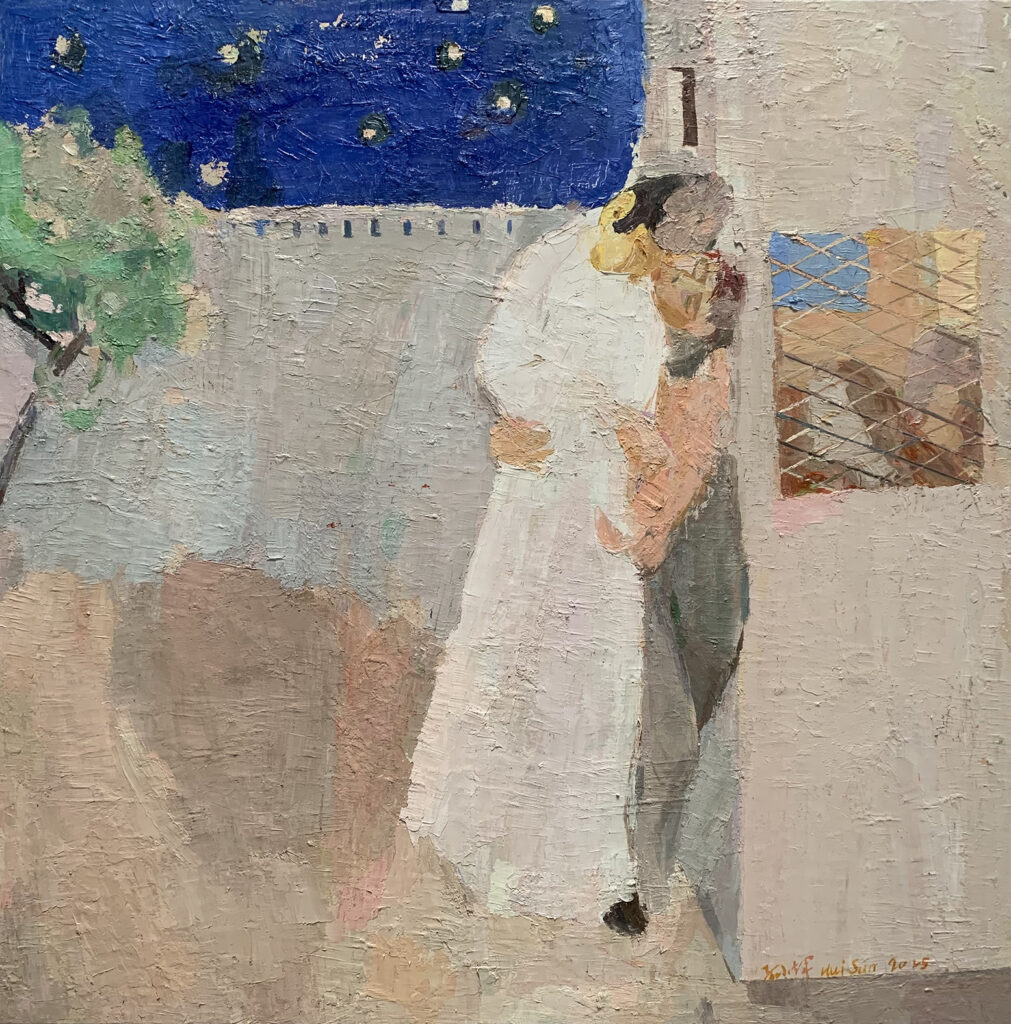
Silence, Sun explains, is central to his artistic practice.
“When I was a student, I loved sitting with my friends and discussing art. In recent years, I’ve become more silent, preferring to work and think alone,” he says.
“My friends have changed after working for a long time; time and complex interpersonal relationships change a person. They gradually become unwilling to express their true thoughts. People talk a lot, but their hearts remain silent. Space is my perspective on art; a painting is a space. I like to use flat shapes to create a dynamic space − a silent space with strong structural contrasts.”
The exhibition unrolls through the galleries of Palazzo de La Salle, guiding visitors through the themes of ‘Reception’, ‘Fantasy’, ‘Vertigo’ and, finally, ‘Revolution’.
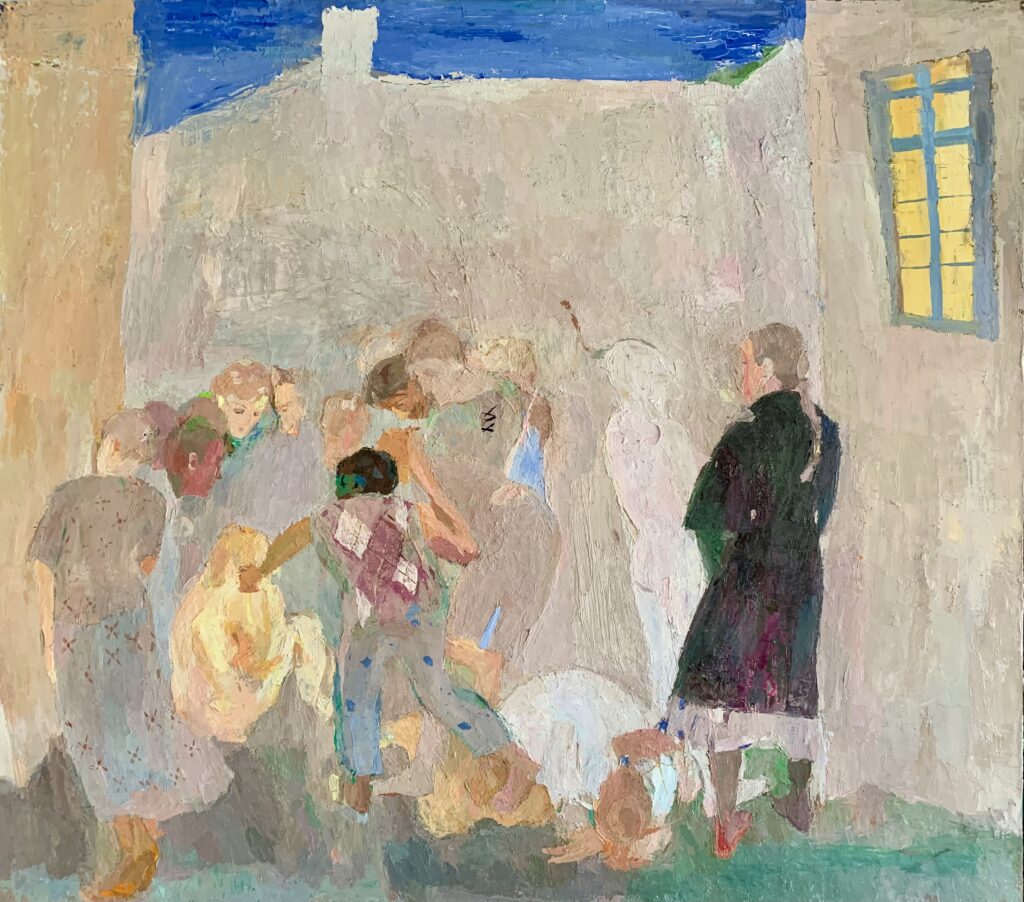
Red and gold flags and weaponry, whether symbols of pomp or brutality, draw on Sun’s views on politics and violence.
“Many major events are particularly absurd, such as the political movements in China from 1950 to 1970, the ethnic killings, and school violence, as seen in Absurdity and Seriousness II,” he remarks.
“Many seemingly intelligent people act with apparent reason and justification, but in reality, they are quite ridiculous. I wanted to express this conflict and absurdity. This Absurdity and Seriousness series possesses a strong dramatic quality. I like the stark contrast and conflict within it, and the imagination it evokes. In my creative process, I can break the rules and create using both imagination and reality.”
These dream-like paintings are gently hazy, both stylistically and in meaning: with promise but without resolution, Sun’s characters draw the viewer into intriguing and intimate scenes in which a core of danger is overlaid with an engaging softness.
“We are reminded of Hölderlin’s haunting verse, a line from the German poem Patmos (1803) the first lines of which translate, approximately, as ‘God is near, and yet elusive, but where there is danger, the promise of rescue grows.’ Hölderlin suggests that within humanity’s deepest vulnerabilities lie the seeds of our rescue, and it is this combination of lurking danger and the potential for salvation that inspire Hui Sun’s works,” Obiols Fornell smiles.
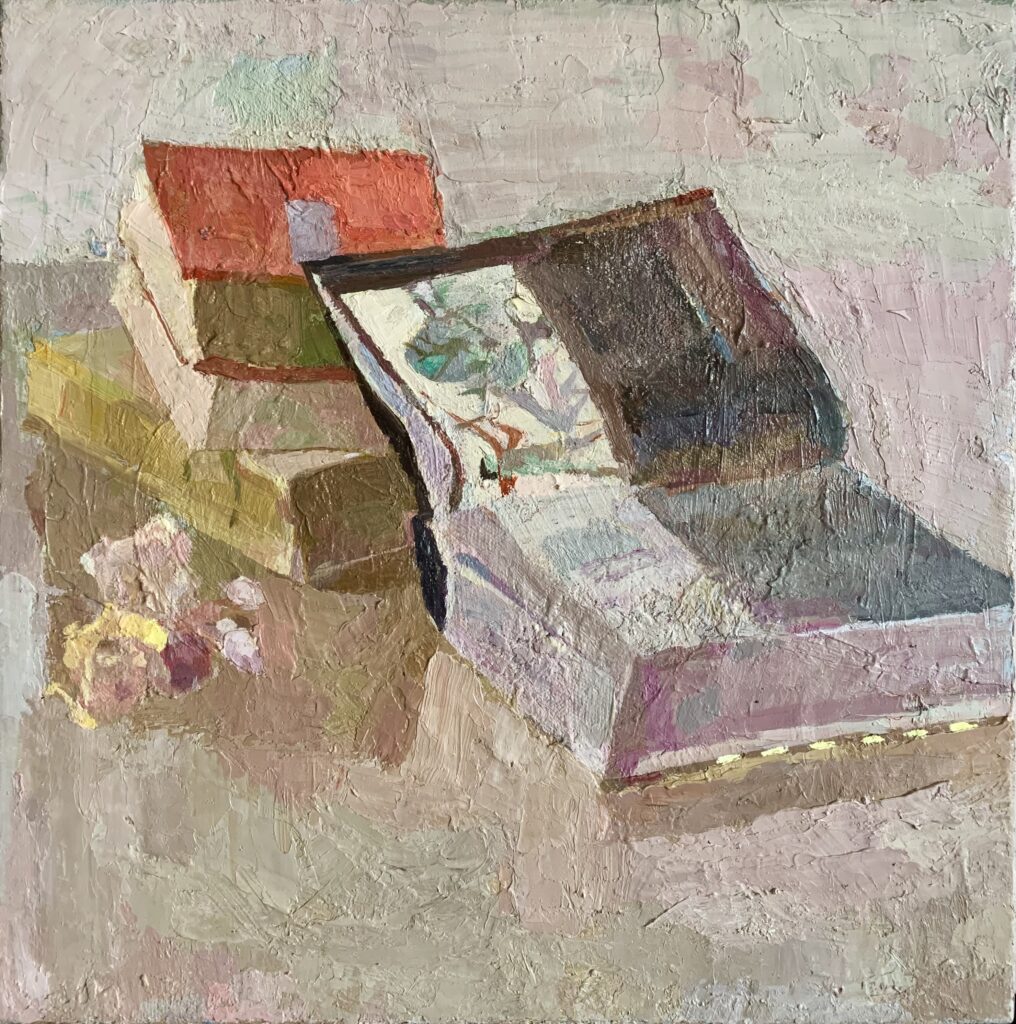
In addition, scattered throughout there are small melancholic works of China, and heavy richly-textured scenes of Malta, and the Three Cities in particular.
Additionally, paintings of open books, the same motif seen in larger works, represent the unfolding of a story, both those within the show and – perhaps − Sun’s own.
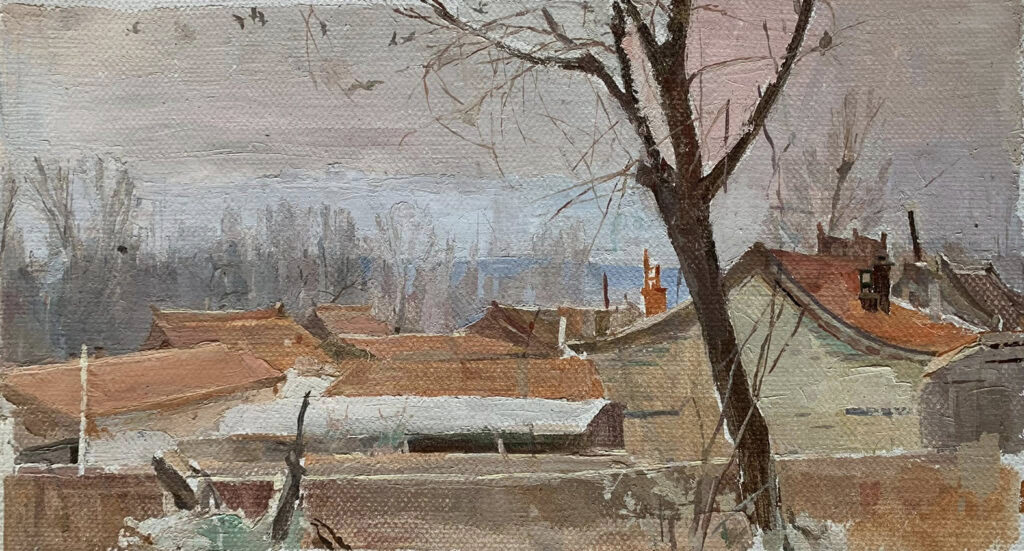
“My home town is in northern China, a beautiful little village. In winter, all the leaves would have fallen, creating a desolate and quiet scene. I used thin paint on these works as I wanted to capture this desolation,” Sun says.
As regards Malta, he says that the island and its architecture are “unique”.
“The stone city gives a feeling of solidity, simplicity and elegance, which feels poetic. It fills me with an enthusiasm to paint the place from many different angles.”
Vertigo runs until June 25 at the MSA premises, Palazzo de la Salle, Valletta. Opening hours: Monday to Friday from 9am to 7pm and on Saturdays from 9am to 1pm.