




Following successful presentations in Paris, New York, Cairo and Canada between 2024 and 2026, the international exhibition Between the Lines: The Civilization Code of Chinese Characters opened at the China Cultural Centre in Malta this week, inviting visitors to discover one of the world’s oldest continuously used writing systems and the civilisation that grew alongside it.
The exhibition traces the evolution of Chinese writing from the earliest symbols found on Neolithic pottery through successive stages of development on turtle shells, animal bones, bronze vessels, bamboo slips, silk, stone tablets and paper.
Welcoming guests, Chen Xiao, director of the China Cultural Centre in Malta, noted that Chinese characters have influenced the cultural development of Korea, Japan, Vietnam and beyond, describing them as “an enduring symbol of Eastern civilisation and a shining example of mutual learning and exchange between cultures”. She said the exhibition’s arrival in Malta represents “another meaningful encounter between two ancient civilisations”.
The Chinese Ambassador to Malta, Zhang Zuo, said Chinese characters are “not merely tools for recording language and conveying ideas” but also embody “the wisdom and aesthetics of five thousand years of Chinese civilisation”. He noted that the exhibition follows the evolution of Chinese characters while showcasing the achievements of Chinese civilisation in thought, institutions, science and technology, and the arts.
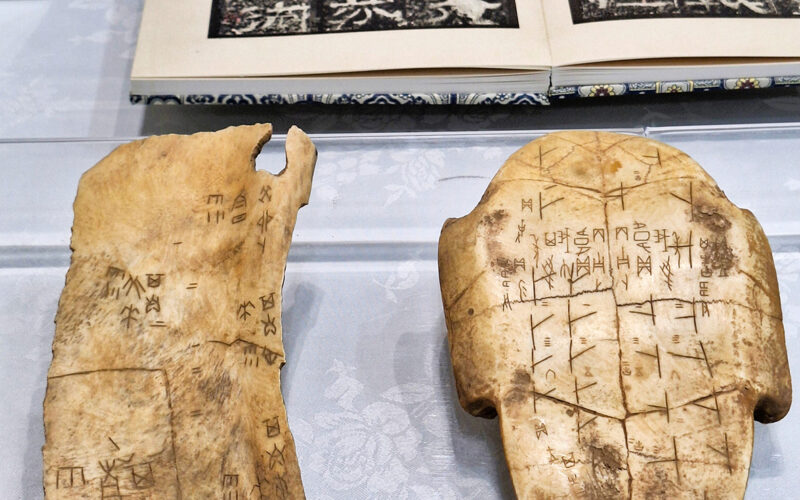
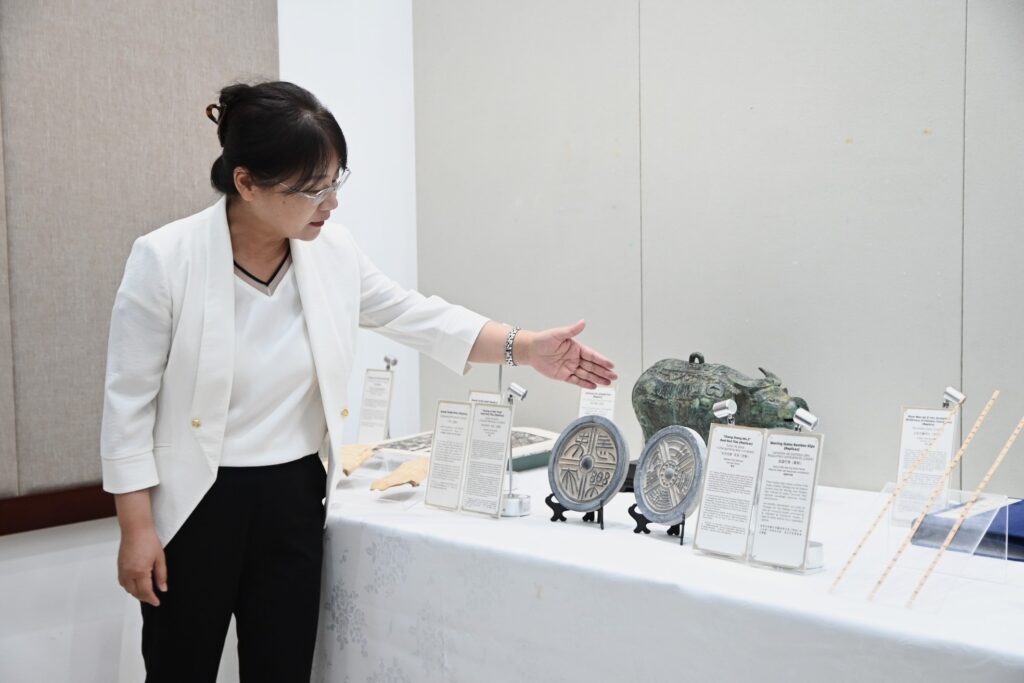
Among the exhibition’s most striking exhibits are replicas of an oracle bone and turtle shells dating to the Shang Dynasty. These reveal that Chinese script was already developed more than 3,000 years ago and offer valuable insights into early Chinese civilisation. The shells and bones were used for divination. Questions concerning matters such as weather and harvests were carved onto their surfaces before heat was applied to create cracks that were interpreted as answers from ancestors or spiritual forces. The questions and outcomes were then inscribed onto the bone itself.
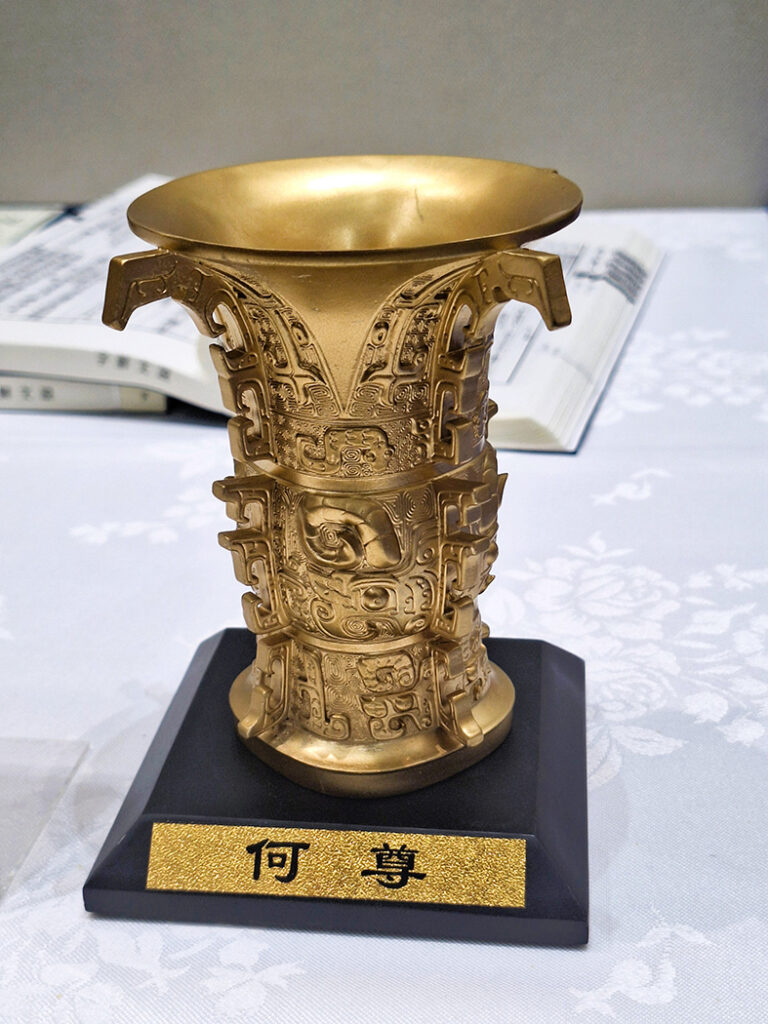
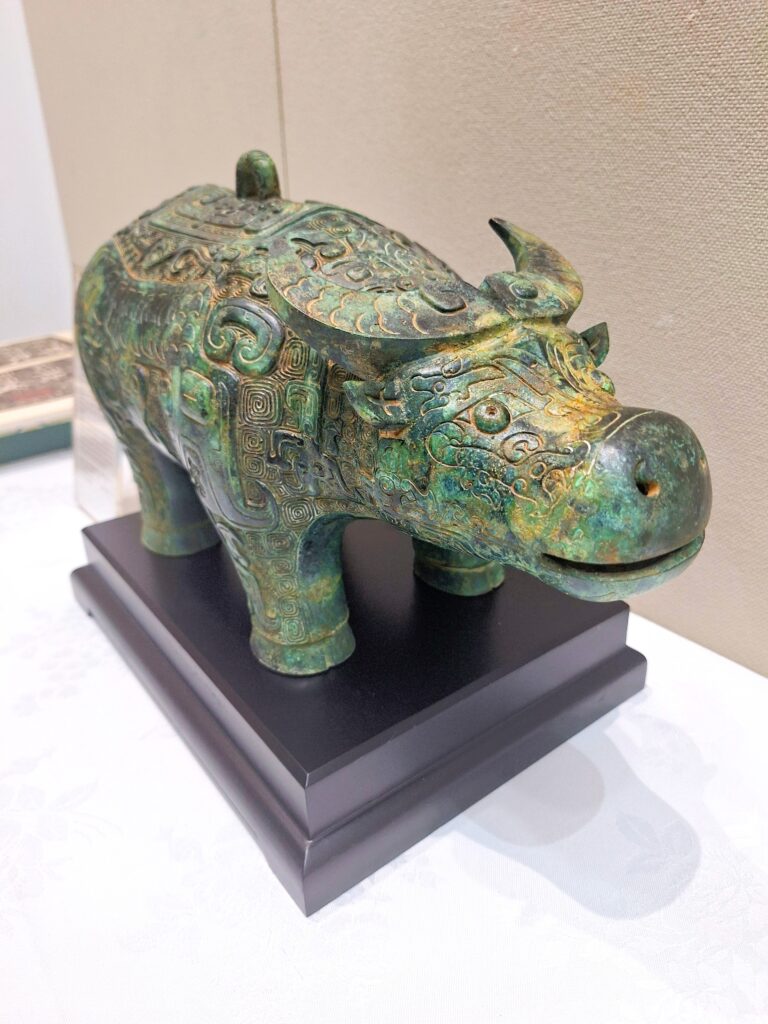
The exhibition also features replicas of two important historical artefacts. One is the Yazhang Ox-shaped Zun, a bronze wine vessel cast in the form of an ox and bearing an inscription referring to the chief of the Zhang tribe. Another highlight is the celebrated He Zun, an early Western Zhou bronze wine vessel containing the earliest known written reference to “Zhong Guo” – originally meaning the “central region” and later evolving into the modern name for China.
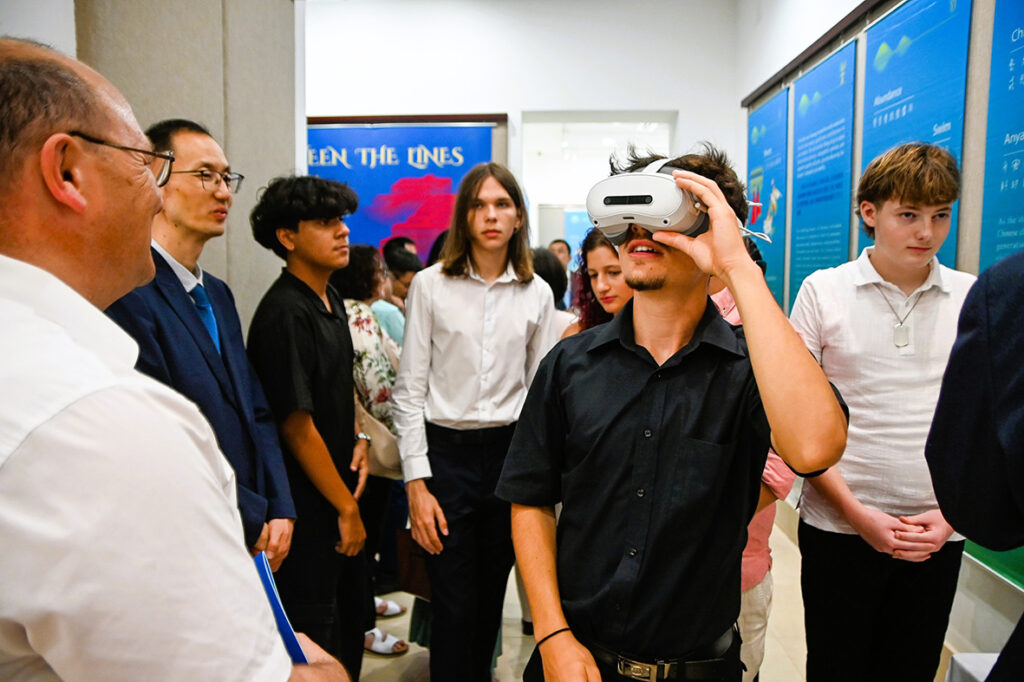
A special attraction of the exhibition is Guardian of Chinese Characters, a five-minute immersive virtual reality experience. Visitors are invited to assume the role of a “guardian” and travel through five historical realms, from ancient oracle bone inscriptions to modern calligraphy, experiencing the evolution of Chinese writing through cutting-edge digital technology.
Between the Lines is organised by the China Cultural Centre in Malta, together with the Chinese People’s Association for Friendship with Foreign Countries (CPAFFC), the People’s Government of Anyang Municipality, Henan Province, the National Museum of Chinese Writing and China International Exhibition Agency (CIEA), is co-organised by Beijing CIEA Danqing Exhibition Ltd and is supported by the Malta-China Friendship Society.
Drawing parallels between Chinese and Maltese heritage, Mario Calleja, vice chair of the Malta-China Friendship Society and mayor of Marsascala, described the exhibition as an invitation to read the “civilisational code” embedded within Chinese characters. Referring to Malta’s own historical legacy, he mentioned the role of the Cippi of Melqart in helping scholars decipher the Phoenician script.
Lu Xiangdong, vice president of CPAFFC, described writing as “the living genes of civilisations and a silent bridge for cultural communication”. He said Chinese characters, originating from oracle bone inscriptions, have preserved the wisdom and spirit of the Chinese nation through thousands of years of uninterrupted development.
The exhibition will remain open to the public at the China Cultural Centre at 173, Melita Street, Valletta, until September 15. Admission is free and visitors are welcome on weekdays between 9.30am and 3.30pm. The exhibition is closed on Saturdays and Sundays.