The year 2026 marks the centenary of the first performance of Giacomo Puccini’s final masterpiece, Turandot, and it was therefore especially fitting that The Classique Foundation chose to commemorate this historic anniversary with an ambitious new production at the Astra Theatre, Victoria, on May 30. The result was a production fully worthy of both the occasion and the masterpiece it celebrated.
The stage direction by Salvo Dolce, assisted by Andjela Bizimoska, was one of the production’s principal strengths. Dolce approached the work with intelligence, imagination and a keen understanding of its dual nature as both fairy tale and psychological drama.
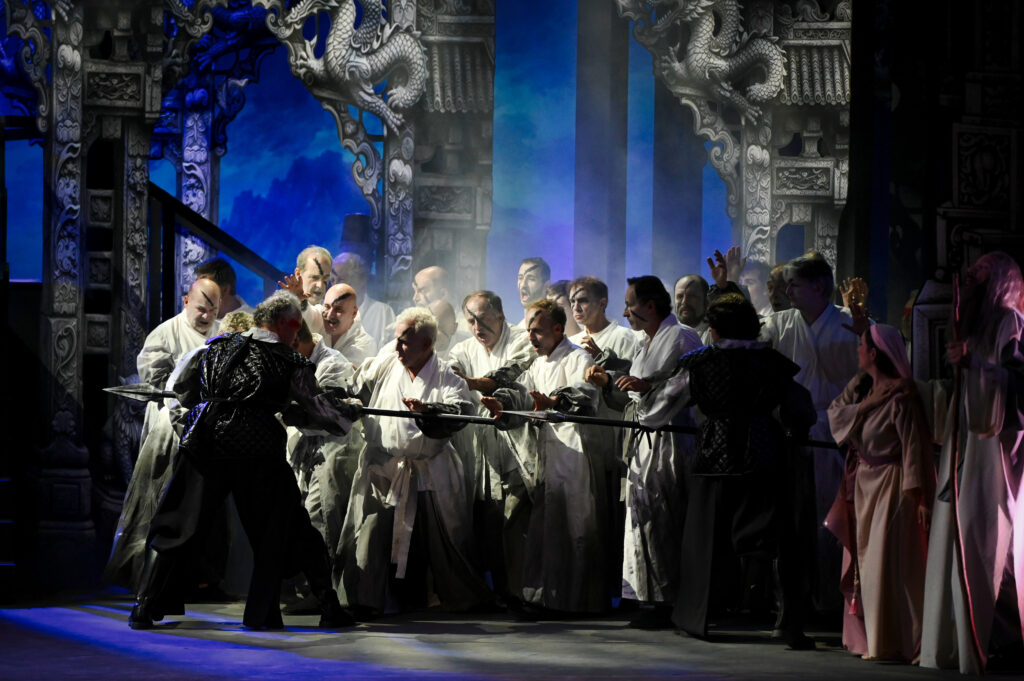
The movement of the large choral scenes was expertly managed, while the principal characters were given ample space to develop dramatically and emotionally. The production maintained momentum throughout and succeeded in making even the most familiar moments feel fresh, engaging and theatrically compelling.
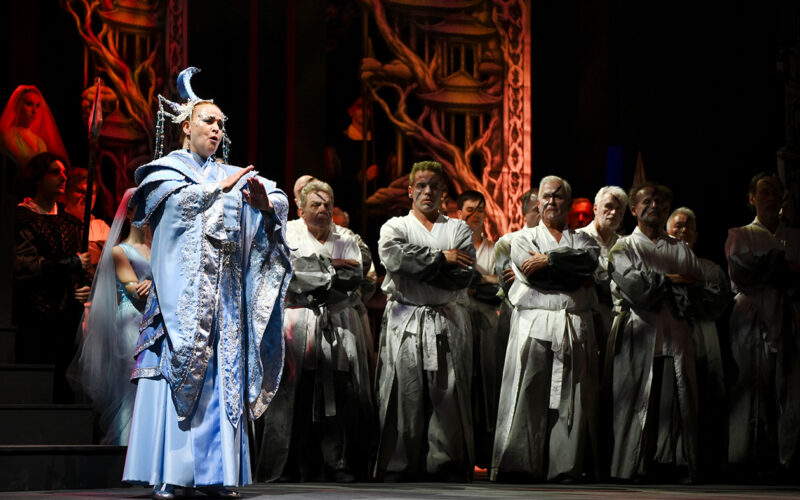
The Coro del’Opera di Parma and The Classique Chorus.
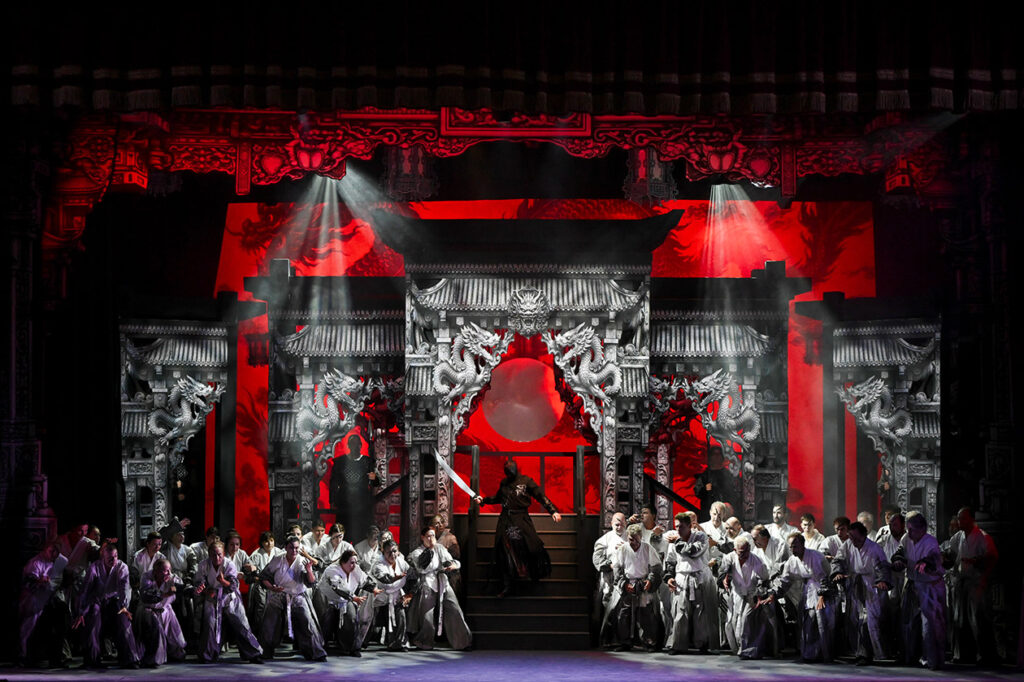
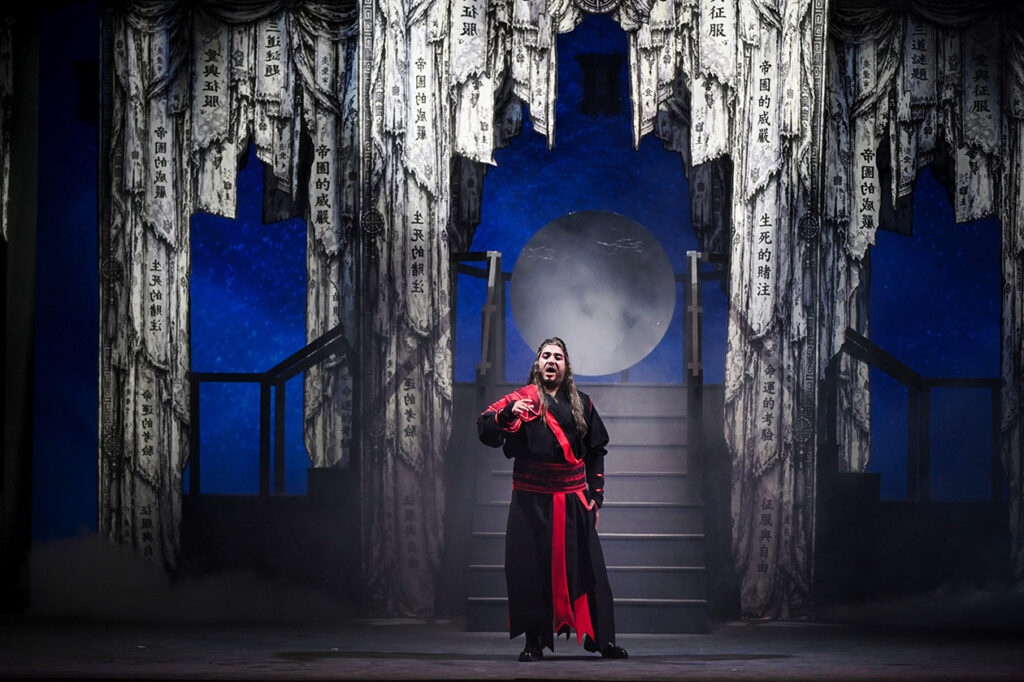
Particularly impressive were the costumes realised under the leadership of Ina Zammit and the scenography constructed by Andrew Portelli, both elements masterfully designed by Matteo Capobianco. The visual concept successfully balanced fairy-tale fantasy with operatic grandeur. The multi-layered scenic structure created a flexible performance space capable of accommodating both intimate encounters and monumental crowd scenes.
Richly detailed costumes enhanced the atmosphere of imperial China while contributing significantly to the evening’s visual impact. Indeed, the way in which he approached the textile’s textures provided a fresh atmosphere when compared to the oldish methods we all have become somehow so much accustomed to. Indeed, his way of merging the older traditions of canvas painting with modern technological advances. A round of applause is well due to Gianluca Bianco’s lighting.
At the centre of the performance stood Maida Hundeling, whose portrayal of Turandot was nothing short of extraordinary. Possessing a beautifully focused, razor-sharp and immensely powerful dramatic soprano, Hundeling dominated the stage whenever she appeared. Her voice cut effortlessly through Puccini’s massive orchestration while retaining warmth, musicality and expressive nuance.
She brought commanding authority to the great riddle scene and invested the character with a fascinating mixture of cruelty, pride and latent vulnerability. She was majestic in presence, fearless in her vocal delivery and utterly convincing dramatically. It would be difficult to imagine a finer exponent of the role today, and one could reasonably argue that she is currently among the very finest Turandots performing on the international stage.
Tenor Ragaa Eldin as Calaf.
As Calaf, Ragaa Eldin delivered a compelling and heroic portrayal. He sang with stamina, confidence and conviction throughout the evening, successfully negotiating one of the most demanding tenor roles in the repertoire.
His rendition of Nessun dorma was one of the evening’s highlights and was deservedly greeted with enthusiastic applause and shouts for a bis. Beyond the celebrated aria, however, he brought dramatic credibility to the role, creating a convincing protagonist whose determination never descended into mere bravado.
One of the evening’s greatest emotional triumphs came from Nicola Said as Liù with her vocal beauty, sensitivity and genuine emotional depth. Her final scenes were deeply moving and beautifully sung, revealing both technical accomplishment and considerable artistic maturity. Indeed, the scene of her death was one of the most moving. The simple yet very beautiful detail involving white petals worked so well.
Gianluca Breda portrayed Timur with dignity, authority and genuine pathos, creating a touching portrait of the fallen monarch. His scenes with Liù were among the production’s most affecting moments.
As Emperor Altoum, Charles Vincenti brought warmth and nobility to the role.
The Coro del’Opera di Parma and The Classique Chorus.
The trio of ministers proved a particular delight. Marzio Giossi as Ping, Andrea Tanzillo as Pang and Matteo Mezzaro as Pong formed an exceptionally cohesive ensemble. Their singing was polished, their stagecraft assured and their characterisations vividly realised, providing moments of humanity and reflection amid the opera’s larger dramatic tensions.
A production of Turandot depends heavily on the quality of its choral forces, and here The Classique Foundation assembled an exceptional team. The collaboration between the Coro dell’Opera di Parma and The Classique Chorus proved immensely successful. Their singing displayed tremendous power and precision, while their dramatic involvement transformed them into active participants in the unfolding drama.
Puccini’s demanding choral writing was delivered with confidence, producing a sound that was both thrillingly powerful and beautifully refined.
Praise must be directed towards chorus masters Silvia Tagliaferro and Francis Camilleri, whose preparation of the choruses was exemplary. Equally impressive was the contribution of The Classique Children’s Chorus under the direction of chorus mistress Maxine Debrincat.
The musical foundation of the entire evening was provided by the Malta Philharmonic Orchestra, which delivered a performance of outstanding quality under the baton of Joseph Debrincat. Conducting Turandot requires not only technical command but also a deep understanding of Puccini’s richly textured orchestral language.
Debrincat demonstrated both qualities throughout the evening. His reading was well balanced, ensuring that the orchestra supported the singers while allowing the score’s magnificent orchestral colours to emerge in all their splendour.
Climaxes were thrillingly realised, quieter moments were shaped with sensitivity and refinement, and the dramatic architecture of the work was maintained with admirable assurance.
The smooth execution of such a large-scale undertaking is never accidental, and considerable credit must be given to George P. Cassar, who served as both production manager and props manager.
As the final curtain fell, the packed theatre audience responded with prolonged and thunderous applause. Their reaction was entirely justified. This centenary production of Turandot represented a major artistic achievement. The Classique Foundation has every reason to be proud of what it accomplished. Indeed, it was a fitting tribute to one of the greatest operas ever written and definitely one of the best productions ever in Malta and Gozo.