



On an island where a 1,000-year history of subjugation has been internalised into a contemporary form of self-colonisation, No Need to Sparkle reflects on what it means to live without performing expectations imposed by the gaze of others.
Curated by Margerita Pulé and featuring work by Adrian Abela, Charlie Cauchi, and Raphael Vella, Malta’s offering at this year’s Venice Art Biennale takes its title from Virginia Woolf’s A Room of One’s Own. The pavilion’s ultimate proposition is that instead of continuing to ‘sparkle’ − performing an inauthentic version of ourselves in the futile search for closure to the identity question − the doubt we feel could actually be our greatest strength and a cornerstone for a new contemporary identity.
Stepping out of the bright Venice sun and into the dimly lit pavilion, it took a few seconds for my eyes to adjust. It was my third day in Venice and I was saturated with critical curatorial statements, radical art and aspirations of utopian potential. Having just paid the Biennale Foundation €4.50 for a small bottle of water, my cynicism was at an all-time high.
I was happy to find that No Need to Sparkle acknowledges this.
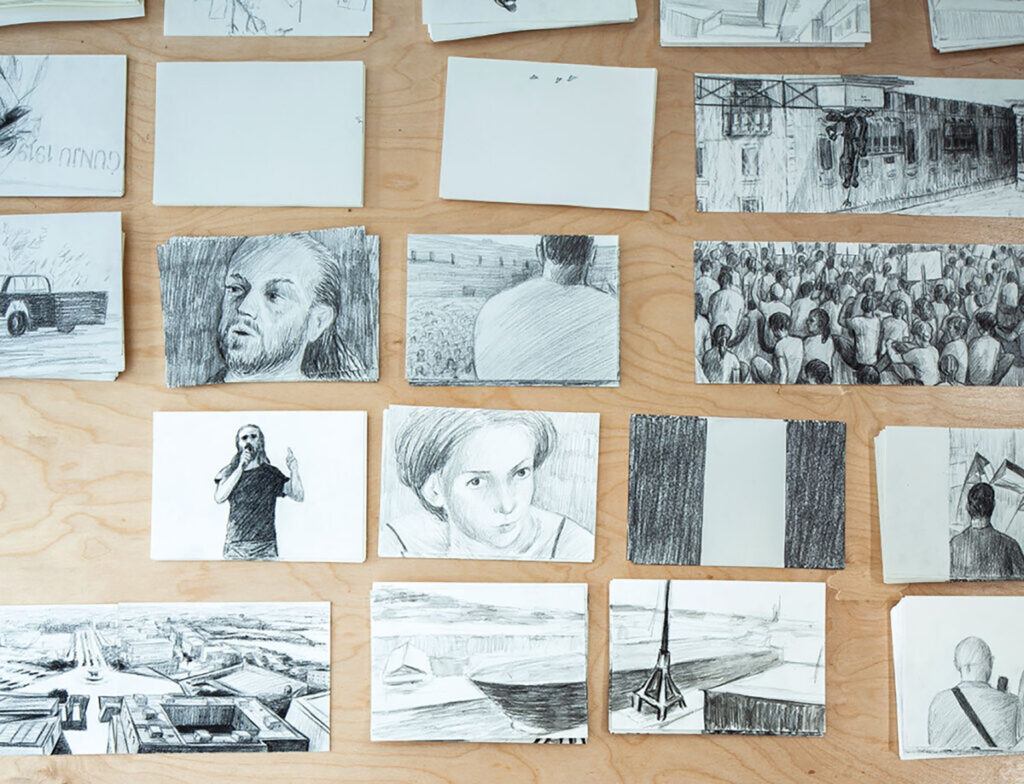
Vella’s Praying for a Revolution That Will Never Come is composed of hundreds of small drawings compiled into a stop-motion animation and a monument-like sculpture. The work is a protest and prayer in material form. Vella knows that the revolution will never come, because that is what history shows us, and yet he continues to pray, because in some non-rational chamber of the mind we still cling to the impossible; it is how we survive.
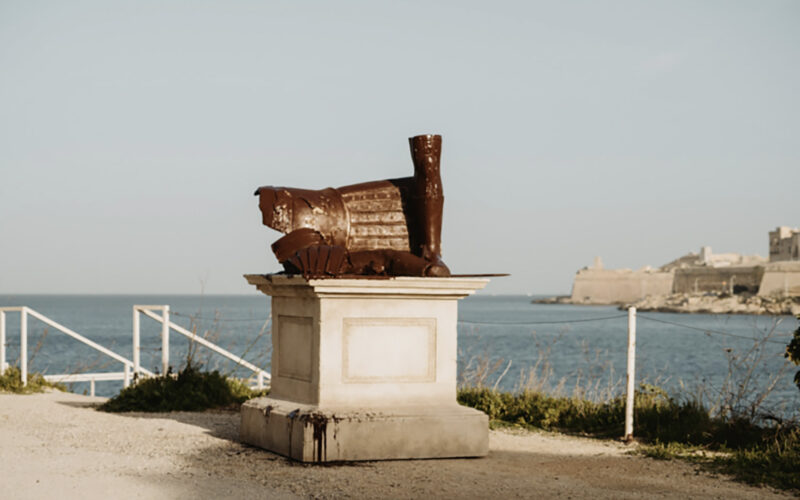
Cauchi’s Dolce is a film and a life-sized chocolate sculpture of Russell Crowe, made by a Tarxien artisan for the Ħamrun Chocolate Festival in the early 2000s, when Gladiator came to our island to film, triggering a national moment of mythmaking.
Malta has sold itself as a backlot for big budget productions, which descend briefly onto the island, using the local vernacular to portray other parts of the world, becoming “a cinematic ‘other,’ a backdrop onto which external narratives are projected,” as Cauchi puts it. Dolce tracks the development of national identity as a commercial blank canvas, primed for a new kind of financial self-colonisation.
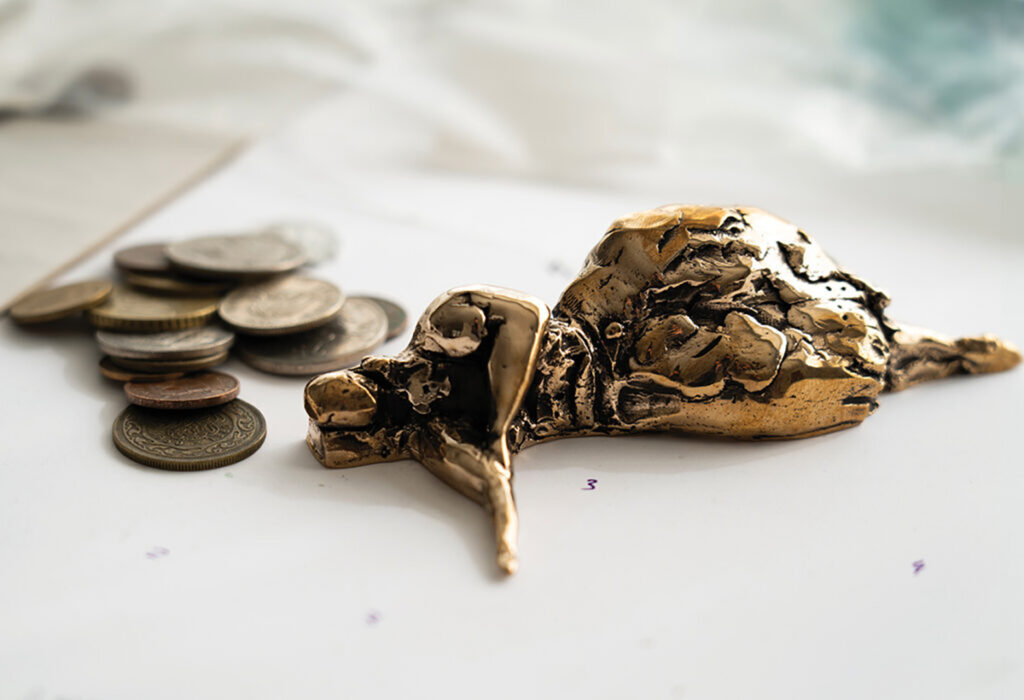
Abela’s work, Declaration of Dependence, is a kind of metaphysical game. It is split into several parts that make up a perpetual time-loop. At the centre is an interactive video that uses AI to generate an ever-changing declaration of dependence.
“To declare dependence is to refuse the fiction of the sovereign self,” the artist writes.
The claims that Abela is making are nebulous and shrouded in art-speak. There is a play on the perpetual deferment of final meaning in the work mirroring the process of identity building, which is also always incomplete. The overly-complex metaphysical games are confusing, and a stronger emphasis on the arcane symbolism in the work might have brought Declaration of Dependence more fully to life.
In fact, all three of the works require a granular, Malta-specific knowledge to be understood, so I found myself questioning how an international audience would engage with the pavilion.
Ultimately, everything is deftly brought together by Pulé’s curatorial acumen, which introduces a measure of universality, “propos[ing] doubt […] not as paralysis, but as a vital act of resistance.” None of the works end in cynicism, and that also pulls the pavilion back from the edge of incomprehensibility.
Vella’s monument-like sculpture is a 350kg block of compressed placards which seems to say “individually it might be difficult to effect change, but look what happens when things come together in aggregate”.
Simultaneously, at various points in her film, Cauchi and her cast of actors freeze in the act of playing others and become themselves, staring defiantly through the camera.
In Abela’s work, under the right conditions, a green felt curtain is drawn back to reveal a small drawing, made when the artist was still a teen that is pure, naïve, and harkens back to innocent days, when a more frontal kind of authenticity was taken for granted.
I remained there for a long time, sitting in the beautifully designed and mercifully cool space.
At times, the decolonial discourse in Malta can feel like an insincere promise of an easy way out of our identity trouble. It offers an otherness against which we can react, an enemy to define ourselves against. But there is often a disjunction between speech and action. This is felt in cultural policy written with the widescreen aim of economic maximisation, trending towards commercialisation and in projects about decolonisation where Maltese artists and cultural workers are treated terribly by Maltese institutions, while foreigners are worshipped (to a greater or lesser extent, depending on how much power they have).
And so there is a feeling of decolonial fatigue, because radical exhibition wall texts rarely match reality. Artistic and institutional narratives that claim to unwind something fundamental about who we are, and propose new ways of being free, slam into the lived experience of the people looking at and making the art. The duplicitous promise of new authenticities becomes a vehicle for a subtle form of self-colonisation, and it often feels as though very structures that enable art are themselves the self-colonising forces.
No Need to Sparkle does not get caught up in making the same easy promises. It does not allude to a final decolonised state that it would be advantageous to reach. Instead, it looks at both the tragedy and the hopefulness of being Maltese in the contemporary moment, acknowledging that perhaps the most sincere answer to the deeper questions of who we are, and where to go next, might lie in the doubt and fatigue we feel − because these feelings could point us to who is really pulling the strings, and that may be the most honest place from which to begin, again.