


A multidisciplinary exhibition exploring the eye as symbol, sense, metaphor and witness opens today at the church of St Mary Magdalene in Valletta.
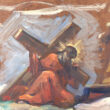
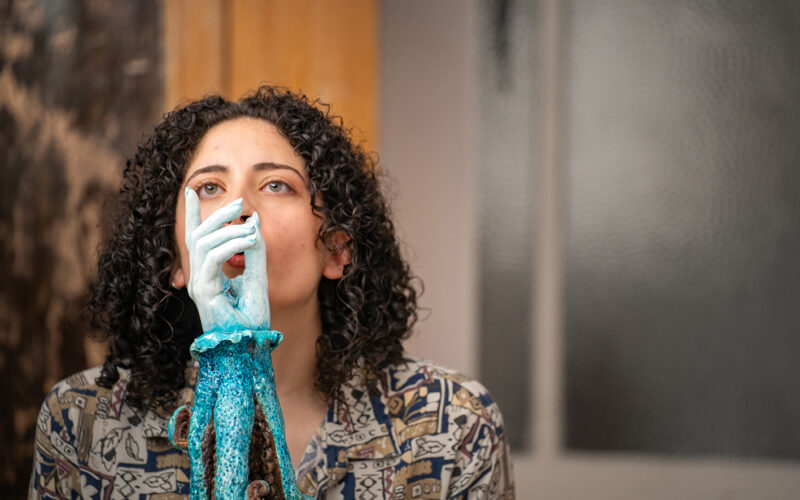
Titled Unblinking, the exhibition by contemporary artist Etienne Farrell brings together sculptures, paintings and an immersive installation. Yet it extends beyond the traditional gallery format through a performance that will bring the artworks to life.
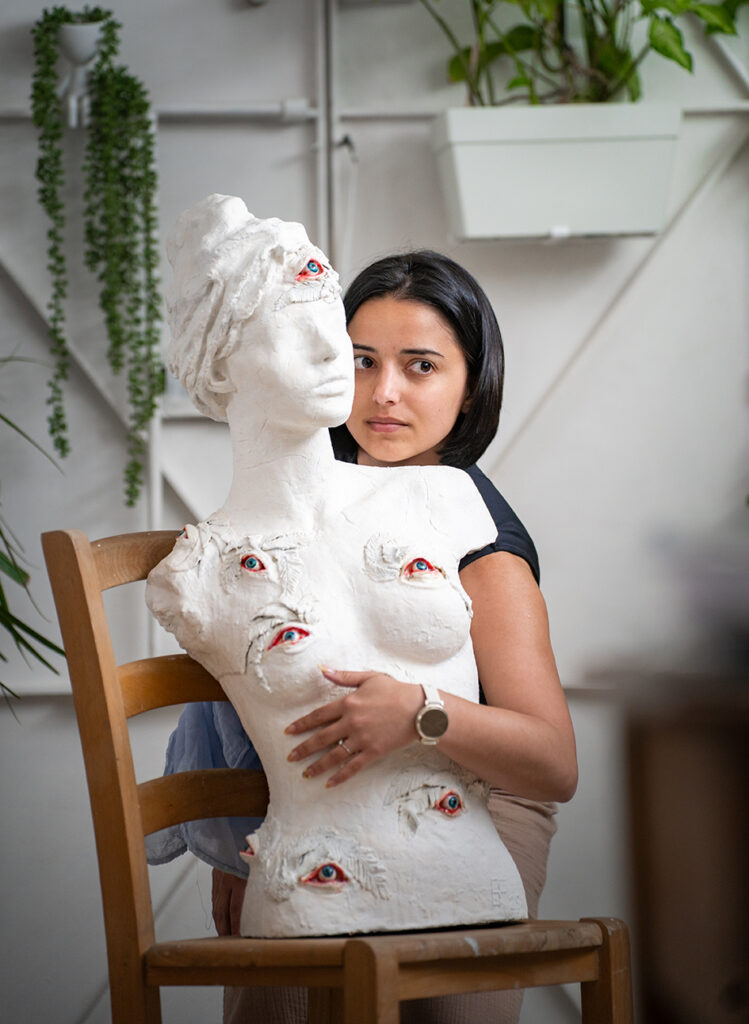
Farrell has long been fascinated by the eye’s symbolism. She recalls ancient symbols such as the Eye of Horus, spiritual concepts including the Eye of God and the Third Eye, and contemporary mythologies such as the Eye of Sauron from the Lord of the Rings trilogy. She also refers to the Nazar, the protective talisman associated with warding off negative intent or the “evil eye”.
“I first researched the eye as a symbol of protection, and sometimes of a curse, while working on another exhibition, Għajnejk f’Għajni. The amount of material I encountered fascinated me. That experience was probably one of the reasons why I decided to explore the broader ideas of the eye and of seeing in greater depth,” Farrell shares.
“The eye appears repeatedly throughout human history and across many cultures, often carrying powerful symbolic meanings. We also tend to privilege sight above our other senses, which makes the subject particularly interesting to me. The work is a personal interpretation of what I learnt.”
Unblinking invites the audience into what Farrell describes as a “multilayered meditation on perception and observation, vulnerability, power and the unseen”.
While perception and observation may seem obvious themes, Farrell argues they are far more complex.
Vulnerability lies in allowing oneself to be truly seen, revealing moments of emotional weakness, and in the delicate fragility of the eye itself; while power resides in the cold stare that asserts authority, reminding us that we are constantly watched and subject to control.
The exhibition also draws attention to the unseen. As Farrell notes, human beings tend to rely too heavily on vision, often forgetting the many realities that can be felt, understood or perceived through the other senses.
“Things may be plainly present and waiting to be discovered right under our noses, yet remain unseen because we choose to experience the world primarily through sight,” she says.
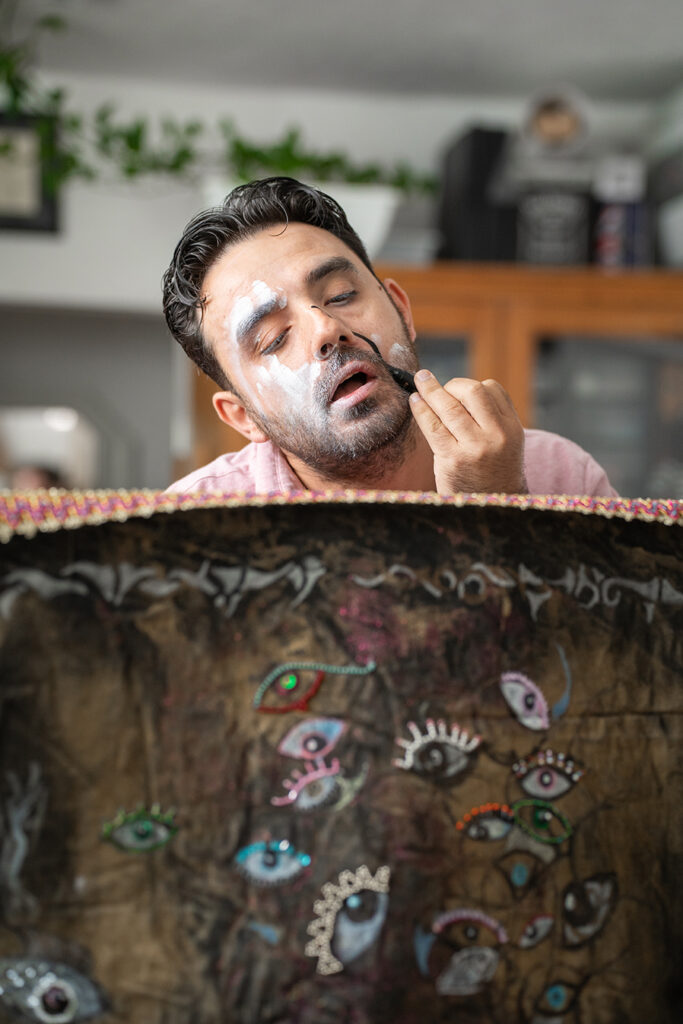
These themes will be further explored through the live performances, for which the artist is collaborating with theatre director Patrick Vella.
“The performers and the artworks will function as extensions of one another,” Farrell says.
“Under the guidance of Vella, the performers will draw on contemporary dance, acting, voice and mime to reveal the living aspects of each work, as though sharing their heartbeats, voices and movements with it. The aim is to allow the audience to experience the artworks as something more alive, more human, and perhaps more easily understood.”
The choice of venue − St Mary Magdalene church, in the lower part of the capital city close to Fort St Elmo − was not accidental.
“I am very particular about the venues in which I exhibit my work,” Farrell points out. “The more the work developed, the more I felt that its atmosphere was spiritual in nature. I therefore needed a space that resonated with those qualities, and this church felt like the perfect setting.”
St Mary Magdalene church also echoes one of the exhibition’s central themes: the tension between what is seen and what remains unseen.
The artist says that one may look at the church and think immediately of sanctity and spirituality, yet many are unaware of its history.
She explains that the church formed part of the monastery of St Mary Magdalene, established by the Order of St John as a refuge for penitent prostitutes and other women who, for various social reasons, found themselves on the margins of society. Many of these women eventually became cloistered nuns, living largely hidden from public view. Their story reflects the exhibition’s interest in overlooked histories and unseen lives.
Farrell thus encourages visitors to look beyond first impressions and engage more deeply with the artworks on display.
“These are pieces that invite contemplation; they are not works to be rushed through. They ask visitors to pause, reflect and engage with them over time,” she says.
“The performances exalt the experience, bringing a novel connection between visual art and live performance in a way that keeps the artworks themselves at the centre of attention. I think audiences will encounter the exhibition in a fresh and unexpected way.”
Unblinking runs from today, June 22 to Saturday, June 27. Opening hours: 7pm to 9.30pm daily. Live performances, featuring artists Frances Galea, Mandy Muscat, Joswe Muscat Galan, Svetlana Psaila, Bernard Zammit and Justin Calleja, will be held today, on Thursday and Friday at 8.15pm. Admission is free.