

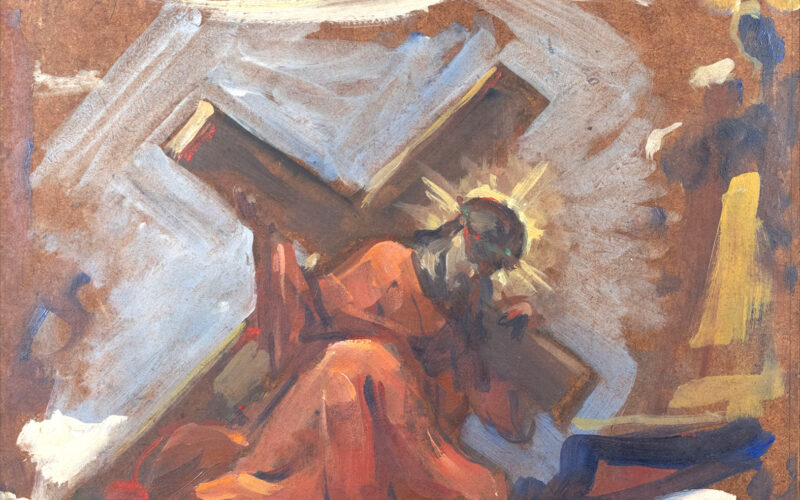
Reluctant Modernism: The Art of Ġużeppi Briffa, a retrospective exhibition of over 100 works currently on show in Gozo’s Il-Ħaġar Museum, is a deep delve into the oeuvre of an important but often overlooked artist as part of this year’s edition of the Victoria International Arts Festival.
“Ġużeppi Briffa’s significance lies in his role as a leading exponent of an artistic tradition shaped and sustained by ecclesiastical patronage,” says Joseph Farrugia, the museum’s curator.
“It is within the broader context of Briffa’s sacred and other canvases across the islands that the exhibition at Il-Ħaġar should be viewed.”
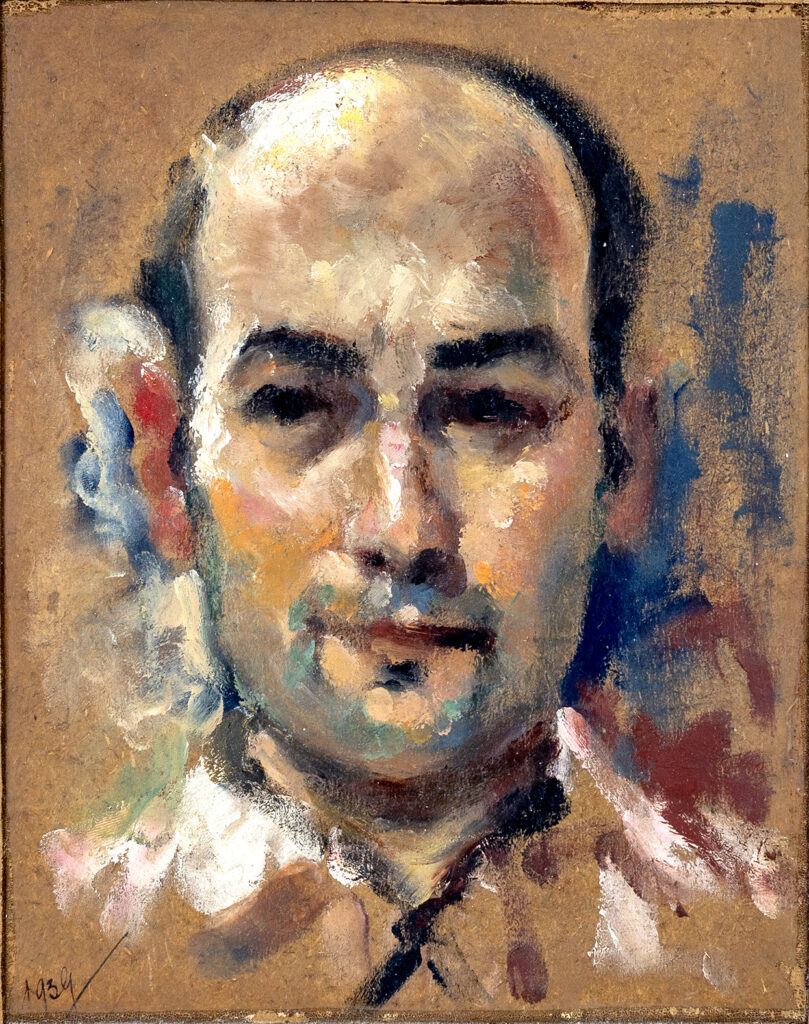
The ‘reluctance’ invoked in the exhibition’s title is rooted both in Malta’s socio-religious climate and in an audience that repeatedly demanded that religious paintings conformed to rigid sacred imagery, explains exhibition curator and Briffa expert Christian Attard in the insightful exhibition catalogue.
“Angelic figures framing [Briffa’s] ecclesiastical works were occasionally deemed too sensuous for sacred contexts. In Mosta, parishioners, confronted with Briffa’s flock of wildly dancing angels beneath the church’s cupola, attempted to prevent him from continuing his work,” he relates.
Briffa (1901) emerged at a liminal moment in the evolution of Maltese art, bridging the gap between Fin de Siècle and modernism in Malta, and his time studying at the Regia Accademia di Belle Arti in Rome in the 1920s coincided with the inauguration of the Malta School of Art in Valletta. Attard presents Briffa – known to be a reserved man – as a ‘quiet pioneer’ whose “measured innovations may have softened public expectations for the bolder experimentation that followed”.
Briffa can, therefore, be seen as a critical intermediary standing between two pivotal phases, linking the artistic traditions of the 19th century with the emergent modernism of the 20th, and particularly the work of Anton Inglott, Emvin Cremona and Willie Apap.
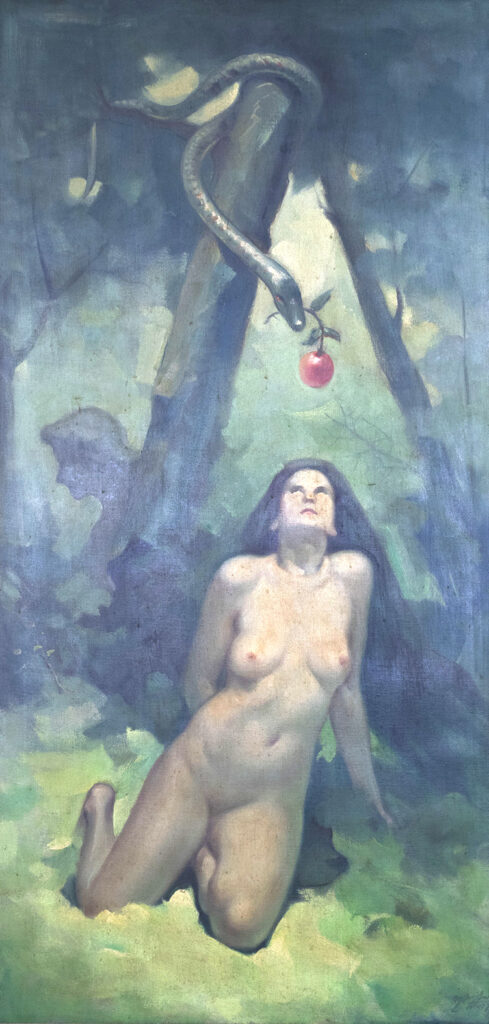
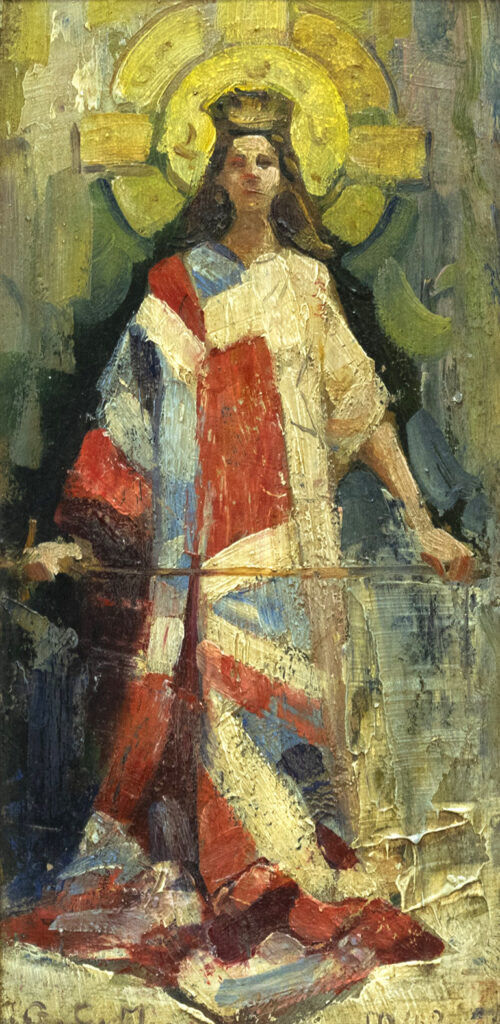
However, as neither a strict traditionalist nor radical modernist, Briffa’s output has long been undervalued and so, nearly half a century after his death in 1987, it’s a delight to see this collection which ranges from portraiture to work for churches, and from paintings influenced by high art to those with a more cinematic aesthetic.
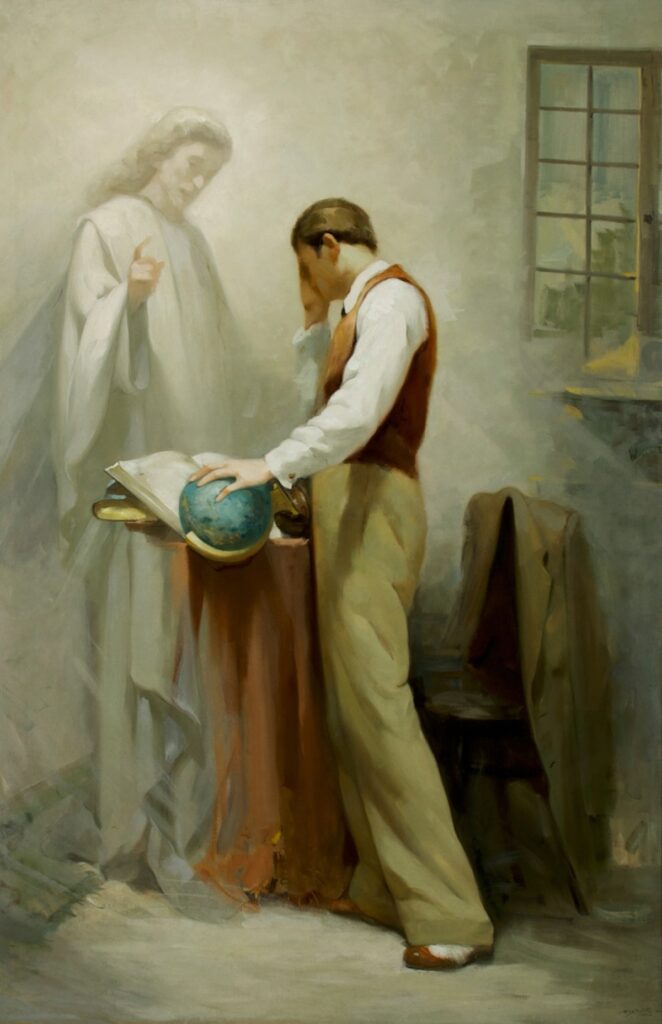
In the upper gallery, hanging floor to ceiling, Between Worldly Achievement and Divine Purpose shows a young man with a book and a globe and a book, while alongside him hovers the figure of Christ, as he chooses between the two paths. The image, which could be the storyboard for a dramatic film still, parallels the position of the artist’s practice halfway between the sensuous and the spiritual.
“[Briffa’s] depictions of Eve, in particular, seem to straddle the threshold between high and popular visual culture, occasionally drawing on Symbolist and Art Nouveau tropes while also absorbing the stylised allure of pin-up imagery and film posters,” Attard says.
A small painting shows the Maltese patriot Dun Mikiel Xerri being publicly executed in retaliation for his involvement in the uprising against the French in the late 18th century.
Here, Attard explains: “Briffa approaches this subject from an unusual and striking angle. The viewer is positioned behind the pole to which Xerri is tied, immersively witnessing him at the very moment before death. In this way, the artist places the viewer in the position of the condemned, heightening the emotional intensity of the scene. Much like a film director, Briffa uses perspective to draw the viewer directly into the experience, creating a powerful sense of immediacy and empathy.”
Also showcasing the artist’s expressive power and intelligent engagement with popular culture, a small yet striking personification of the island itself draped in a Union Jack flag, which dates from 1942 (the year the George Cross was awarded to the people of Malta), shows Malta battle-worn yet glowing.
Presenting a cross-section of works, the exhibition begins with a series of 16 self-portraits and portraits of others. These illustrate Briffa’s “fascination with people and the way they walk or comport themselves, a compulsion to observe, coupled with a remarkably retentive visual memory.”
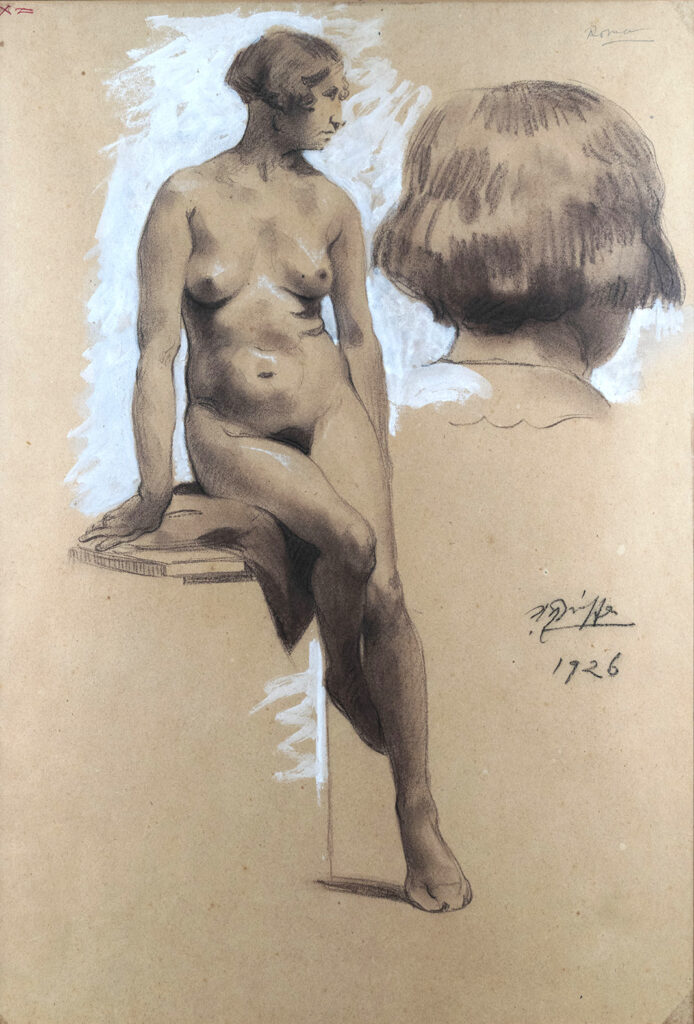
Nearby, a selection of this talented draughtsman’s explorative drawings includes nudes, feet and, unexpectedly, the armoury of the order of St John for a postage stamp design produced in 1977 before Emvin Cremona began to truly dominate that field.
Other delights include works drawn on the back of lottery tickets, evidence of this compulsive sketcher’s inclination to draw on anything; a disquieting still life of a broken doll; a large study for the Dome of Qormi St George Parish Church Oil monumental in style depicting the Moors’ siege of Mdina in 1429; and two paintings of St Peter and St Paul with a faux-revivalist medieval flavour, for which Briffa uses gold-leaf on board.
Look out too for the unexpected oil painting of the back of a boy’s head – a study in preparation for a work in the church of St Augustine, Victoria.
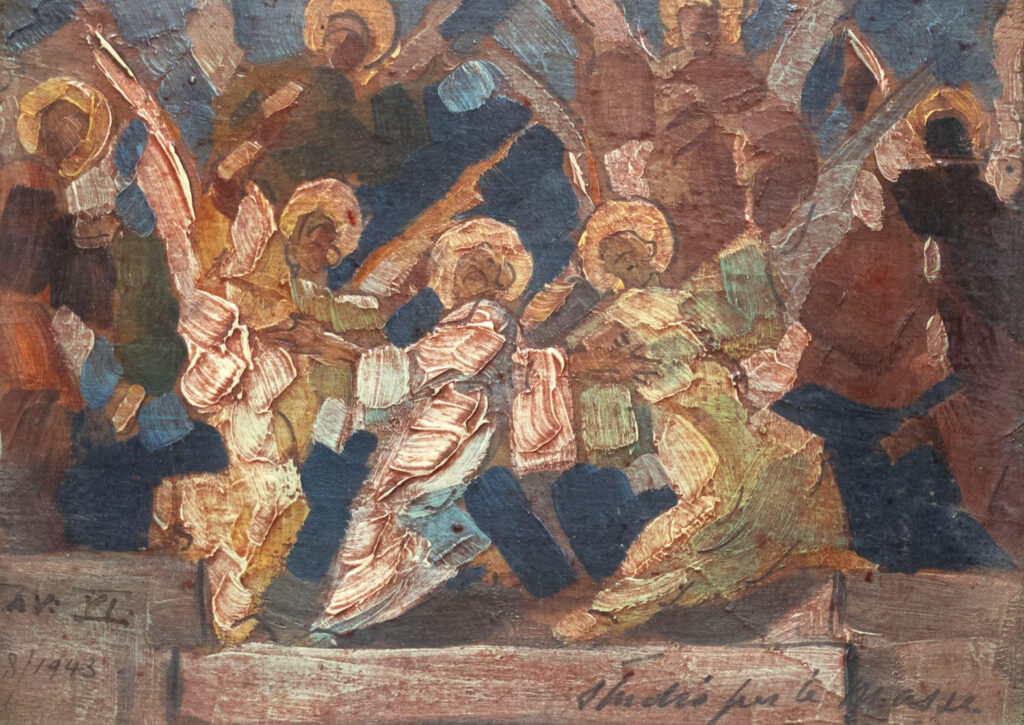
Briffa’s works in Gozo are numerous, and one room in the show is dedicated to studies for churches on this smaller island, including sketches, several small topographical works and the glorious large-scale Descent of the Holy Spirit, a design for the mosaic decorations at Ta’ Pinu Basilica.
A large wall-map then encourages visitors to visit six churches in Gozo to continue their exploration of Briffa’s works, while a side room showcases the artist’s legacy with a selection of works by other artists who were influenced by Briffa’s work.
“It is hoped that this exhibition will stimulate renewed scholarly and public interest in the artist’s work and contribute to a more nuanced understanding of [Briffa’s] artistic legacy,” concludes art historian Mark Sagona, head of the Department of Art and Art History at the University of Malta.
The exhibition runs until September 8. The accompanying book, Reluctant Modernism: The Art of Ġużeppi Briffa (Il-Ħaġar Ġem 39; €25), includes Attard’s comprehensive insights into Briffa’s life, work and legacy, a personal narrative by Briffa’s great-granddaughter and further background information.