





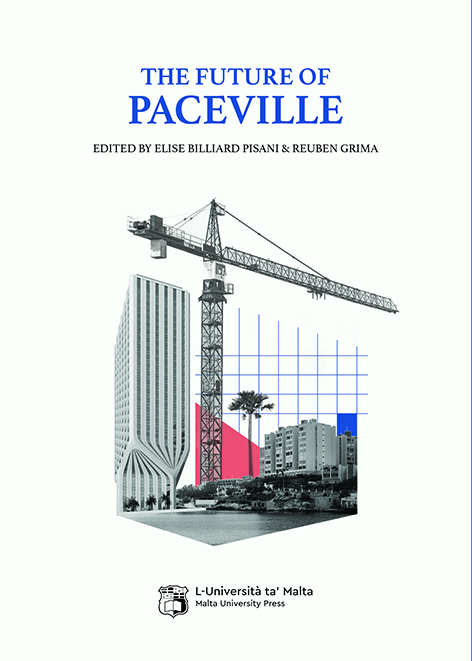
The Future of Paceville
Co-edited by Elise Billiard Pisani and Reuben Grima
Malta University Press, 2026
The Future of Paceville is an important and timely book, written by authors from anthropology, law, planning, architecture and cultural heritage management, and spanning academia and practice.
The story of today’s Paceville begins in the early decades of the 20th century, when Giuseppe Pace began to build residences there for British service families. Previously a fortified promontory, Paceville lies north of the fishing village of St Julian’s.
Part of the appeal of Paceville, indeed St Julian’s, to its early developers was its beautiful coastline, and indeed the motto of St Julian’s is ‘My Coastal Waters are Surrounded by Land’, according to Fiott’s 1991 book on Maltese settlements.
Since the building of Spinola Palace − its inscription reads that the palace’s extensive gardens were “for the people’s recreation” − St Julian’s has attracted a series of wealthy residents seeking rest and leisure along its scenic shores.
The ornamental gate of Dragonara Palace declares: ‘God has made these pastimes for us’. Later, as part of the post-independence tourism drive, the Sheraton and the original Hilton hotels opened, along with the first bars and restaurants.
David E. Zammit explains how the “hybrid and atemporal understandings of Maltese law” that resulted from the semi-privatisation of the Dragonara estate “continue to underline attempts to regulate frenetic construction activity today”.
For years, a site of social experimentation, as Frans Attard writes in his 1991 novel Paceville, the book describes how Paceville became “a micro-laboratory for the future of urbanism in Malta,” according to Elise Billiard Pisani.
Beginning with the Hilton redevelopment project in 1995, the next decades saw a series of large, high-rise, mixed-use, gated projects transforming Paceville so that its fortifications and the bucolic arcadia of rest and leisure envisaged by the developers of the Spinola and Dragonara palaces and Paceville would no longer be recognisable.
The development pattern emerging in Paceville is of concern for two reasons. Firstly, it has favoured private interests, leading to coastal enclosure, commodification or destruction of historical heritage, and over-commercialisation. The decaying public environment has serious infrastructure problems.
Marguerite Pace Bonello calls Paceville a “fortress city”, where tranquillity (behind gates) is accessible only to those who can afford it.
“This book is a must-read for anyone interested in understanding and influencing Malta’s urban future”
While attempts at planning have been reactive and top-down, Paceville still has “a local community and a growing amount of daytime land uses that require well-thought-out strategies to ensure the formation of a quality urban realm and a liveable place in the long term,” Antoine Zammit notes.
He reminds us that public open space is where community ties are born and strengthened.
Billiard Pisani warns that “the dilemma around private enclaves is not only that they are unfair… enclaves suppress debate, prevent the fostering of a sense of place, and ultimately preclude the necessary conditions for democracy”.
She argues, quoting Arendt, that “public spaces are where an individual becomes human”, through actively engaging with others.
More broadly, the book questions Malta’s postcolonial narrative of progress and modernity, underpinned today by neoliberal notions of ever-increasing economic growth based on major projects and tourism. The failings of speculative development and property-led regeneration have long been documented, including in terms of house prices, yet we continue to peddle that narrative.
Billiard Pisani notes that the special designated areas that first appeared at Portomaso, where controls on property purchases by non-Maltese are waived, have now spread, and property agents’ websites now list over 20 such sites, including within heritage sites such as Fort Chambray.
Jacques Borg Barthet points out that stakeholders have yet to engage in a debate about how to shape “a Maltese urbanity that will be treasured for generations and provide lasting value and quality of life to all, including those who are well off”.
Civil society plays a critical role here, but I would also ask what sorts of forums are needed to allow for such reasoned and respectful debate about Malta’s urban future… for urban planning to become what Hajer, quoted by Borg Barthet, described as “the process of facilitating the untamed intelligence of a given city’s citizens”?
In other liberal democracies, mini-publics and citizens’ assemblies have been used to deliberate on crucial issues of public policy. Why not in Malta?
This book is a must-read for anyone interested in understanding and influencing Malta’s urban future. It provides a new vocabulary and a counter-narrative for those who feel ambiguous about the direction of progress and the need to challenge the glitzy narrative of hyper-consumerist urbanity playing out on our streets as high-rise, segregated communities, and for those who question, who gains and who loses from these transformations.
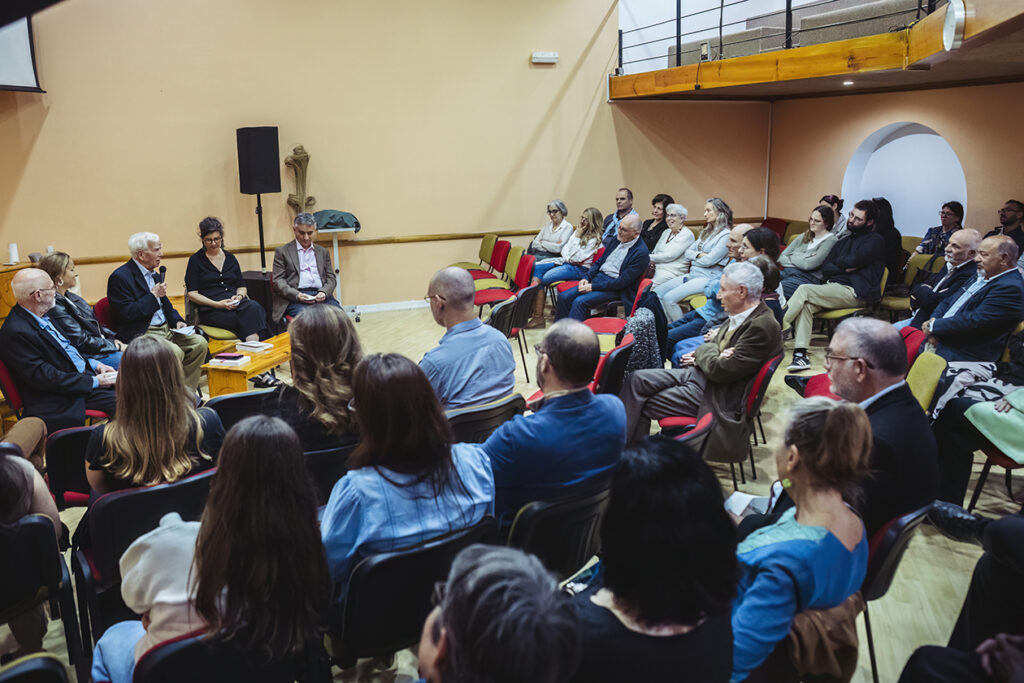
The book is not about nostalgia for a past arcadia in Paceville, but about the implications of this development model for the rest of Malta. The challenges related to commodification and speculation in Paceville are now playing out at a national scale, and the decisions regarding Bills 143 and 144 will have a decisive bearing on the quality of life of the next generation, Reuben Grima argues.
The Future of Paceville is at once inspiring, moving, and uncomfortable, forcing us, as Borg Barthet writes, to take a long hard look in the mirror. For too long, many of us have ignored what is happening in Paceville; this book warns us that if we don’t do anything about it, we will find similar projects coming near us.
Paceville has been touted as a modern city − in the past, the term ‘city’ had connotations of civility – is this what today’s Paceville evokes? We have struggled hard to forge an egalitarian, peaceful, democratic and safe country; gated communities are out of place in Malta.
Like Borg Barthet, many of us are asking whether the primary focus since independence on economic growth is sustainable if “its impact on social and environmental infrastructure becomes increasingly deleterious”.
Marguerite Camilleri is a lecturer at the Department of Policy, Politics and Governance at the University of Malta’s Faculty of Economics, Management and Accountancy.