



What’s in a name? For a photographer named Joe Smith, an everyman if ever there was one, the answer seems almost preordained. His work gravitates towards the quotidian, elevating the ordinary with a quiet, deliberate attention. It feels less like coincidence than a kind of inevitability.
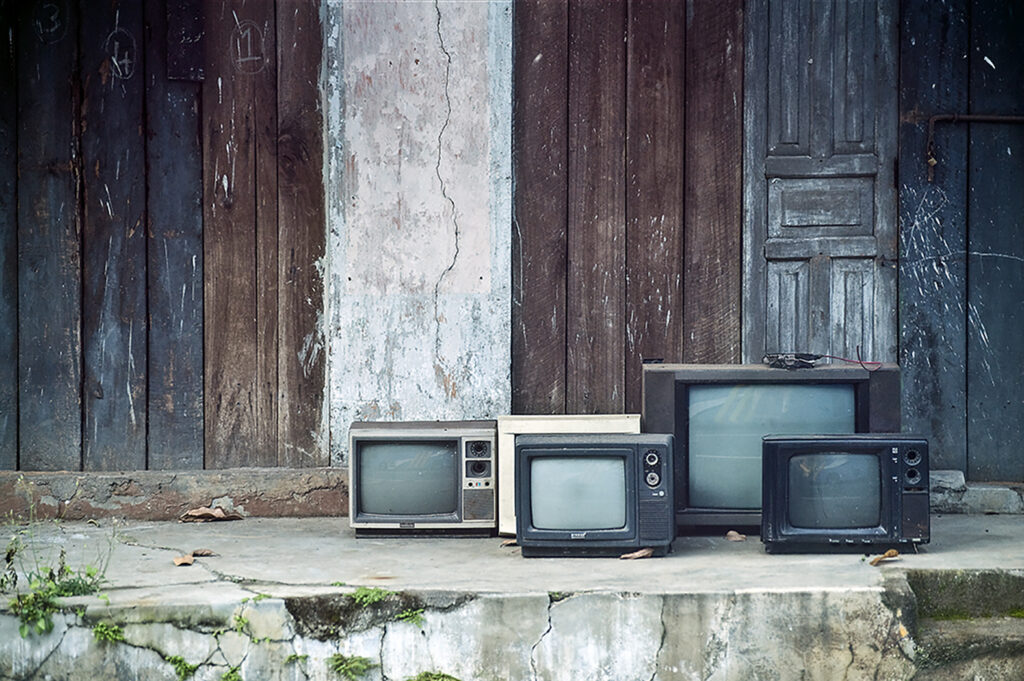
In his exhibition Still Time, curated by Lisa Gwen Chetcuti, this sensibility is given structure. It is divided into four sections, including ‘The Ordinary and the Mundane’, ‘Form and Matter’, ‘People and Faces’ and ‘Spaces and Places’. Titles that might be considered elementary, were it not for the way they echo the democratic gaze at the heart of Smith’s practice, where the unremarkable becomes, under scrutiny, something enduring.
The structure of the exhibition emerges less as a curatorial imposition than as a reflection of the artist’s own instincts.
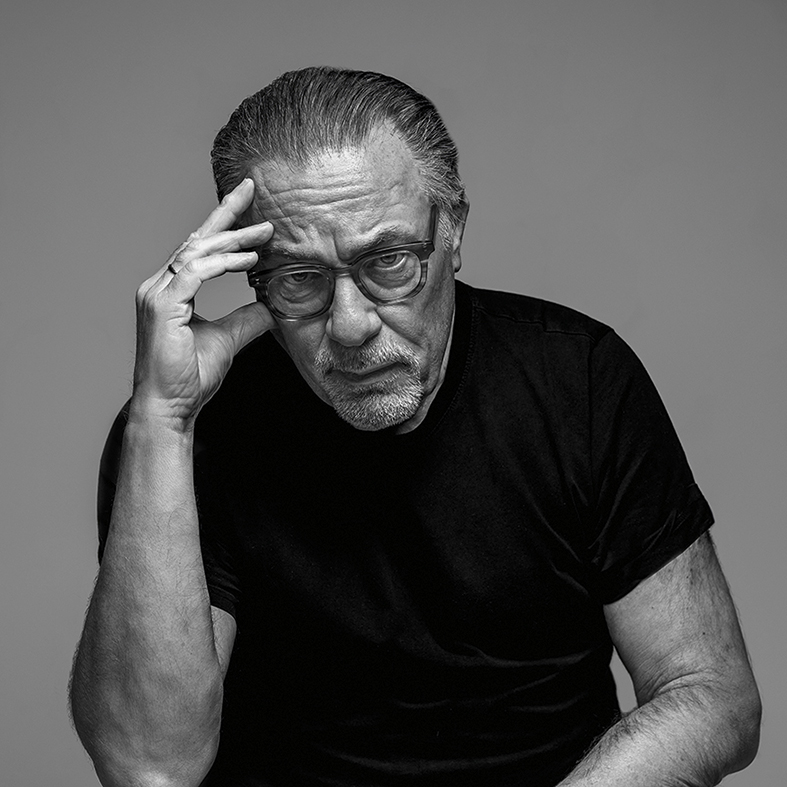
“Most of my work is involved with these four categories,” Smith explains matter-of-factly, framing the show as both a survey and a continuation, spanning 50 years while still making room for unseen and recent images.
There’s a bright energy about Smith – it prompts the question: why a retrospective? He agrees that the notion implies finality. British artist Dame Tracey Emin’s current show at Tate Modern in London, which spans 40 years, is referred to as a “landmark exhibition” – perhaps here too that term feels more fitting.
Smith is excited about the show and motivated by the present, in which he is able to dedicate himself fully to his true vocation now that he is retired. He is at a juncture, entering into a more tactile phase with his photogravures, which he is developing in his studio, situated in Dingli.
“I’m aware that I’m still alive, still working, but I want to draw a line here and take a step back,” he quipped.
Many of the works to be mounted are still under wraps when I arrive at Valletta Contemporary on day one of the installation. It forces us to talk about the works without being able to see them, to cut through to the core of his practice.
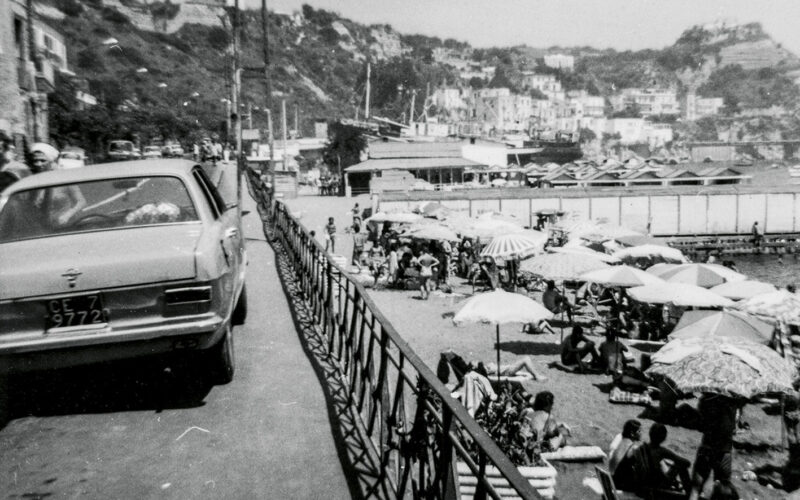
Among them is his very first photograph, taken in 1972 at the age of 12. He recalls the moment with clarity – a journey to Italy with his grandfather, by ship and then train – when a chance encounter with a camera shop in Naples sparked a fascination that would shape his life’s work.
The camera in question was a Diana F, still used by analogue lovers, and the photograph taken on that trip of his grandfather, Angelo Aquilina, marks the beginning of the show.
We meander down to basement level and stop in front of a double-height wall.
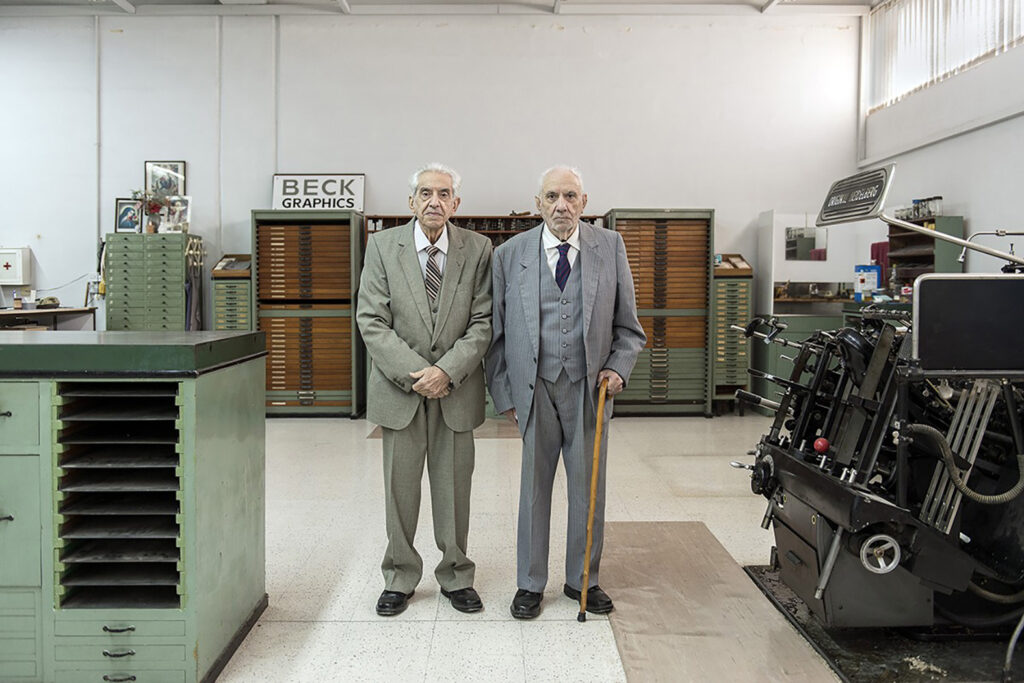
“This is where I’m going to hang my photos of the Beck brothers,” he says, taking out his phone to show a rendering of how they will look once installed. They will be positioned to greet the viewer from the mezzanine above – the scale of the images befitting Valletta Contemporary.
Smith reflects: “These two photos have travelled all around the world. They have been exhibited at the National Portrait Gallery in London, at the Head On Photo Festival in Sydney, BBA Gallery in Berlin, in Kuala Lumpur, India and Italy. As you can imagine, this was quite important for me in terms of acknowledgement and engagement.”
The history of the Beck family’s printing business, founded in 1919, reads like a meditation on craft and endurance. Forced to leave school after their father’s death, brothers Alfred and Paul devoted their lives to the press, earning a reputation for precision and restraint.
Decades later, photographed near the end of their careers, they stand in formal stillness among the machines that defined them, rendered in a mix of natural light and industrial glow. A quieter image, taken through a canteen window, reveals a more intimate pause – a reminder that behind every legacy of labour lies a human story.
In relation to these two images, Smith references film-maker Wes Anderson, and the conversation drifts into a meditation on obsession, and the painstaking construction behind images that appear effortless.
“That’s the artist,” Smith reflects, acknowledging the fine line between discipline and compulsion, “as Oscar Wilde said, ‘art can protect us from the sordid periods of everyday existence’.”
Smith has a sense of wanting to seize the present and savour every moment. On the eve of his solo show, he’s already looking ahead: “I’m thinking of putting something together with my jazz photography.”
Smith has been documenting the Malta Jazz Festival since its early days, and his affinity for the genre meant it was always playing in the background.
“My son grew up to be a jazz drummer, and lives in New York City now!” he says with a smile.
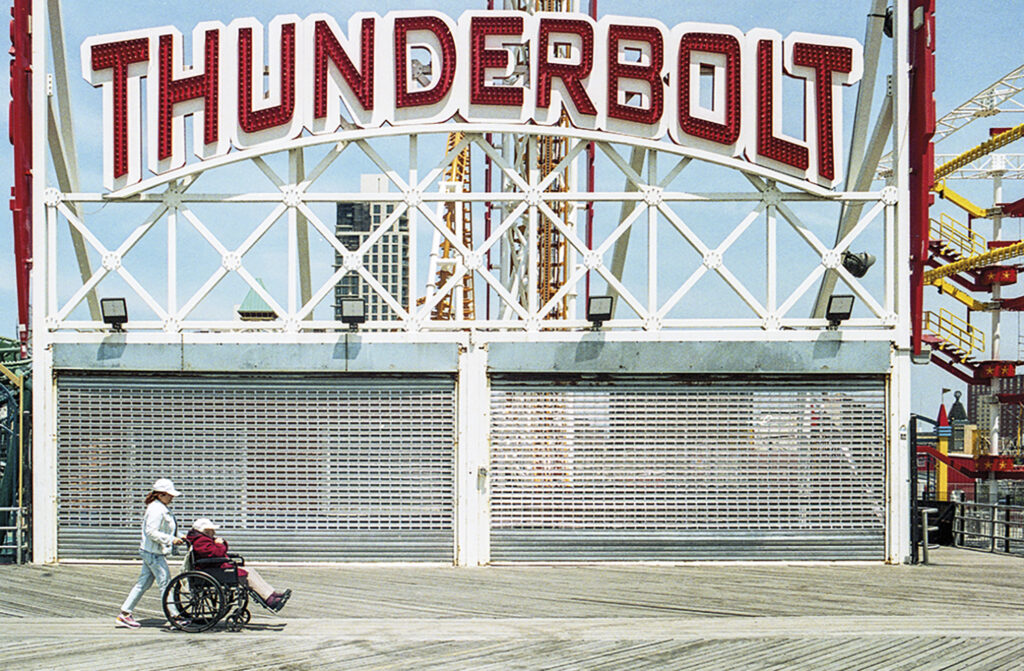
On a recent trip to America, Smith headed towards Coney Island with just a few rolls of film. The results can be seen in the final section of the show, a sequence of four images that are nostalgic yet fresh and contemporary, bridging the past and the present – upon reflection, much like the rest of his practice, just slightly outside of time.
Smith’s lifelong attention to the ordinary is not an act of documentation alone, but of transformation; an insistence that even the most familiar scenes can be re-seen, making them renewed. Perhaps that is the secret of his effervescence: the ability to see things anew – to return to the familiar and find its charge.
Still Time runs at Valletta Contemporary until June 20.