




Being an unconventional instrument, the double bass was overlooked for many years in the solo repertoire after the era of Giovanni Bottesini (1821-1889). After nearly a century, the instrument found renewed prominence through Paul Hindemith’s compositions, which explored the double bass in both soloistic and ensemble settings.
The German composer (1895-1963) lived in turbulent times, which prompted him to leave his home country to escape Nazi persecution and preserve his artistic freedom. His style of composition was a novelty, particularly because he was the only composer to write sonatas for nearly every orchestra instrument.
Being Jewish, his wife Gertrude Rottenberg (the daughter of Ludwig Rottenberg, principal conductor at the Frankfurt Opera) limited the extent to which his work was performed in Germany, regardless of the support he received from acclaimed conductor Wilhelm Furtwängler.
Although mainly an actress by profession, Gertrude was also an amateur double bass and cello player. This factor led Hindemith to compose various pieces for the instrument, culminating in his well-known Sonata for Double Bass and Piano which he composed in 1949.
As mentioned, Hindemith also saw the potential of the instrument as a chamber music element and consequently also composed an unlikely duo for the double bass and clarinet. As Hindemith was himself a viola player, composing for the clarinet came quite naturally due to the instruments’ similar register.
The duo piece Musikalisches Blumengärtlein und Leyptziger Allerley is indeed an interesting one in the double bass repertoire as it brings out Hindemith’s character.
The movement titles are notably whimsical as Hindemith intended to parody the musical clichés of the time, such as the 19th-century salon music, Leipzig’s (the city of Bach – who was a great influence on Hindemith’s counterpoint style) outdated music traditions, as well as the Nazi regime’s pompous propaganda.
The contrast between the instruments’ timbre, together with the deliberately written “mistakes” and fragmented, interrupted phrases, was employed intentionally. This style could also be compared to Kurt Weill’s theatrical style – another composer with whom Hindemith worked closely and shared a common artistic struggle with.
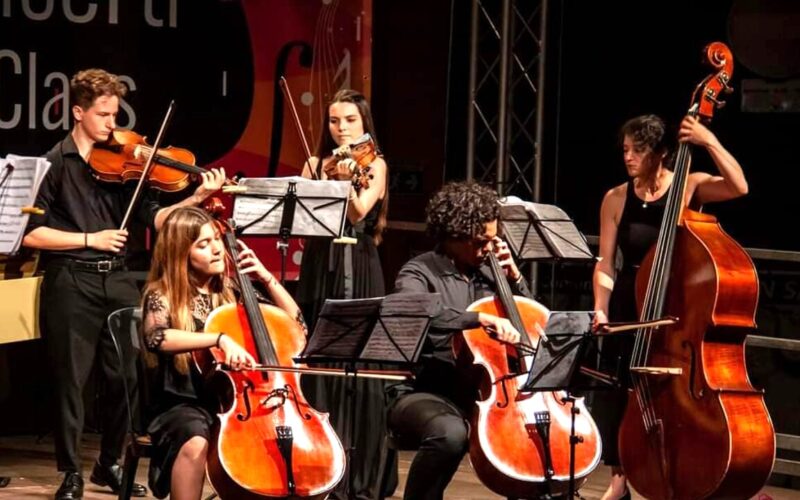
This piece, therefore, is far more nuanced than its playful concept suggests, besides using unconventional techniques that had not been exploited prior to Hindemith’s time. This is why I chose to focus the research of my Masters in Double Bass Performance (under the tutorship and guidance of Mro Amerigo Bernardi) at the Conservatorio Peri-Merulo in Reggio Emilia, Italy, on Hindemith’s timeless and immensely relevant contribution for the double bass repertoire.
Apart from the Double Bass and Piano Sonata mentioned above, I have also chosen to perform the duo for double bass and clarinet alongside clarinettist Noel Curmi at the Malta Society of Arts in Valletta on October 30.
The highlight of the concert will be the premiere of a new piece written for double bass and clarinet by Carl Borg, a Maltese contemporary composer who has recently graduated from the Koninklijk Conservatorium in Brussels. The piece was commissioned by Curmi and is being funded by the Arts Council Malta’s Micro Grant.
The author is a recipient of the Malta Arts Scholarship Scheme, funded by the Government of Malta.