



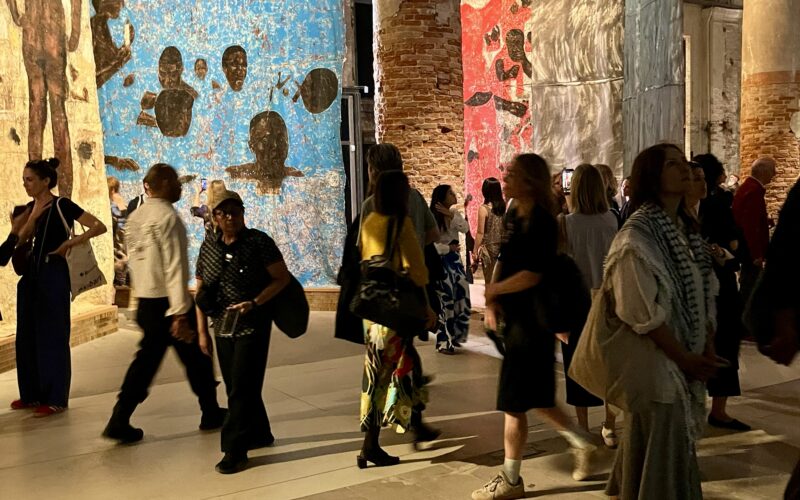
The title of this year’s Venice Art Biennale, In Minor Keys, carries with it both denial and hope. Beneath its subdued cadence lies the feeling of collapse and the growing sense that the biennale itself, with its inherited national pavilions and exhausted architectures of cultural prestige, can remain meaningful only if it is challenged and turned against itself.
During the four pre-opening days, May 5 to 8, there were 27,935 attendees, representing a 4% increase compared to the pre-opening days of 2024. For those who attend, the prerequisites for survival are stamina, hydration, social dexterity and adrenalin. These days are not about exclusivity, they are about presence, about being drawn in by the reveal that is to unfold.
This year’s opening did not disappoint with more hype, more tension, more disruption and contradiction than ever. You are there to enter into the fray guaranteed to be hurtled out the other side, exhilarated, exhausted and this year, ever more uncertain about our current times.
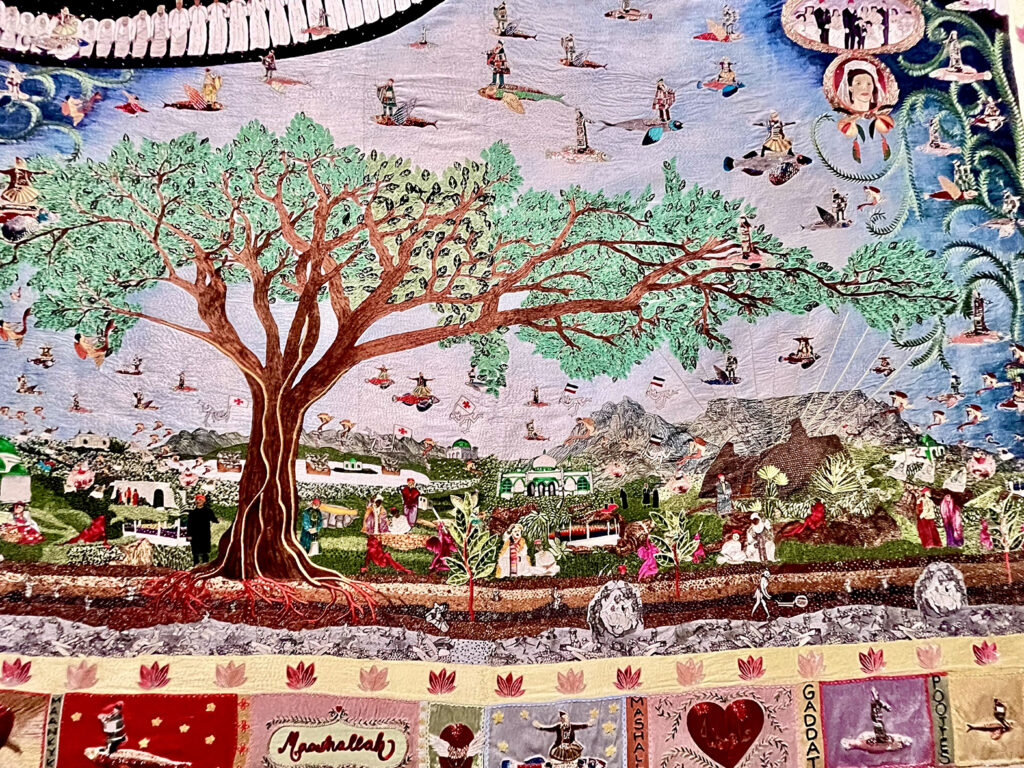
The call for us “to marvel, meditate and commune in realms where time is not at the mercy of relentless accelerated productivity” made by the late Cameroonian-Swiss artistic director Koyo Kouoh was challenging from the outset. The tragic passing of Kouoh in May 2025 altered the foundation of the 2026 Venice Biennale long before the preview days had begun. As the first African woman appointed to lead the international exhibition, her absence created a power vacuum that compromised the event’s governance.
Just days before the arrival of the art world, a controversy exploded when the international jury members collectively boycotted and resigned over the inclusion of sanctioned states. The implementation of the makeshift digital visitor-voting system, hastily introduced by the Venice Biennale Foundation to replace the Golden Lions with the new Visitors’ Lions, hinted at what would be in store for those attending.
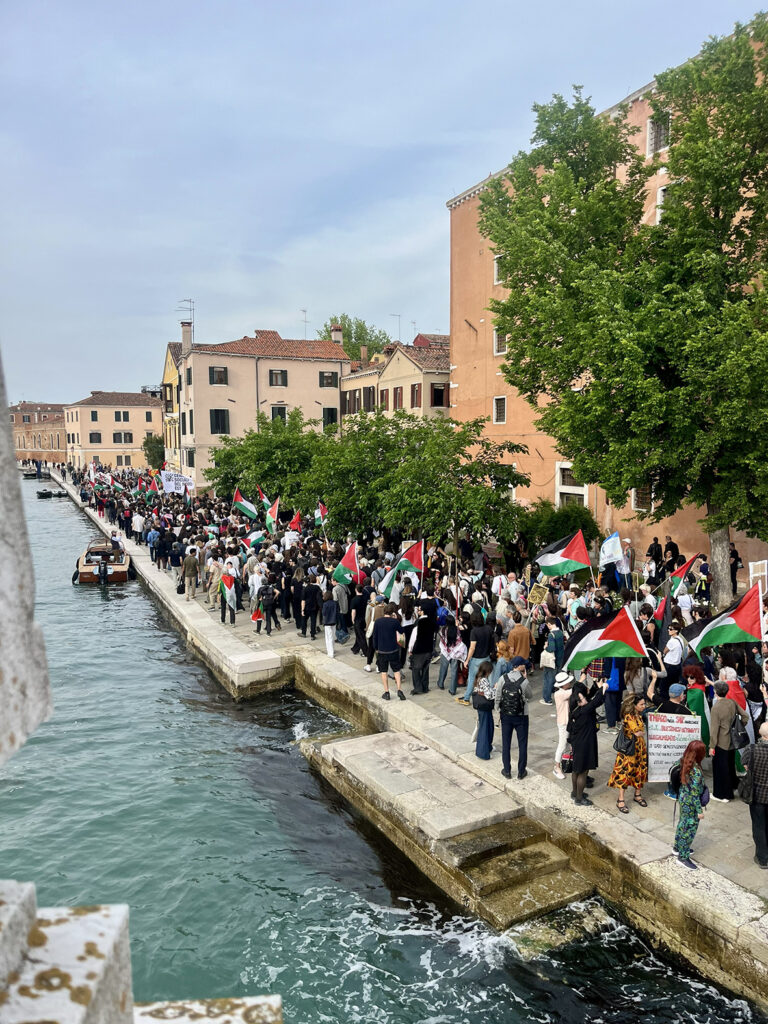
On May 8, the final day of professional previews, a massive, historic walkout occurred. Spearheaded by trade unions and the Art Not Genocide Alliance (ANGA), roughly a third of all national pavilions fully or partially shut down in a strike, protesting the inclusion of Israel and Russia.
On May 9, more than 70 artists and 22 national pavilion teams published a joint statement on e-flux withdrawing themselves from consideration for the Visitors’ Lions, stating that accepting the public vote would validate the biennale’s attempt to bypass the original jury’s moral stance. They viewed the voting system as a corporate mechanism designed to pretend everything was normal.
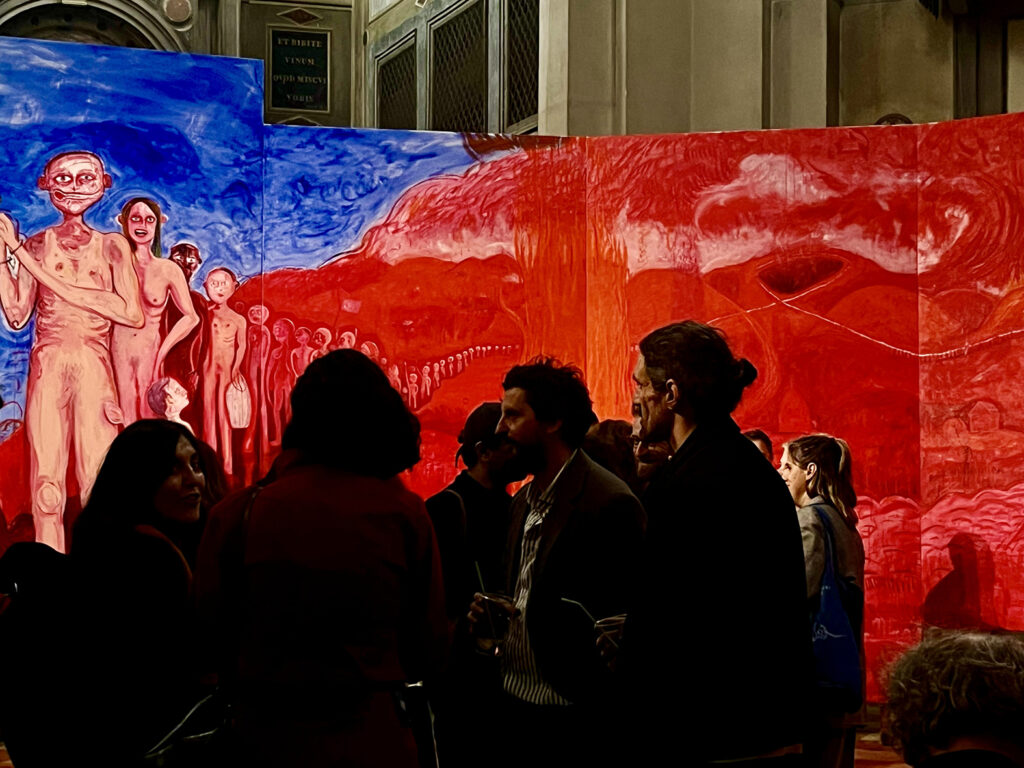
“The Americans can perhaps win a lion now,” quipped a curator, referring to a pavilion that was largely ignored by the attendees, featuring sculptural work from self-taught ‘unknown’ artist Alma Allen, and curated by Jeffrey Uslip, who has a connection to Malta – having been one of the two curators for the Malta Pavilion in Venice in 2022.
Activist groups Pussy Riot and FEMEN stormed the Russian pavilion area, deploying pink smoke canisters and chanting against state propaganda. The pavilion, which restricted its opening solely to the preview days, stood gapingly empty. Being one of the few pavilions without a queue, meant we could nip in quickly – gate-crashers in a macabre Tim Burtonesque wedding scene – to find a world turned upside down, with flower arrangements crawling from the ceiling, and a sense that the newlyweds had fled (changed their minds?), leaving the deejay to play bangers to a deserted dancefloor. Disparities between national pavilions felt stark. Some countries responded to the inherited format with sincerity, others appeared determined to dismantle it from within. Several posited as anti-pavilions, presenting chaotic, provocative performances of institutional exhaustion.
Florentina Holzinger at the Austrian Pavilion was the talk of Venice, though we wondered whether the performance-based frenzy would be sustained over the subsequent six months.
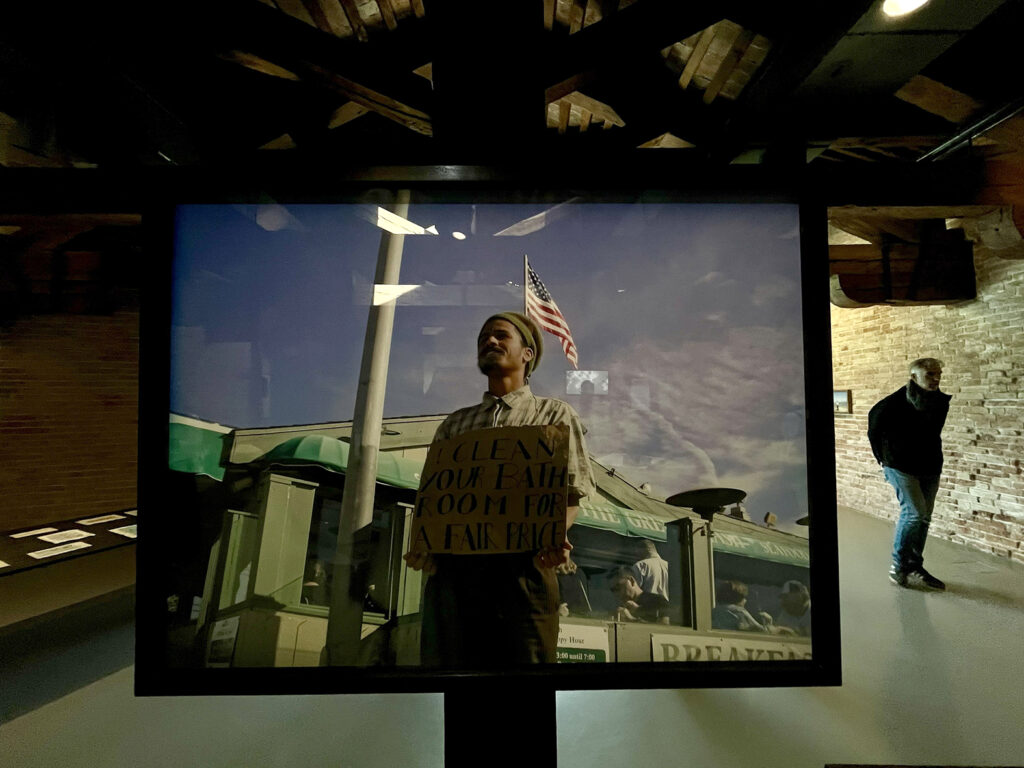
The German Pavilion was perhaps the most coherent response to these tensions. Curated by Kathleen Reinhardt under the title Ruin, it explored the lingering ideological fractures of post-reunification Germany.
Sung Tieu transformed the pavilion’s fascist architecture with a trompe-l’oiel to create a looming image of the graffitied housing complex where she grew up, now slated for demolition. Inside, a room is infested with ladybirds: replicas of chocolates, referencing the racist slur Kanake used against Vietnamese contract workers in the GDR.
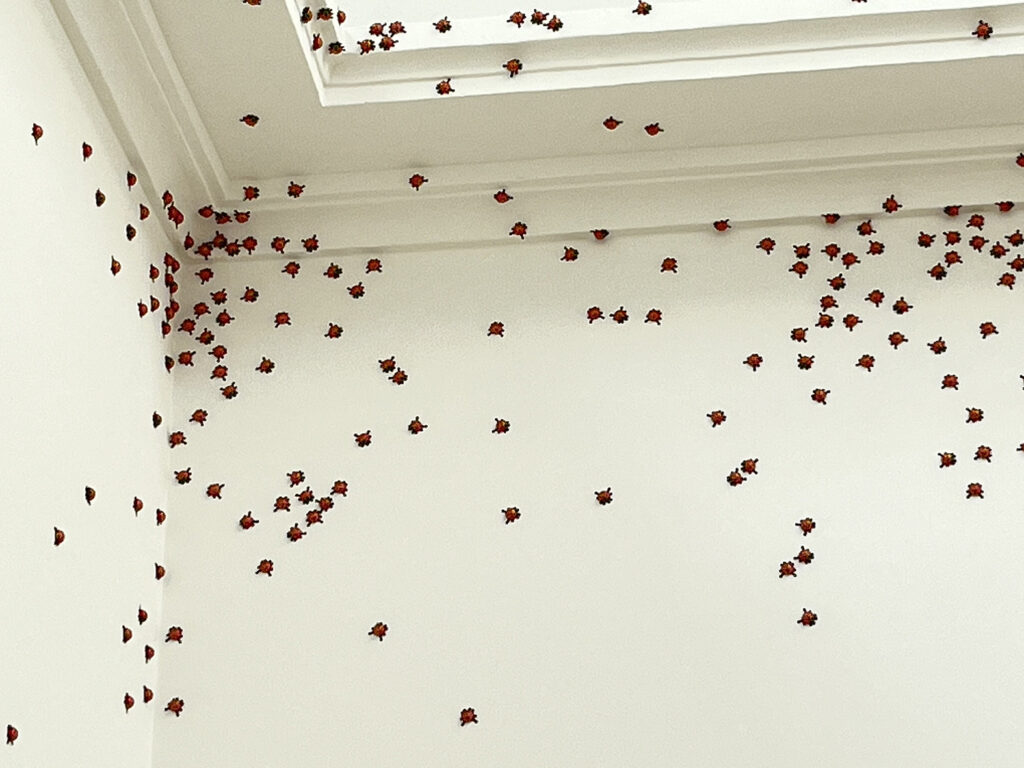
The work is titled They Have Eyes, But They See Not, They Have Ears, But They Hear Not, a reminder of the German basic law, Die Würde des Menschen ist unantastbar, which means the dignity of the human being is inviolable.
Tieu exposes the pavilion itself as a haunted structure, still carrying unresolved histories of exclusion and violence. She shares the pavilion with Henrike Naumann, who died only months before the biennale opened.
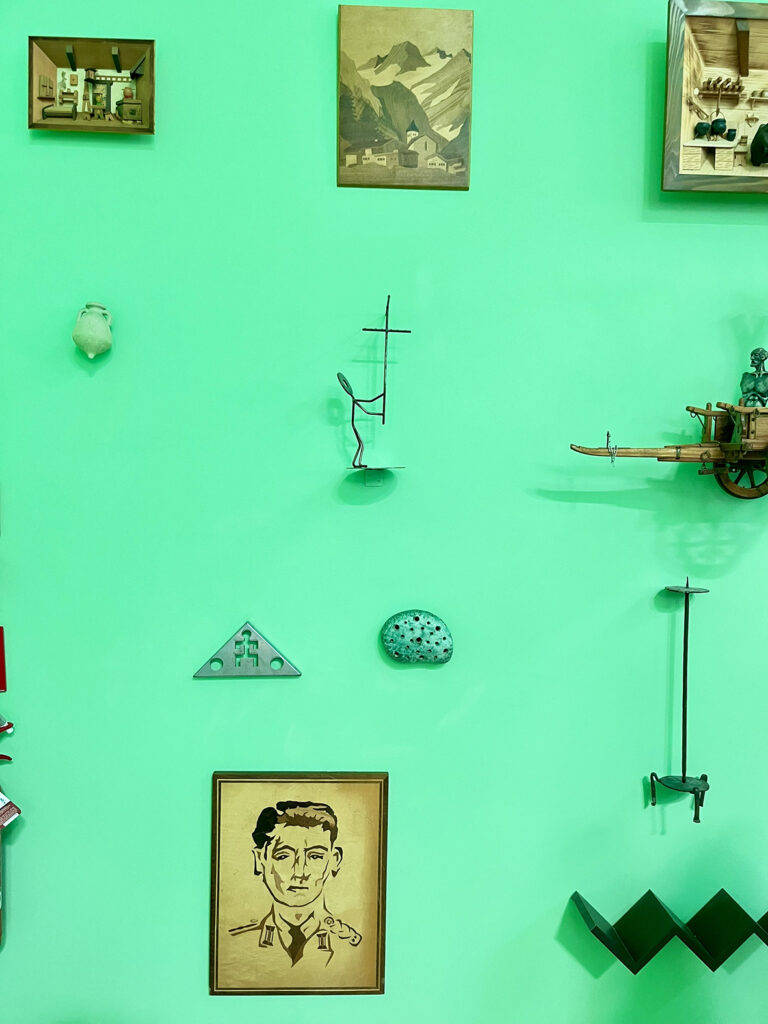
Naumann’s installation, completed posthumously, fills the rooms with furniture and domestic artefacts from the former GDR. The walls are painted a vile green, reminiscent of socialism, yet the aesthetic becomes strangely pop. The theatricality matters; iron curtains hanging in the room − “they’re supposed to be funny,” I was informed − did not collapse into melancholy so much as reveal the biennale’s deeper condition, fraught with contradiction and dissonance. Here, humour exists beside historical trauma, absurdity beside political violence. The pavilion succeeds because it resists emotional resolution.
Even the much-anticipated Holy See Pavilion, The Ear Is the Eye of the Soul, curated by Hans Ulrich Obrist and Ben Vickers, became entangled in its own paradox. Visitors queued for hours outside a monastery garden to experience sound works by artists including Brian Eno, Patti Smith, FKA twigs and Jim Jarmusch. Inside, the experience was described as serene: ambient soundscapes, filtered light through trees, monastic quiet. Yet the long queue outside complicated the pavilion’s central proposition. The question lingered: would the work be more truthful once the machinery of preview week subsided?
Kouoh’s appeal could not be more prescient. In a time of war, brutality and upheaval, she wrote of oases, “islands, where the dignity of all living beings is safeguarded”. Despite global geopolitical strife, Kouoh wrote that “the music continues. The songs of those producing beauty in spite of tragedy, the tunes of the fugitives recovering from the ruins, the harmonies of those repairing wounds and worlds.” That aspiration persists, even amid contradiction.
The biennale does not resolve its tensions so much as reveal them in sharper relief: between activism and institution, sincerity and spectacle, absence and overproduction. What remains is polyphony, a field of competing currents in which conflict and camaraderie coexist. In that uneasy coexistence, Kouoh’s sceptre looms large. Once the crowds subside and protests shift elsewhere, a visit to this year’s biennale will be, for those who seek it, magical and restorative.