




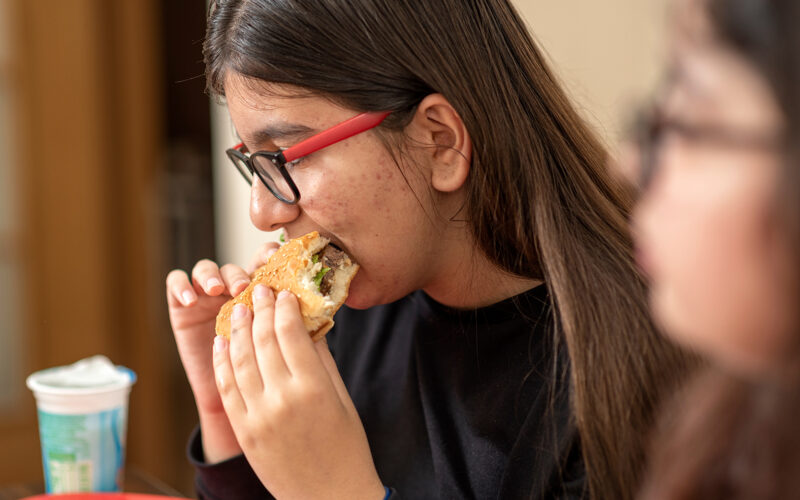
Growing evidence confirms that what we consume has a direct and visible impact on our skin’s appearance and health.
Acne is the leading cause of dermatologist visits, affecting roughly one in 10 people. While we often associate it with adolescence, this condition also afflicts a vast number of adults, particularly women.
Acne often flares up during hormonal shifts, such as puberty, pregnancy or menopause, but it is also linked to polycystic ovary syndrome (PCOS) and insulin resistance.
Though acne can be mild and show itself with a couple of pimples, for some people it can be more severe, manifesting in deep red swellings and painful, pus-filled cysts that might lead to permanent scars and, as a result, deeply affect one’s self-confidence and also mental health.
The two main reasons why acne has become more common in recent decades are changes in the Western diet, which is high in sugar and processed food, and the rise in chronic stress.
Other factors contributing to acne include alcohol consumption, constipation, improper skincare, poor sleep and even a sedentary lifestyle. Nutritional deficiencies can also worsen acne, such as a lack of omega-3 fatty acids, selenium, zinc, vitamins A, B3, B6 and E.
When we eat, the food we ingest is broken down in the stomach and passes into the small intestine. From there, nutrients are absorbed through the intestinal walls into the bloodstream, causing blood glucose (sugar) levels to rise.
Carbohydrates that are easily broken down and quickly absorbed, such as white bread or sweets, rapidly elevate our blood sugar and are known as high-glycaemic (high-GI) foods. These sharp glucose spikes trigger a large release of the pancreatic hormone insulin and an increase in Insulin-like Growth Factor 1 (IGF-1).
These, in turn, boost the activity of androgen hormones, such as testosterone, and increase oil production and pore clogging, which directly causes acne.
Reducing the inflammation
To alleviate acne, our goal is to reduce inflammation by keeping insulin levels steady. Low-glycaemic (low-GI) foods, such as legumes, whole grains and most fruits and vegetables, are beneficial for us because their slow release of glucose into the bloodstream prevents sharp insulin spikes.
This steady release also promotes a feeling of fullness and provides us with more consistent and longer-lasting energy. We can further enhance the positive impact of low-GI carbohydrates when we pair them with protein, fibre and healthy fats.
An easy solution to control sugar levels is to begin the day with a savoury breakfast, such as wholegrain bread with smoked salmon, egg and cucumber; chia pudding with coconut milk, and berries; and unsweetened protein powder with almond milk, half a banana and flax seeds. Even scrambled eggs fried in butter make a quick and excellent breakfast option.
Snacks are tricky because this is when we are most likely to pick up some high GI munchies on the go. We want to arm ourselves with simple snacks that are great for the skin and will help us meet our fruit, fibre, vegetable and wholegrain requirements for the day. These could include a handful of nuts with an apple, one’s favourite veggies with hummus and wholegrain crackers with almond butter and a banana.
Some dinner ideas that are easy to prepare, and balance protein and low GI-carbohydrates to keep us feeling full before we sleep include chicken casserole with bell pepper, quinoa and vegetable stir-fry with fried tofu; and grilled sea bass with tomato, spinach and basil.
If you do not have time for fancy dinners, just keep jarred (or canned) lentils and tomatoes in your cupboard, which can be quickly tossed with onion, garlic and some herbs. Beans, chickpeas and lentils are high in protein and fibre, and therefore they raise the blood sugar level more slowly, making them perfect dinner options for healthy skin.
Dairy and fast food
Observational studies show that dairy can aggravate acne, particularly milk. Milk contains a rich array of hormone precursors and growth factors. Milk can also trigger a high insulin response and thus we may want to replace it with plant drinks, such as almond or coconut milk. Yoghurt and cheese are usually well tolerated. However, in some people, all dairy products may cause inflammation.
Fast food and fried foods promote inflammation throughout the body, including the skin. French fries, burgers, pizza or deep-fried meat have little, if any, nutritional value and worsen acne. Furthermore, frying with corn and sunflower oils leads to the creation of oxidised, pro-inflammatory compounds. One should replace them with coconut or clarified (ghee) butter, which, in contrast to regular butter, is better suited to frying and safer even when on a dairy-free diet.
If you suffer from constipation, this may also exacerbate your acne. The first step is to consume at least 30 grams of daily fibre from various vegetables, fruits, whole grains, nuts and seeds. You could also buy soluble fibre at a local pharmacy and take a tablespoon daily. Other beneficial strategies to promote regularity include ground flax seeds, dried prunes, fermented Japanese plums, kefir, sauerkraut, kimchi, psyllium husk, some probiotic supplements or sencha tea.
Once we cut down or eliminate alcohol, refined carbohydrates, processed food, and (if necessary) dairy from our diet, we should be able to see visible results on our skin within days to weeks. Full skin and gut adaptation may, however, take three to four months.
Life is about balance and it is fine to have a treat, provided it remains a treat. Though it might be challenging to incorporate all the tips mentioned in this article, the easiest approach is to make small changes a little at a time and observe how the skin reacts. Nonetheless, to successfully tackle acne through better nutrition, one has to be patient and consistent.
Arnika Suska is a qualified nutritionist from Germany. One may contact her at arnika-healthyhabits.com.