


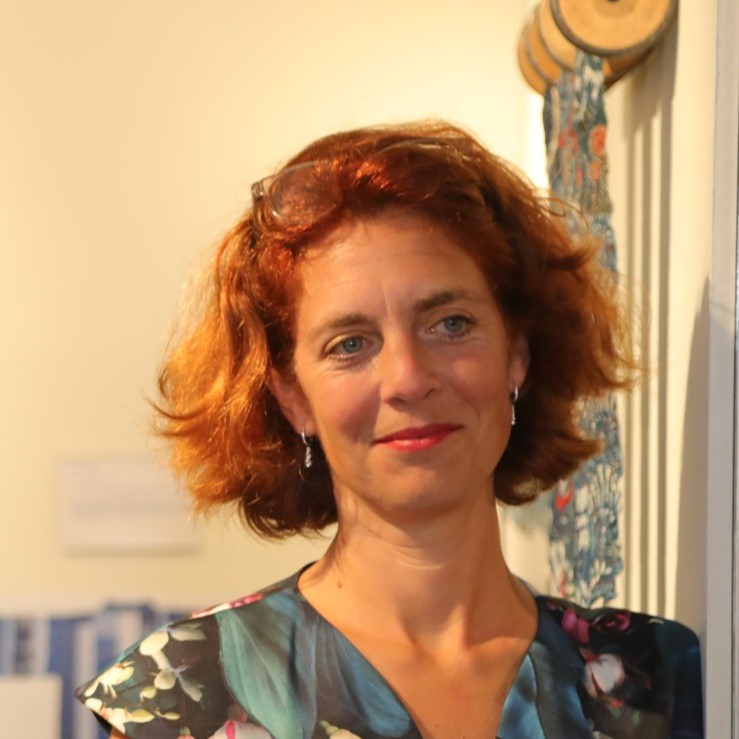
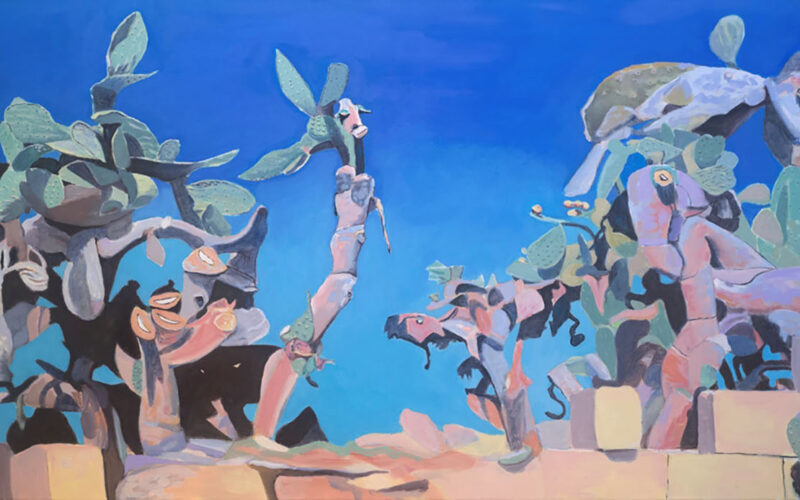
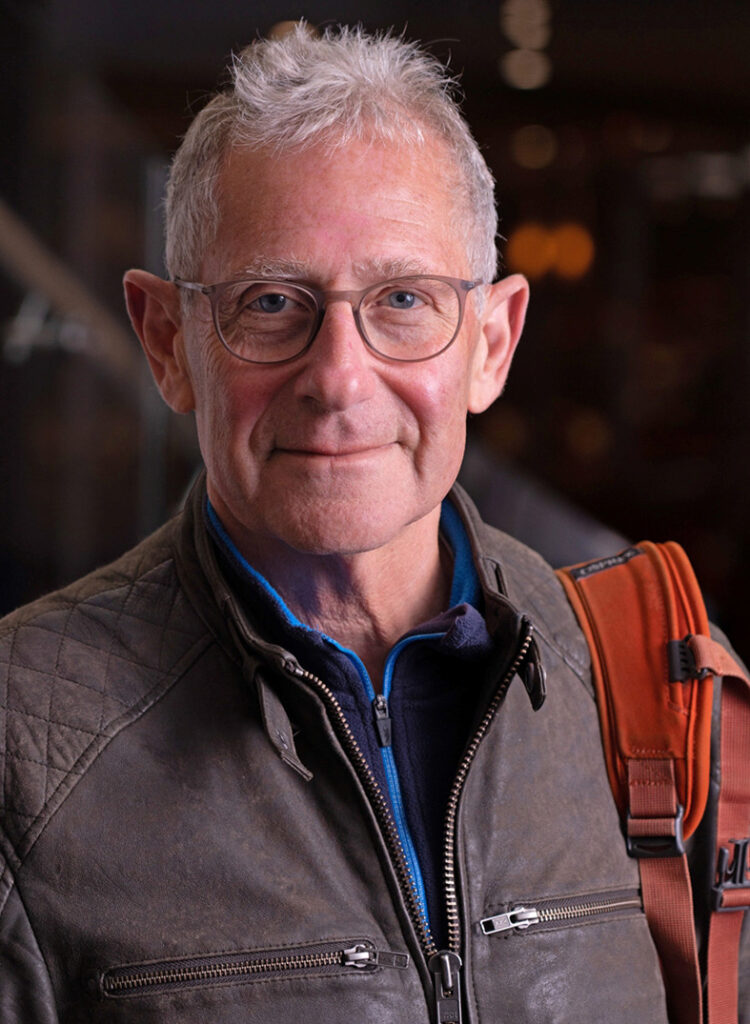
A new exhibition of oil paintings and etchings, Characters in Search of an Author, is now open at the Malta Postal Museum and Arts Hub, in Valletta. It presents the work of Stuart Franklin, who is best known for photographing some of the most important news events of the 21st century.
Since the 1970s, alongside photography and writing assignments, the British professor has also drawn and painted. In 2016 he set up a studio in Gozo − a far cry from the challenging places he visited as a photographer − where he has been able to dedicate himself to painting and studying the anatomy of colour. As Franklin celebrates his 70th birthday, it is these works, painted over the last 10 years, that are on show.
Influenced by a quote from the early surrealist poet Pierre Reverdy, “analogy is a means of creation”, Franklin’s practice explores traces of the past within the landscape and the way we “see the world through the spectacles of memory”, as coined by Maurice Merleau-Ponty in Phenomenology of Perception.
“When we look around, we often find a secondary meaning or ambiguity in what we see, and it sparks a memory,” Franklin says.
“Landscape and memory combine, for me, as a means of seeing and documenting the world. As I explore that hybrid space between nature and society, and between nature and memory, my emphasis is often on trees. Their presence (or absence) today can rarely be separated from human history and human intervention.”
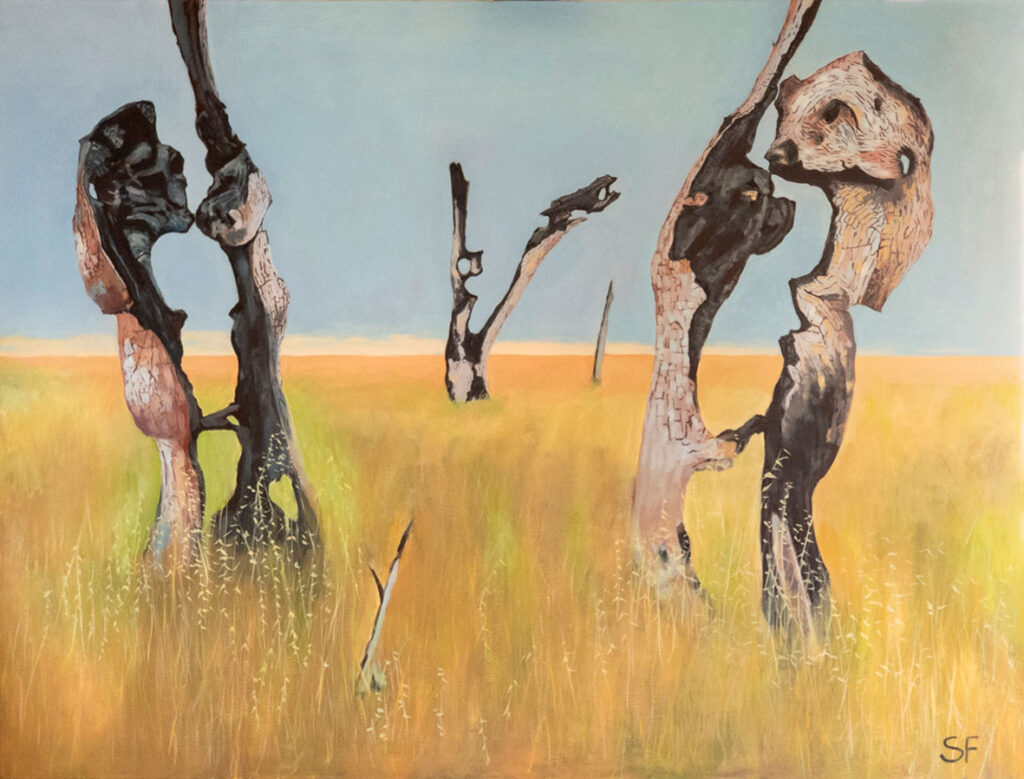
The biggest painting in the exhibition, for example, was inspired by scenes in Puglia, Italy, where, when the olive trees were struck down by disease, farmers burnt them as they stood. It’s a stark desolate landscape, and yet within it, pairs of trees appear to be dancing.
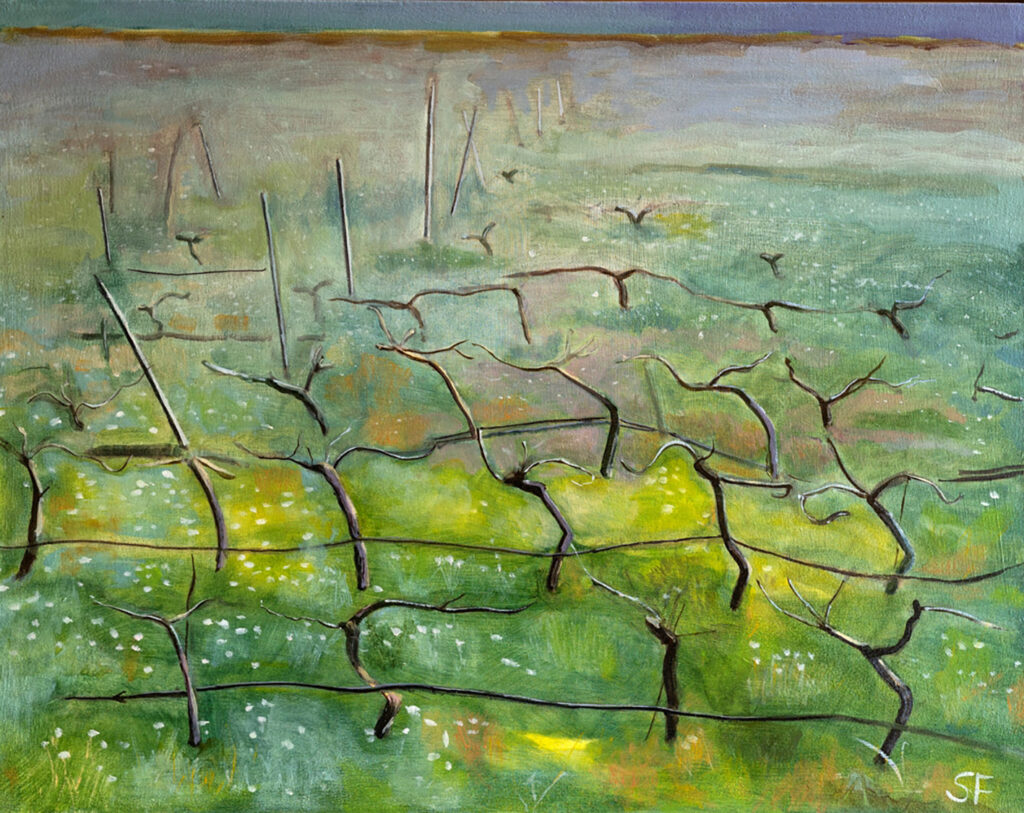
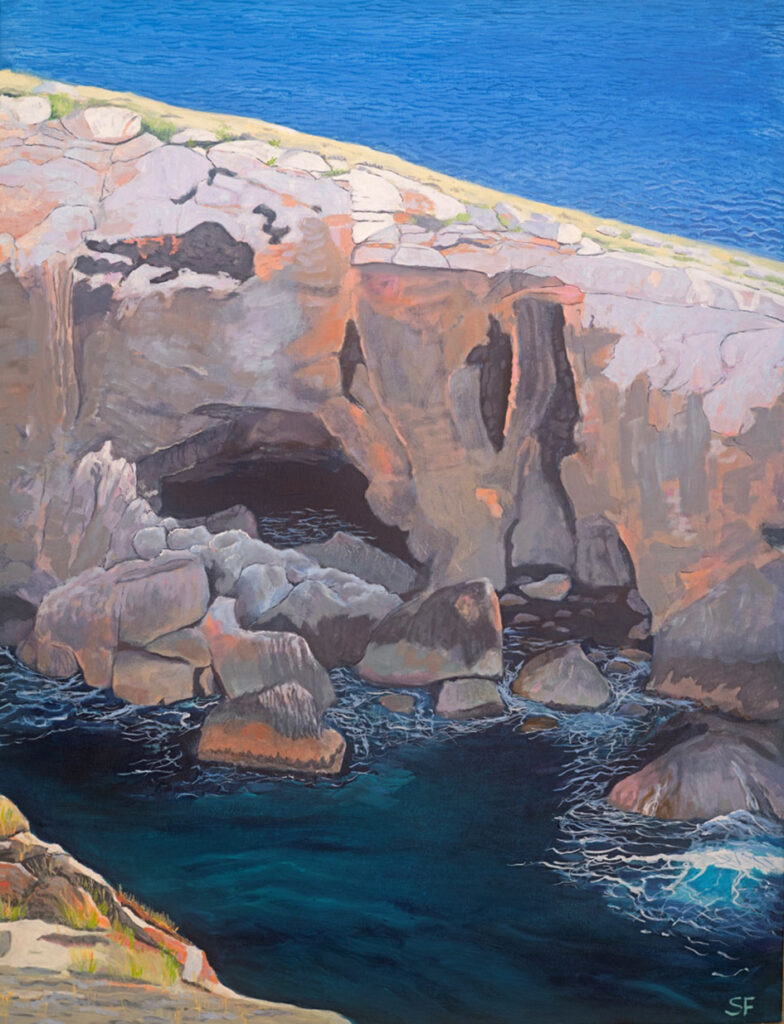
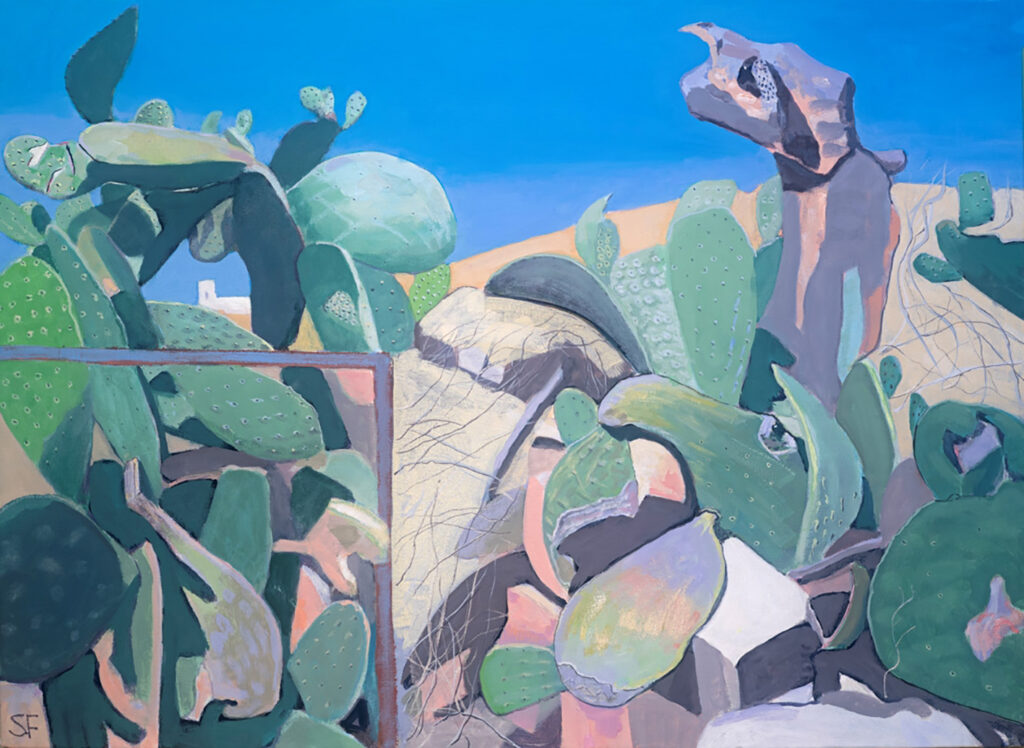
The collection includes several simple memories of local scenes that glisten with a cerulean sea, and a vineyard on the Marsalforn Road in which elegant plants appear choreographed in a field of shimmering emerald. Other works range from peacocks and the tranquillity of garden succulents painted as Franklin moved towards anthropomorphism, to a screaming tree painted at the beginning of the Ukraine war, and surrealism.
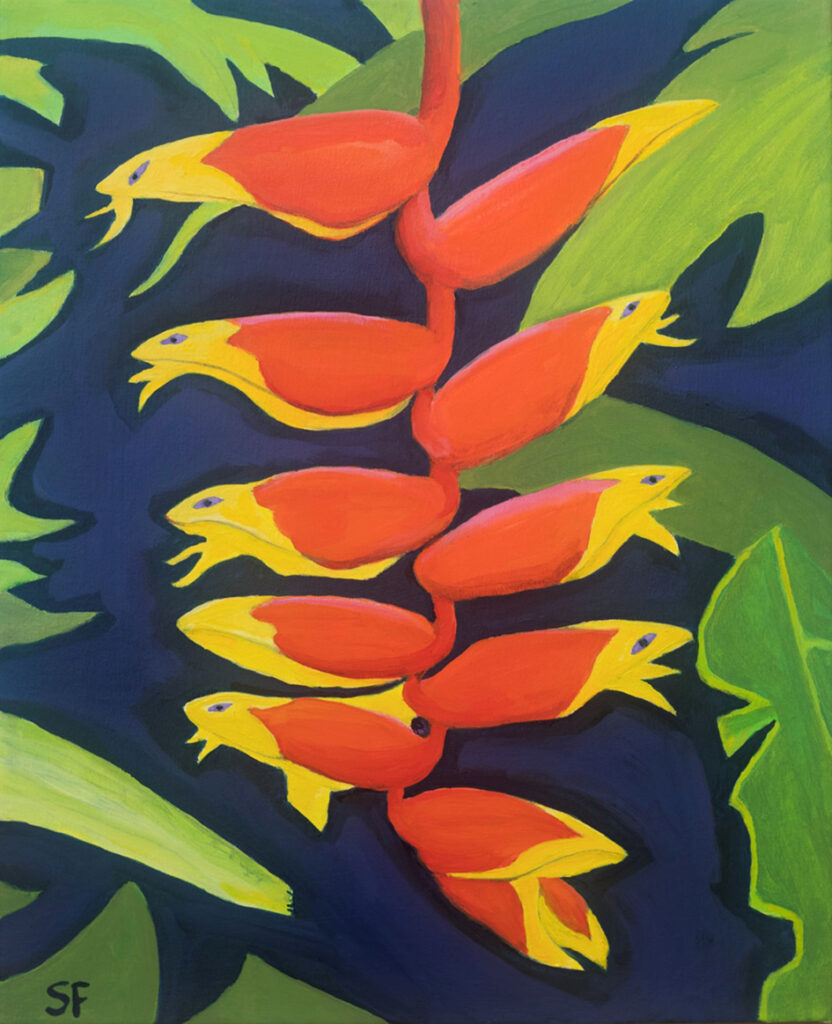
One of Franklin’s latest works, We Can Talk… When There’s Anybody Worth Talking To, depicts a many-mouthed heliconia plant in striking reds and yellow, inspired by the ‘Garden of Live Flowers’ in Lewis Carroll’s Alice Through the Looking Glass.
The title of the exhibition pays homage to an absurdist play by Luigi Pirandello, Six Characters in Search of an Author, in which fictional characters interrupt a rehearsal demanding to tell their stories. Franklin references the line “you can be born into life in so many ways, so many forms: tree or stone, water or butterfly… or woman. And one can also be born as a character.”
Several works hint at Franklin’s distinguished career as a photographer, including the portrait that greets you as you enter the exhibition. Here Franklin recalls a character he met, a man with “extraordinary soul” named Youssouf whom he met in 2008 while reporting on contemporary slavery in Central Niger.
“He stayed in my mind. I had taken several photos of him but I wanted to bring out extra elements that weren’t in the pictures.”
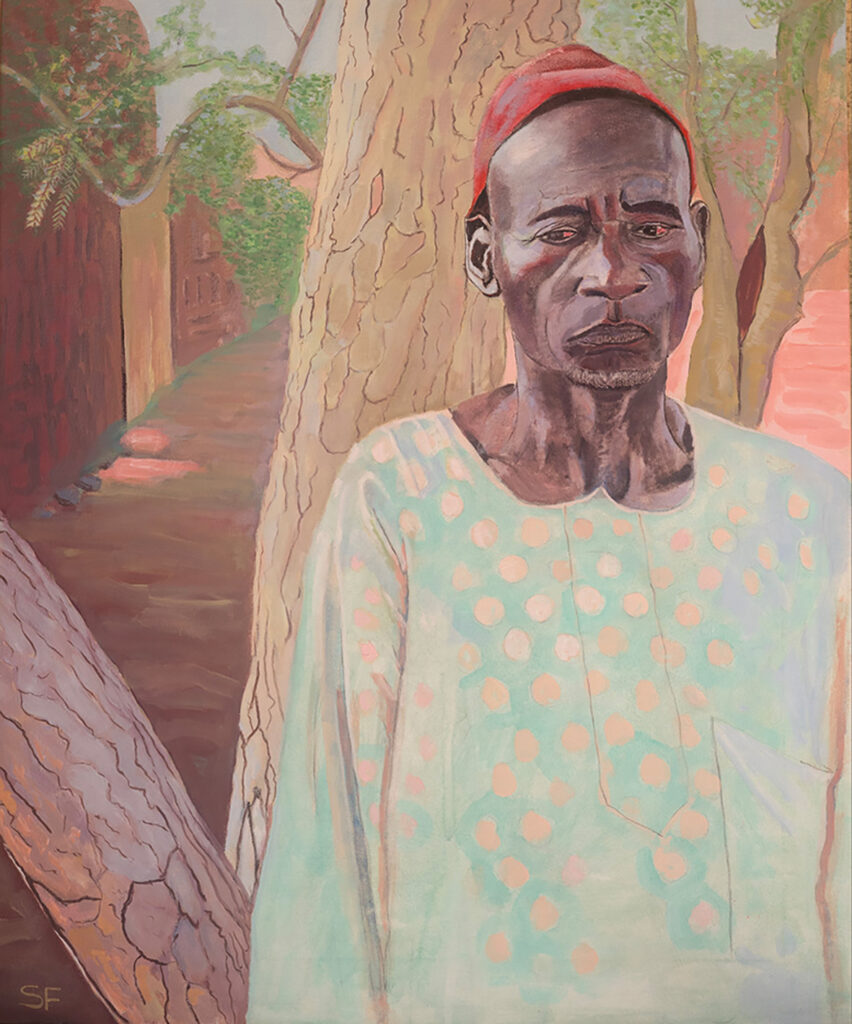
Youssouf’s slightly bloodshot eyes tone with the vermillion of his battered hat and the faded ground on which he stands.
“Much of my early photography was in black and white,” Franklin continues. “For humanitarian photography, I’d eliminate the background colour to focus on people’s expressions and emotions. With a painting, I have scope to add in what I feel, and working with colour is like writing music.
“Using a restricted palette is akin to composing in a certain key. There’s a power in a painting when everything is connected in harmony. You can’t do that in a photograph because you don’t have control of the colours in the local environment.”
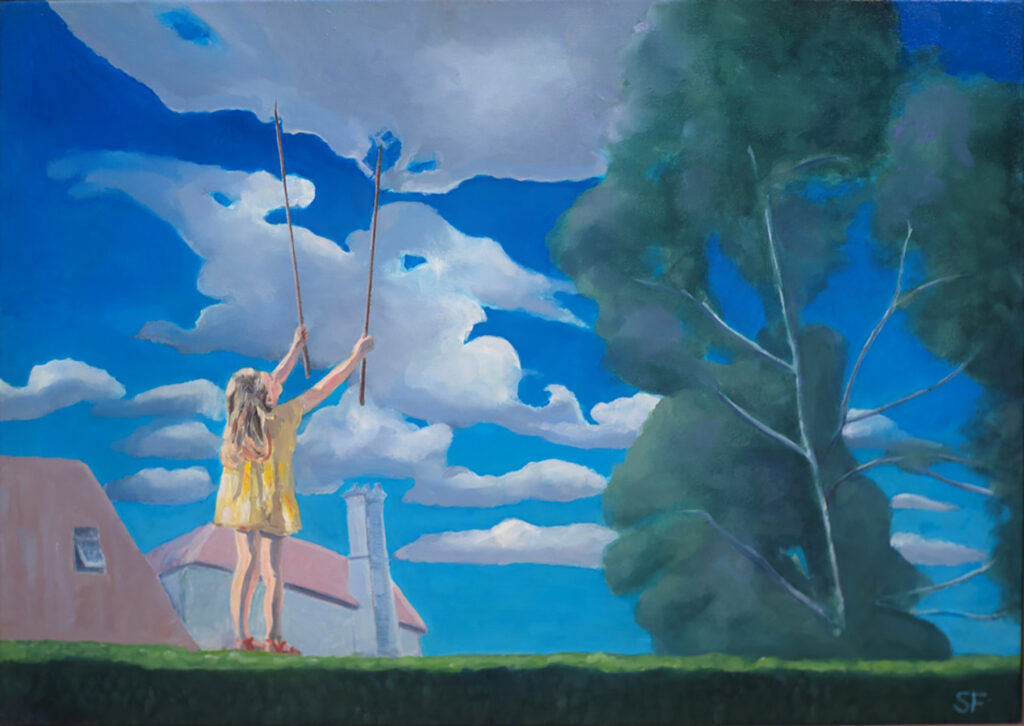
Among the blue skies, greens and orange-browns of the natural world, one painting depicts a small girl in a sun-yellow dress reaching up to the listening clouds which appear strangely God-like.
Franklin describes how, while preparing to give a lecture on film sound at the University of Malta, he interviewed Australian singer Lisa Gerrard, the voice of the haunting vocals in the film Gladiator.
“She told me how she started singing when she was small in Melbourne. She would climb out of her window, pick up the two poles used to string up the laundry, and reach as high into the sky with them as she could. She felt this way she was able to sing directly to God. It was such an extraordinary story that I had to paint it.”
Looking to the future, the exhibition also includes a surreal work, Hapi Dent, in which Franklin explores the increased use of humanoid robots in the world, having crossed paths with them for real in the Far East.
“If you travel to many places in Asia or Africa, you’ll see hand-painted adverts in the most unlikely places,” he smiles, “perhaps at checkpoints at borders or ticket desks in airports. In this painting, I have imagined a scene where they’re using a typically out-of-place Alpine view to sell toothpaste. Standing with a robot at the counter is Nadja, the 1920s protagonist in the novel of the same name by André Breton, author of The Surrealist Manifesto. It seemed appropriately surreal to include her character in this scene from a future age!”
Characters in Search of an Author runs until July 29. The Malta Postal Museum in Archbishop Street, Valletta, is open from Monday to Friday from 10am to 4pm and on Saturdays between 10am and 2pm.